














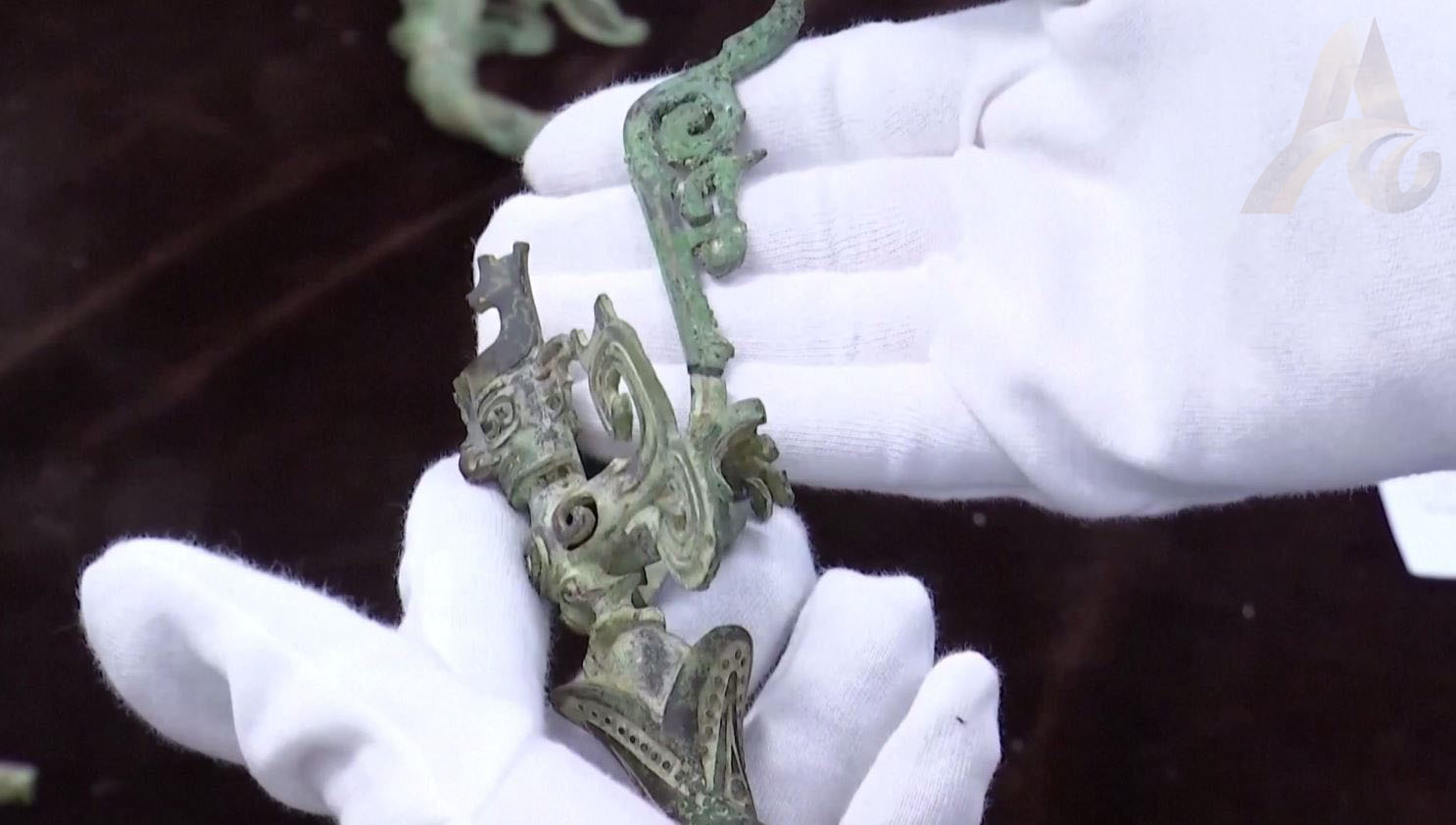
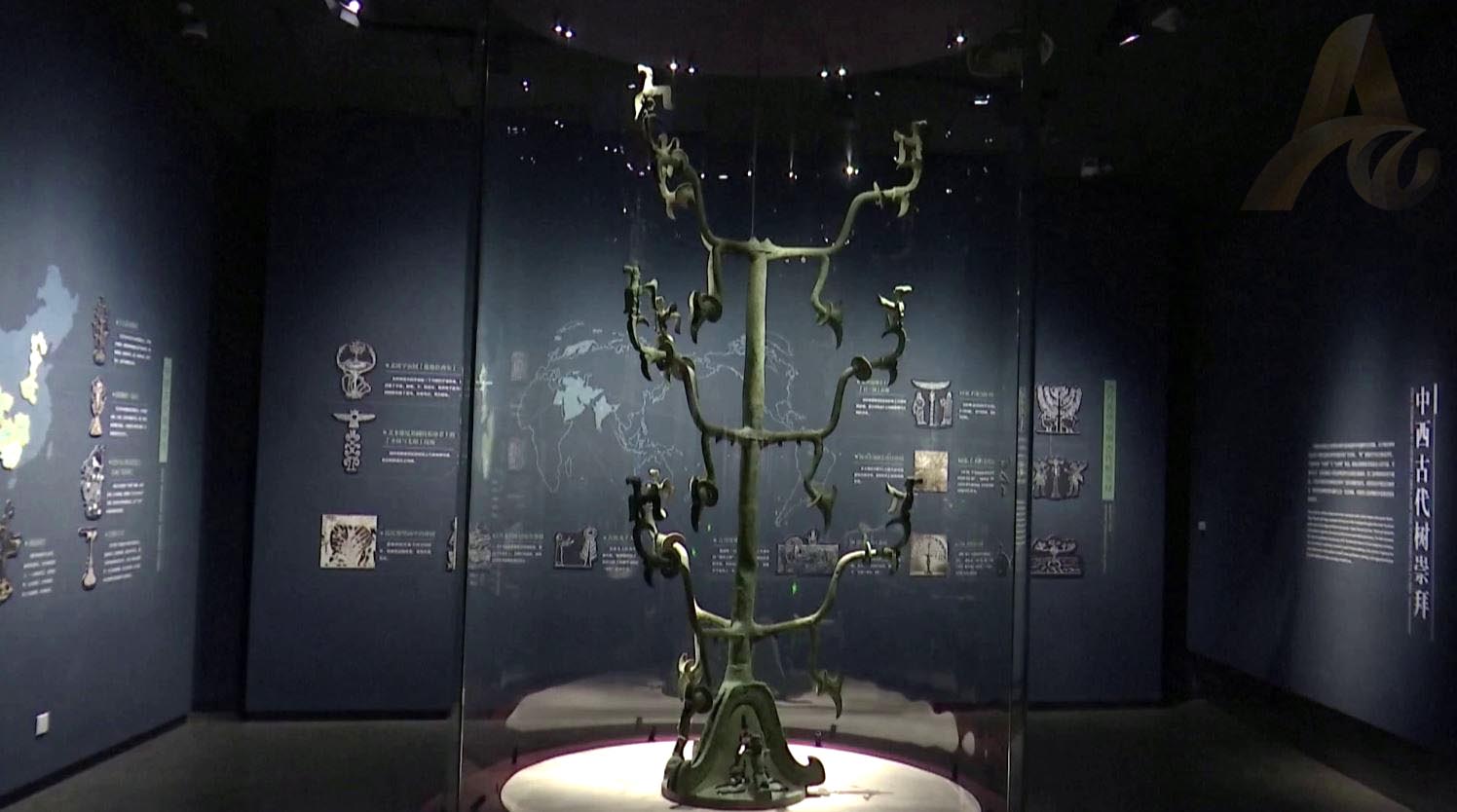
INTERNATIONAL: Some fragments probably belonging to the sacred bronze trees unearthed in 1986 at the legendary Sanxingdui Ruins site in southwest China have recently been uncovered, offering more clues to understand the civilization dating back thousands of years.
Chinese archaeologists found the fragments shaped as flowers, fruits and phoenix bird in the number 7 and Number 8 pits.
The shapes and sizes of the newly found fragments are quite similar with those of a bronze tree uncovered in 1986, said the archaeologists.
Achaeologist Li Haichao says that the bronze tree fragments are a kind of very important things found in the pits and they look almost the same with those discovered previously. So, he predict that there is no problem that they could be pieced together.
In the number 8 pit, archeologists also found fragments similar to the pieces of another bronze tree unearthed in 1986.
The Sanxingdui Ruins is dubbed as one of the greatest archeological finds of mankind in the 20th century. The site was accidentally discovered by a farmer when he was digging a ditch in the 1920s.
Covering 12 square kilometres, the ruins is located in the city of Guanghan, about 60 kilometres from Chengdu and is believed to be the remnants of the Shu Kingdom, dating back at least 4,800 years and lasting over 2,000 years.
Related News