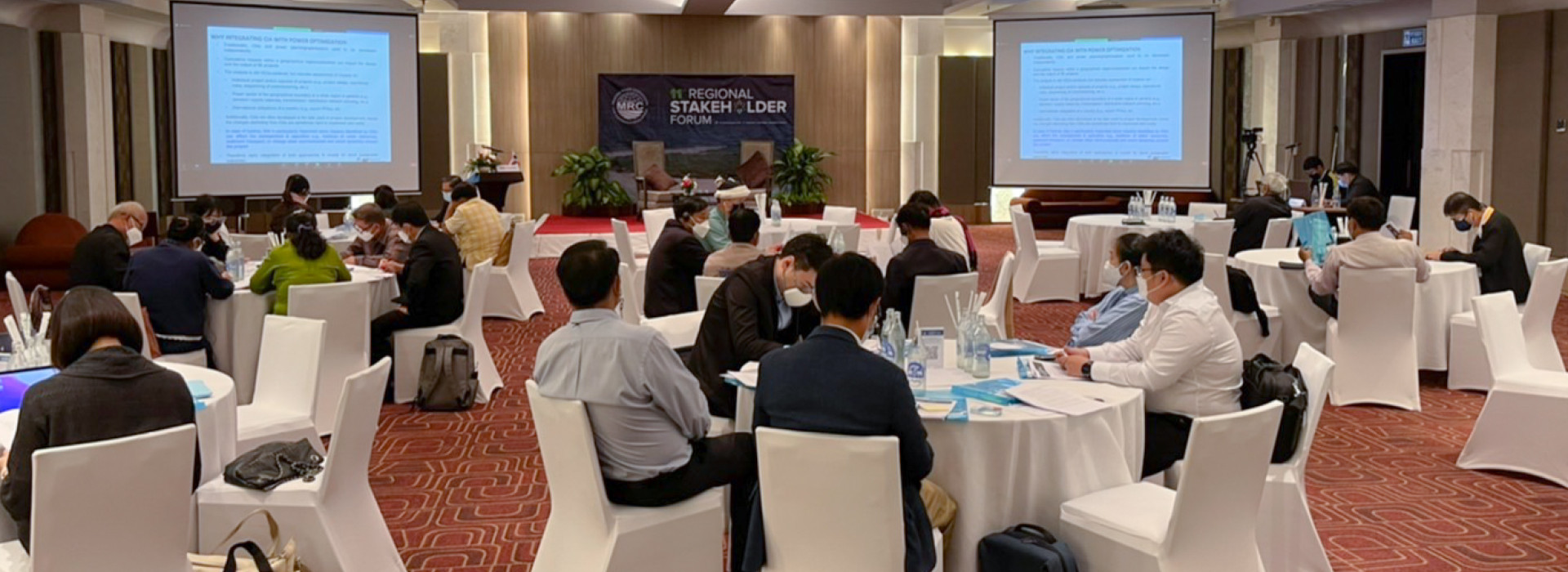







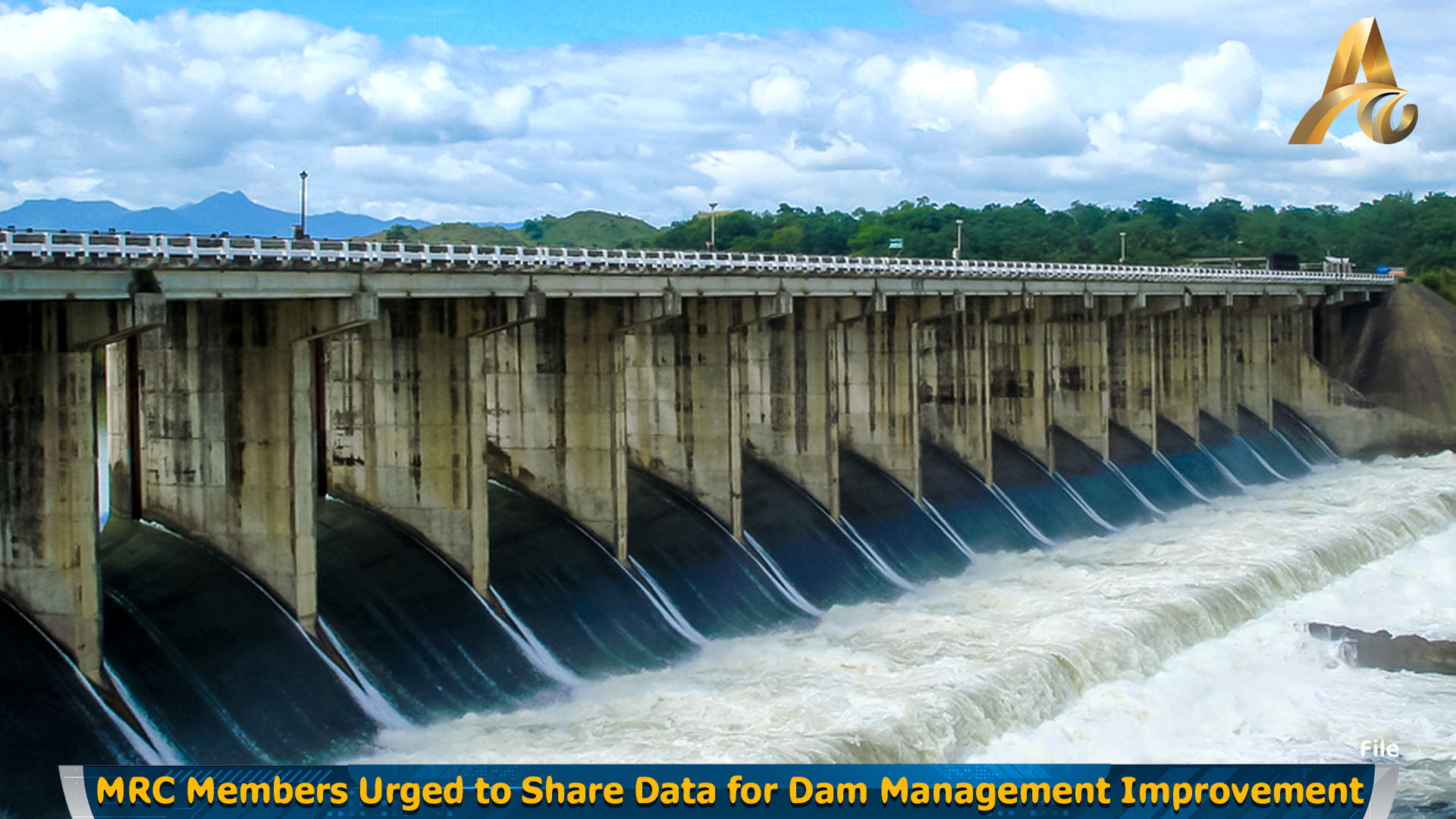








PHNOM PENH: The Mekong River Commission has urged Mekong governments, developers and operators were urged to share information and data on hydropower operation to improve cascade dam management during the 11th Regional Stakeholder Forum held last week. The first-ever public forum was aimed to provide a unique opportunity for stakeholders to exchange views on responsible hydropower development and management and to consult them on the 684-megawatt Sanakham dam.
Stakeholders specifically discussed the most recent assessments of potential transboundary impacts from the Sanakham dam Lao PDR had proposed to build on the mainstream of the Mekong River. During the forum, attendees were briefed on some of the challenges arising from the increasing prevalence of hydropower plants and the regional effort to tackle them. The attendees of the hybrid virtual-physical setting include government officials, hydropower developers and operators, international and national hydropower associations, community representatives, civil society organizations, and MRC Development Partners and Dialogue Partners.
It was discussed that there are currently 88 hydropower projects in the Lower Mekong Basin with around 12,600 MW total installed capacity. Some 15 dams with a total capacity of 1,600 MW are under construction and by 2040, hydropower is forecast to generate more than 30,000 MW in the LMB. Lao PDR’s challenges and efforts in coordinating multiple dam developers and operators provided one of the examples. The country recently commissioned the Nam Ou Cascade Control Centre, the first in the nation, to manage internal and external communications to mitigate flood risk.
MRC’s statement says that the the US Army Corps of Engineers experience in transboundary river management between the US and Canada shows that the challenges of aging infrastructure, climate change and environmental factors are equally applicable to the LMB. Adopting best practices that include collaborative management between the two countries and their national and local agencies, infrastructure maintenance and community outreach, will improve common basin management outcomes.
Representatives from China has provided latest information about hydropower development and management in the Upper Mekong River known in China as Lancang. China’s plans for the Lancang River cascade, a centrally controlled dam operation that includes an automatic hydrological forecasting system, can address environmental and management issues relating to native fish species, water quality and monitoring fish passage. But with more dams coming online, a representative from a civil society organization called for a stronger and urgent sharing of operational regimes of hydropower projects with the public.
MRC Secretariat CEO An Pich Hatda has said, the MRC has been stepping up efforts through the new 10-year Basin Development Strategy to establish a regional mechanism for coordinated basin operation management.
He stresses, “We aim to ensure that decisions on flow releases are supported by transparent data and information sharing between countries. We want to ensure that there is improved predictability of flow changes for basin communities.”