













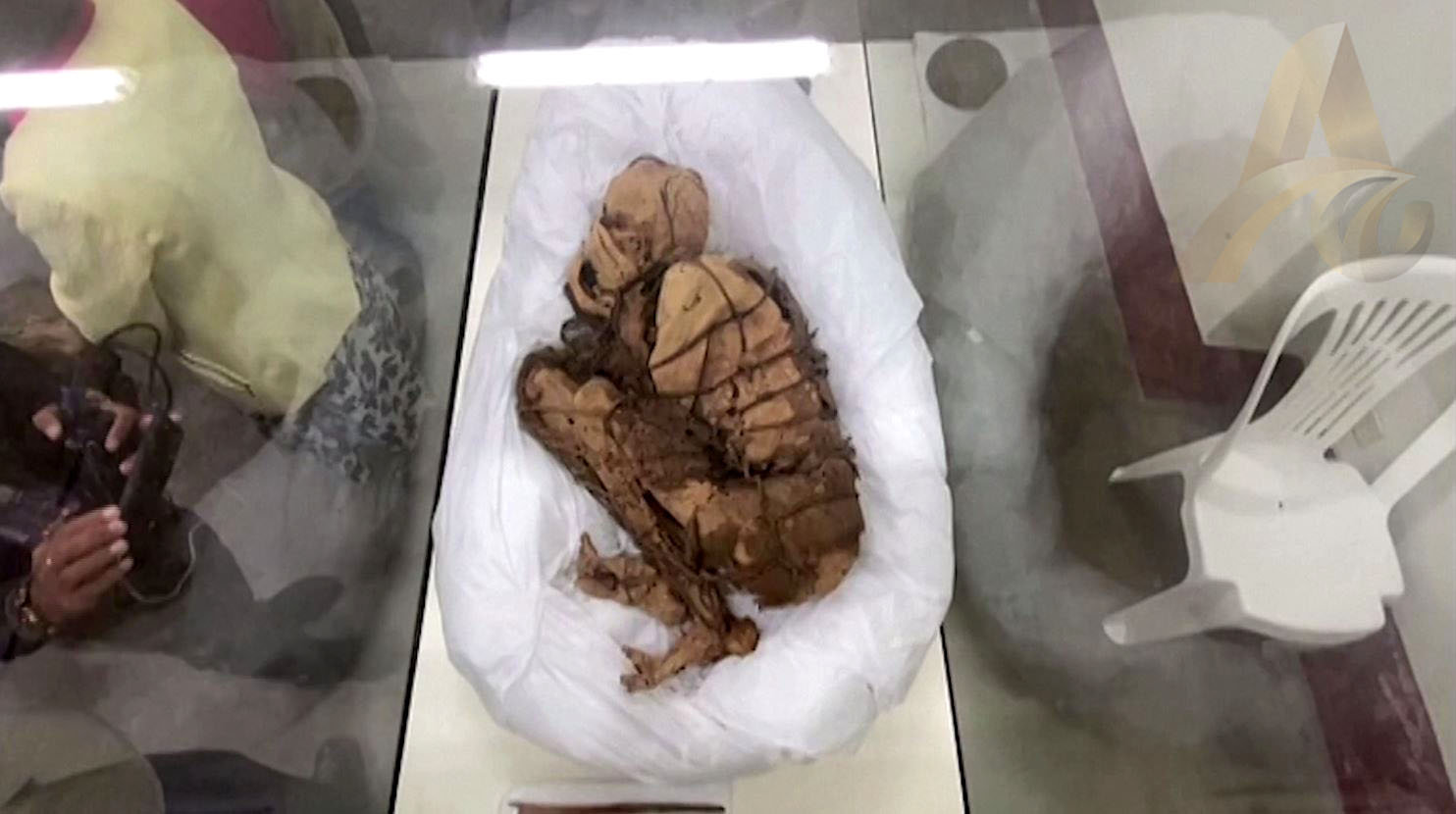
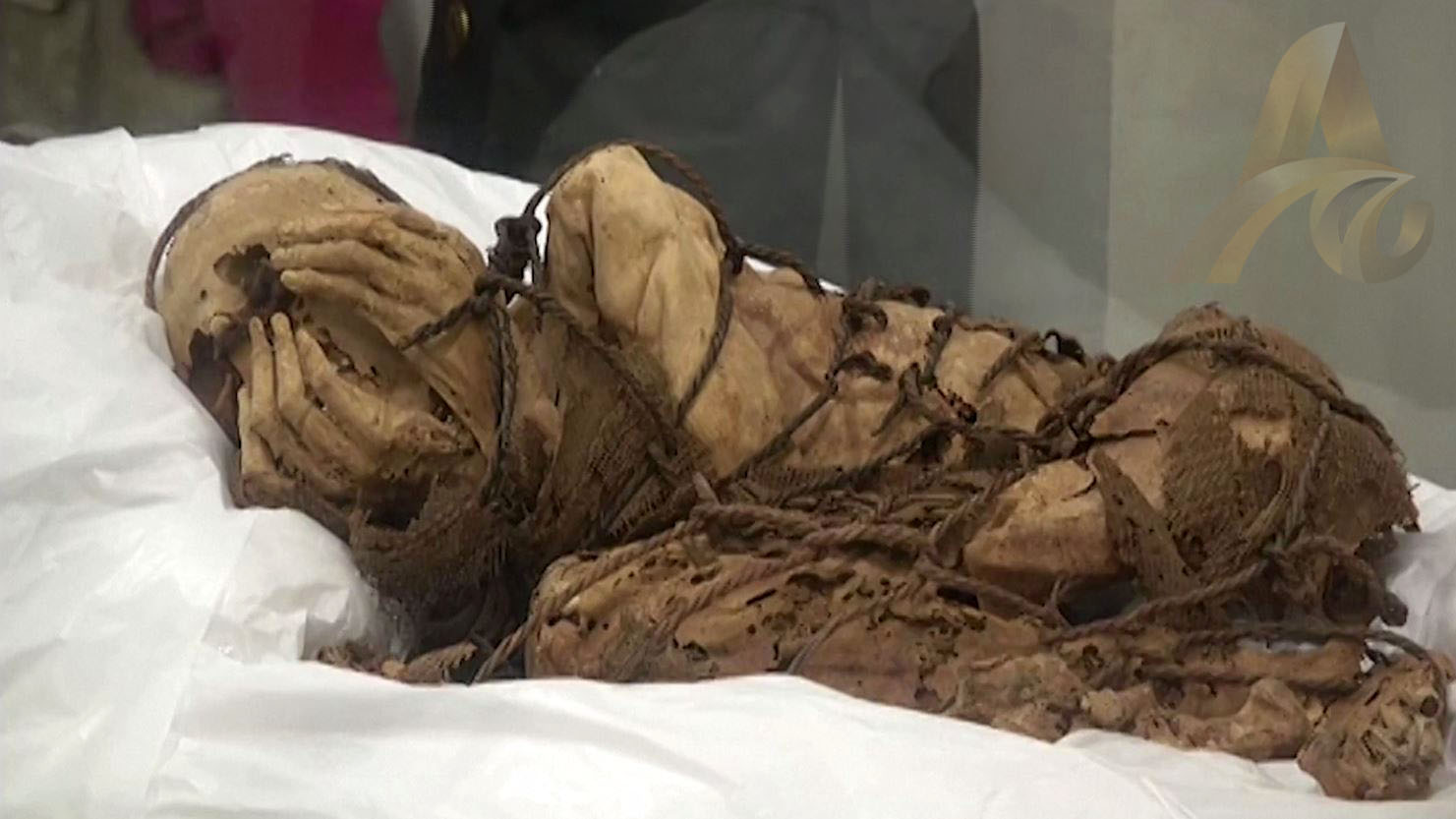
INTERNATIONAL: A mummy found in Peru and thought to be between 800 and 1200 years old is now on display at San Marcos University in Lima on Tuesday.
An Archaeologist in-charge of the discovery, Yomira Huaman has narrated how they found a site in November commonly known as a matrix that consists of holes which are about 6.5 feet in depth. As they went deeper into this matrix they have discovered a burial site in Cajamarquilla with remains of an infant's garments bundle, and artisanal ornament, ceramics and this cocoon shape tied together with the same string as the mummy.
The National Major University of San Marcos, in Lima, presented archaeological discoveries from research done in Cajamarquilla in 2021. The most important is the mummy, a piece of news that has travelled the world around, that is currently being analysed at the University.
The pre-Incan mummy was in a fetal position and tied with ropes, which was probably a local burial rite.The University is now housing the mummy, remains from at least two infants and the objects found in the ancient tomb while its researchers analyse them.
Peru, home to tourist destination Machu Picchu, has hundreds of archaeological sites from cultures that developed before and after the Inca Empire, which dominated the southern part of South America 500 years ago, from southern Ecuador and Colombia to central Chile.
Related News