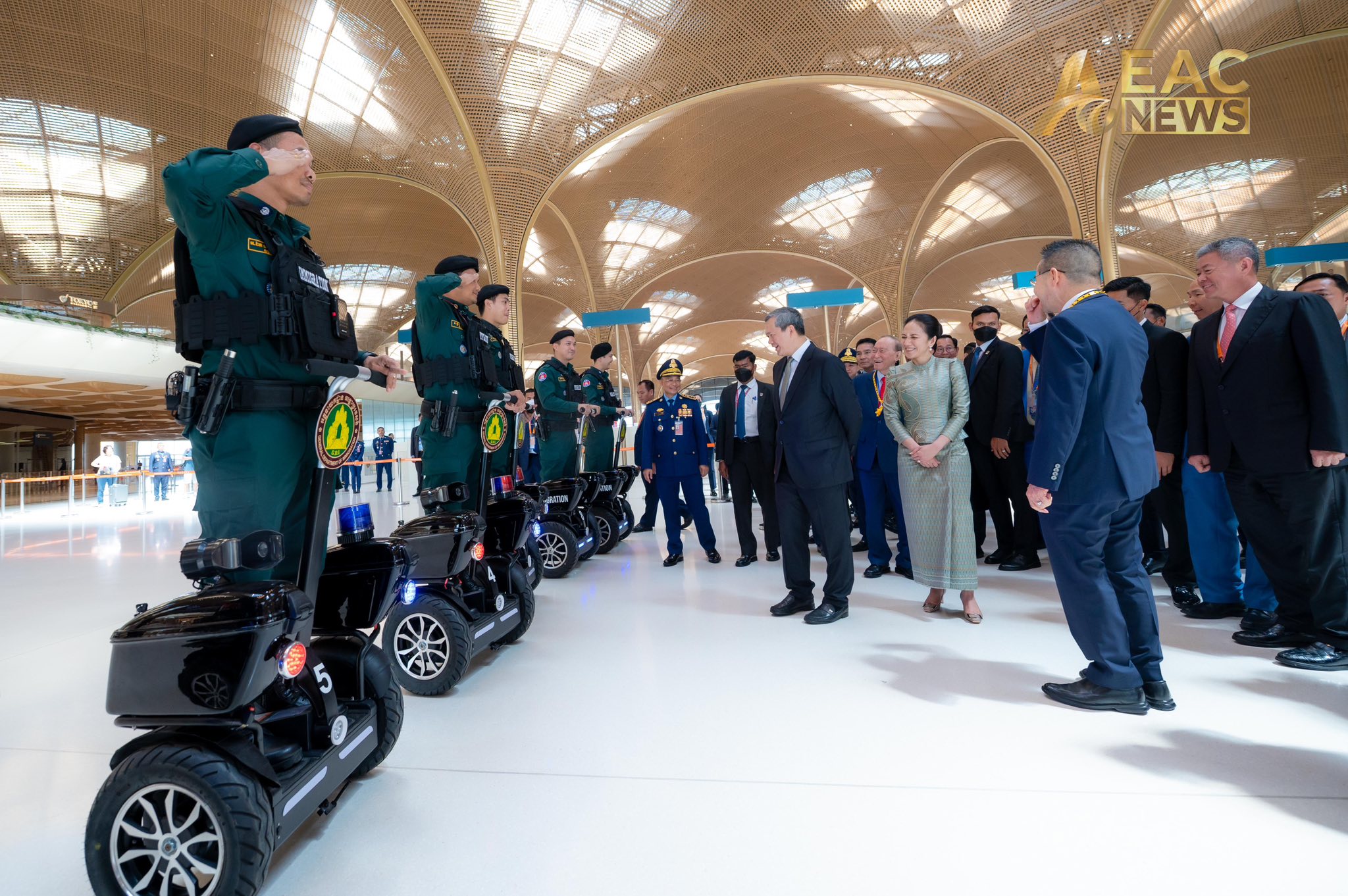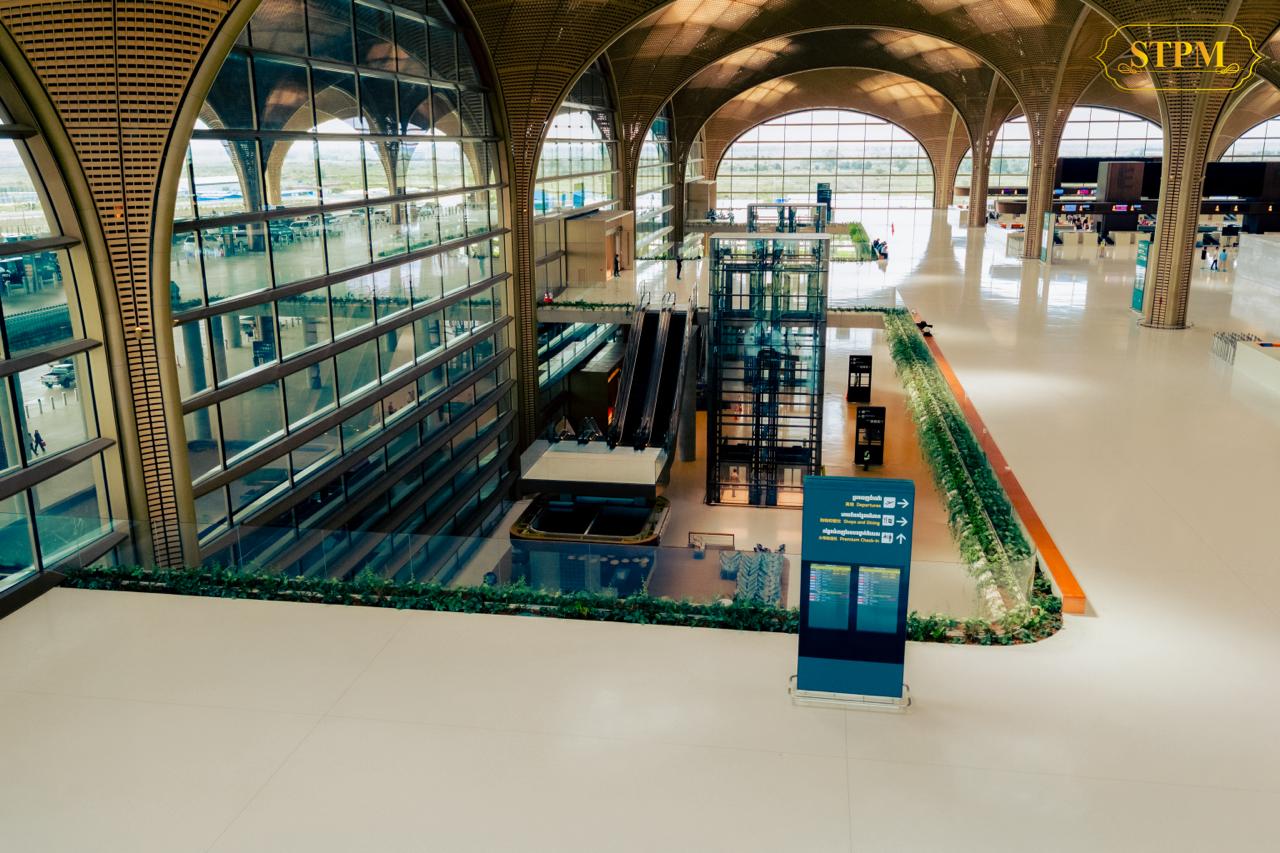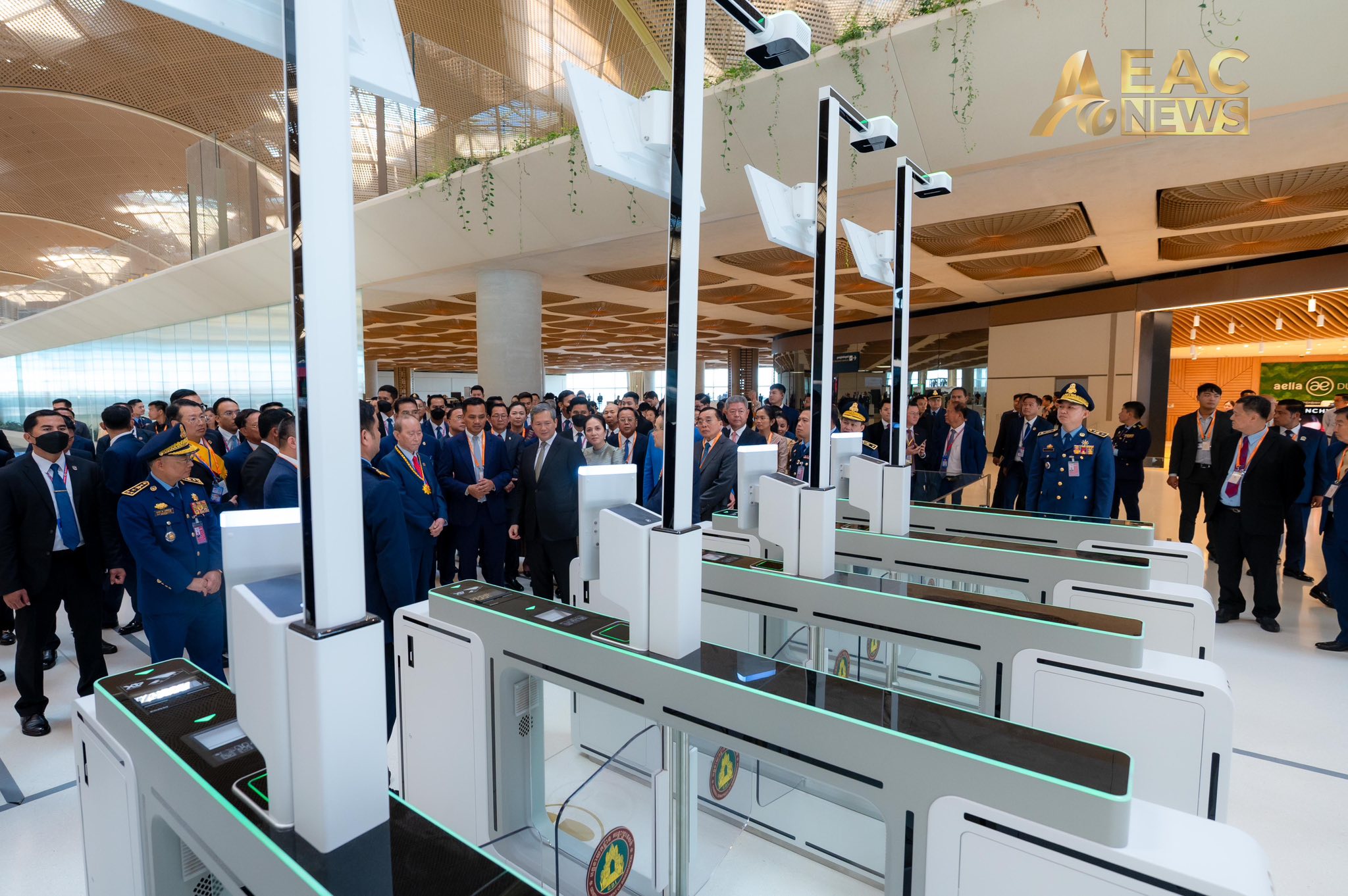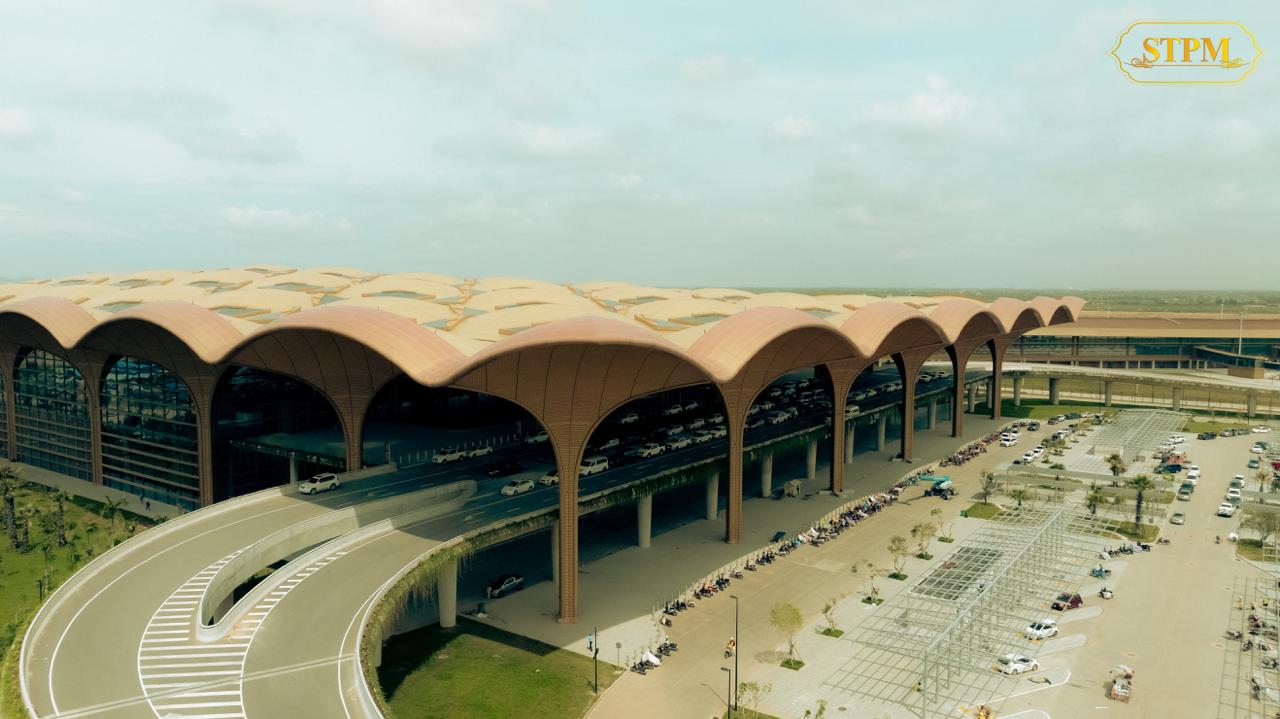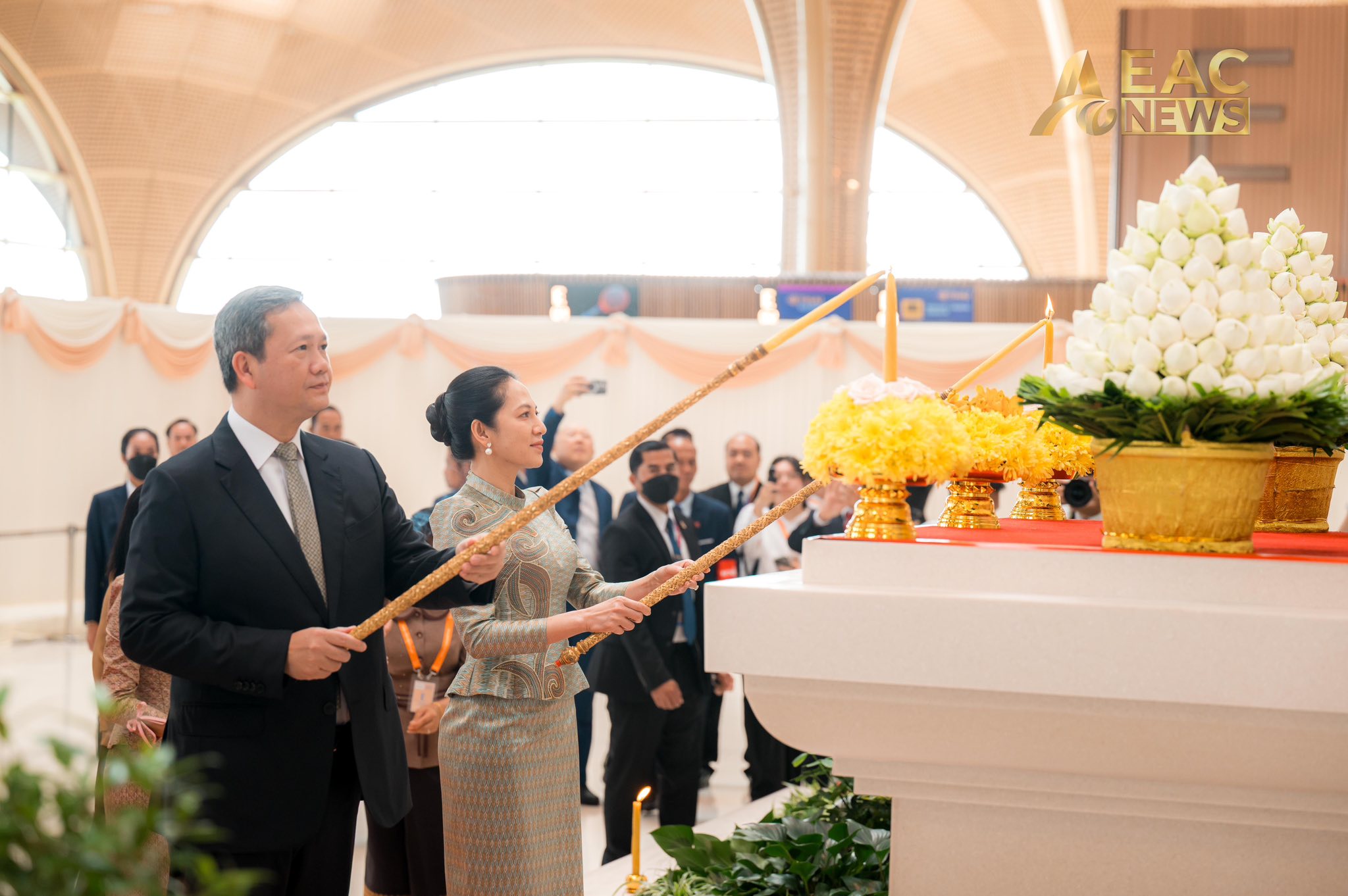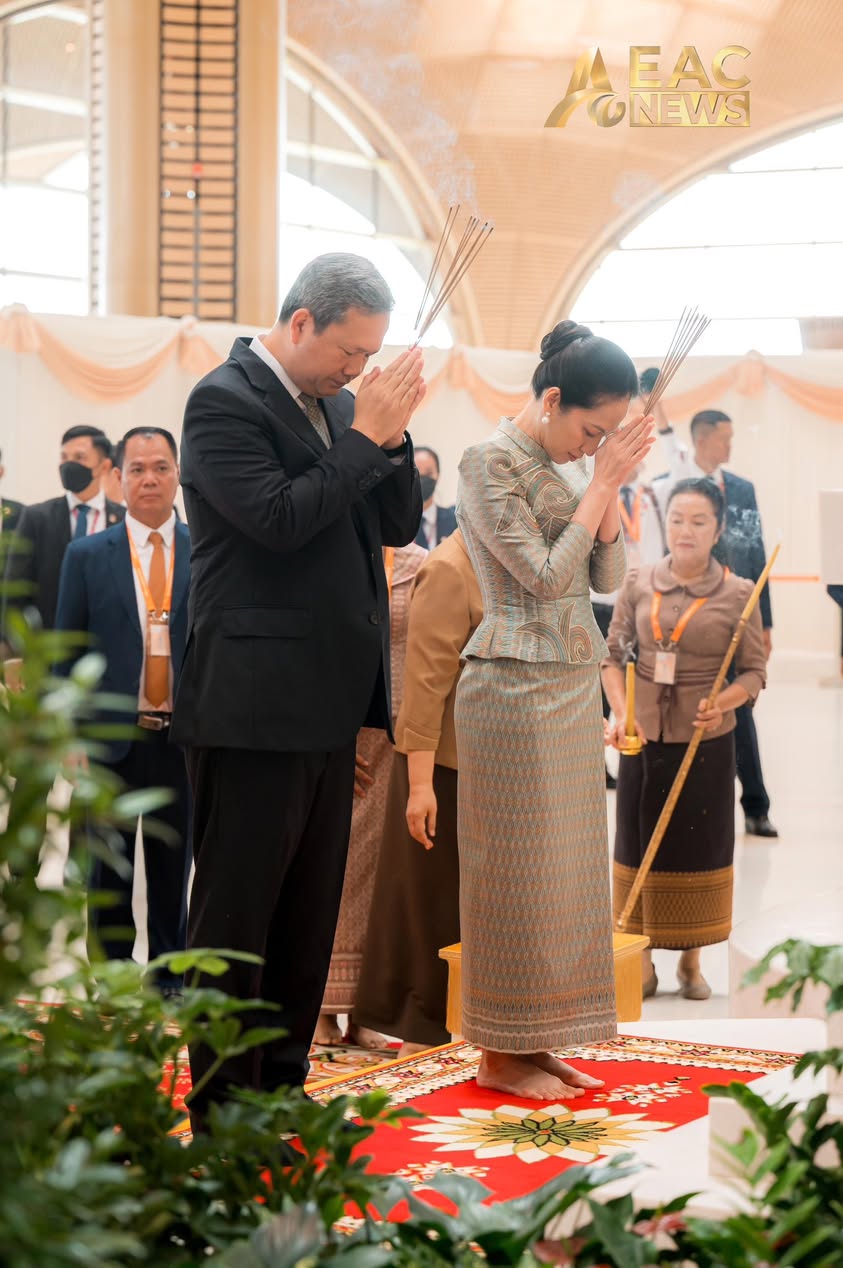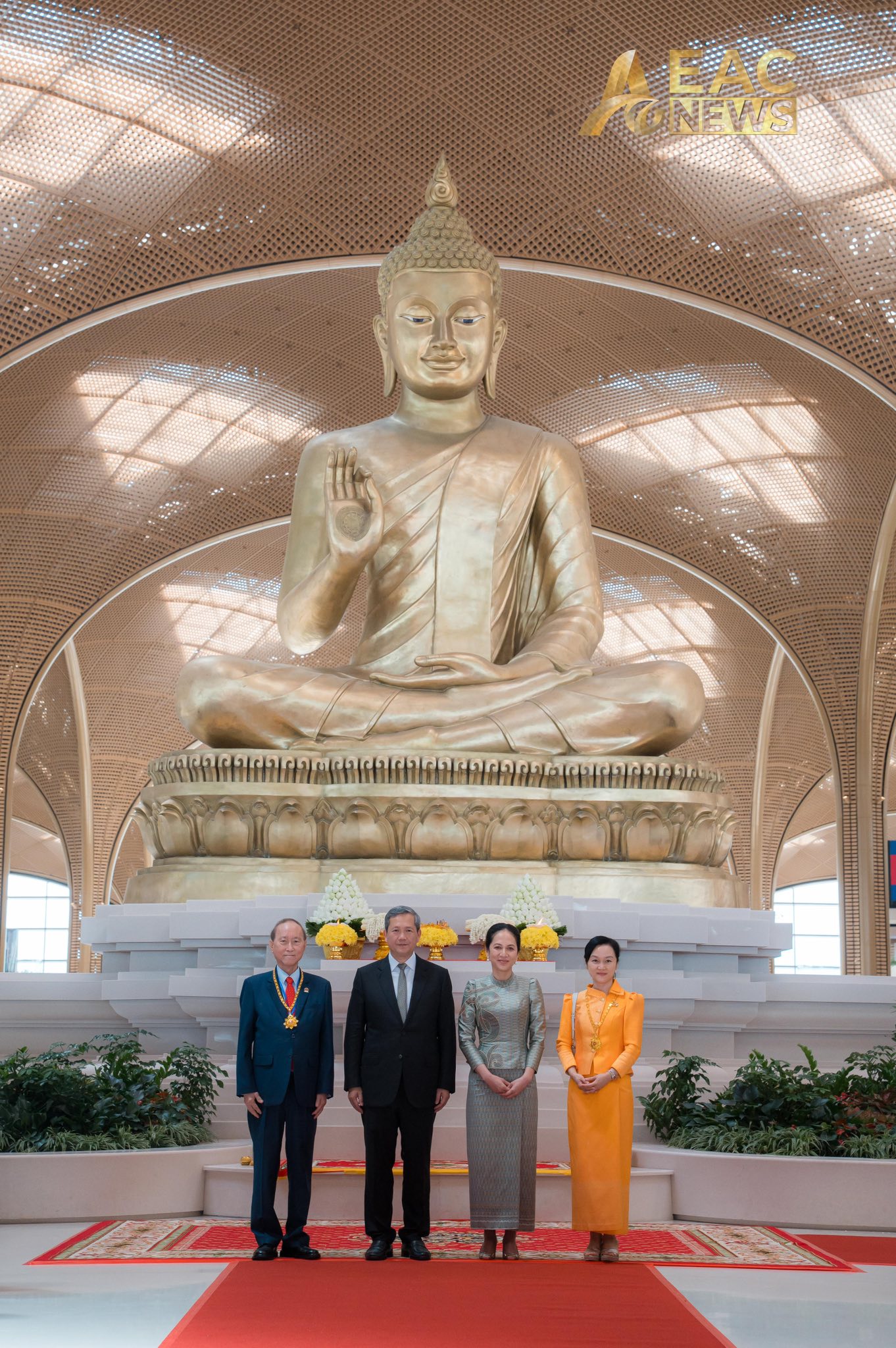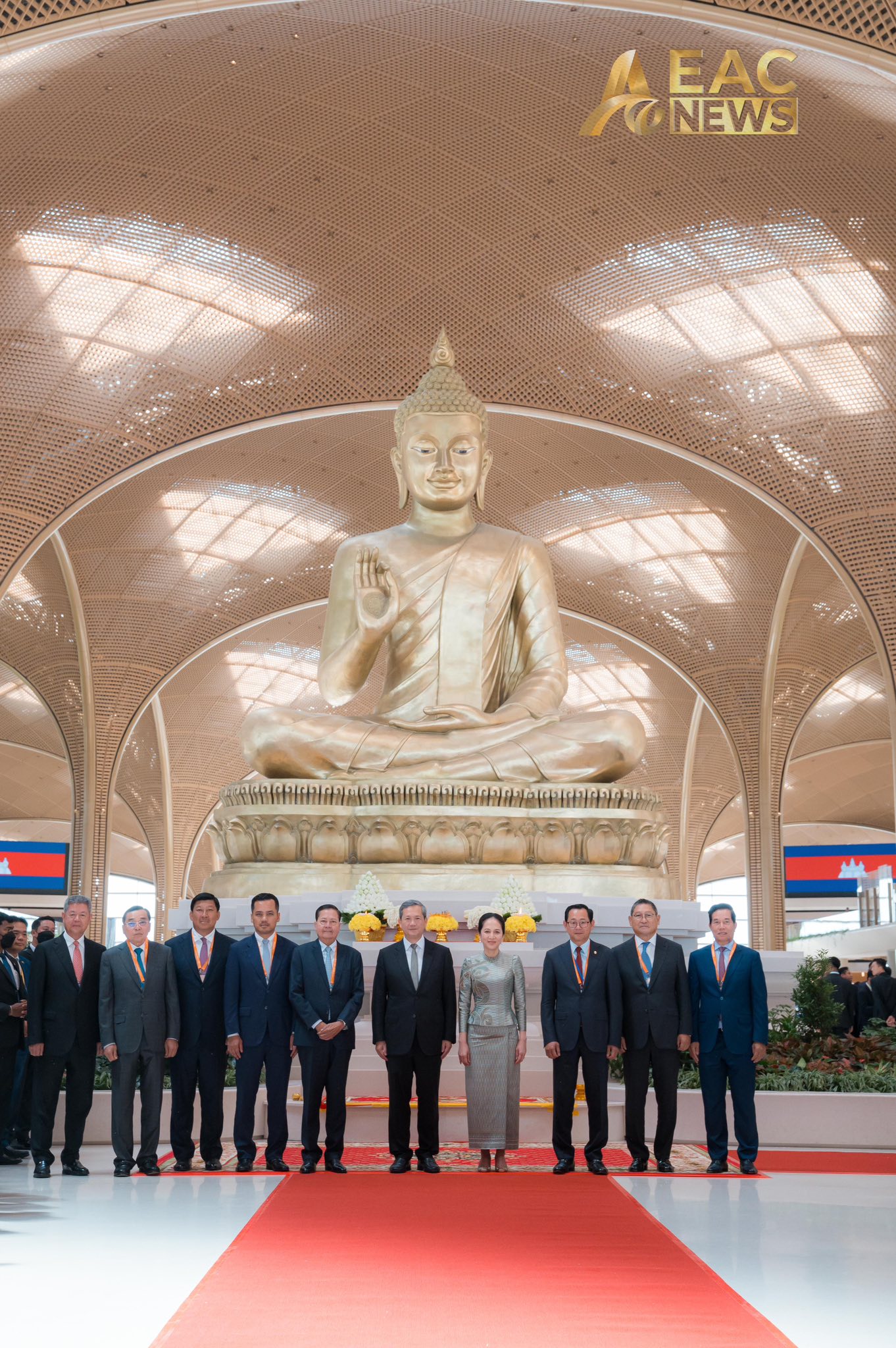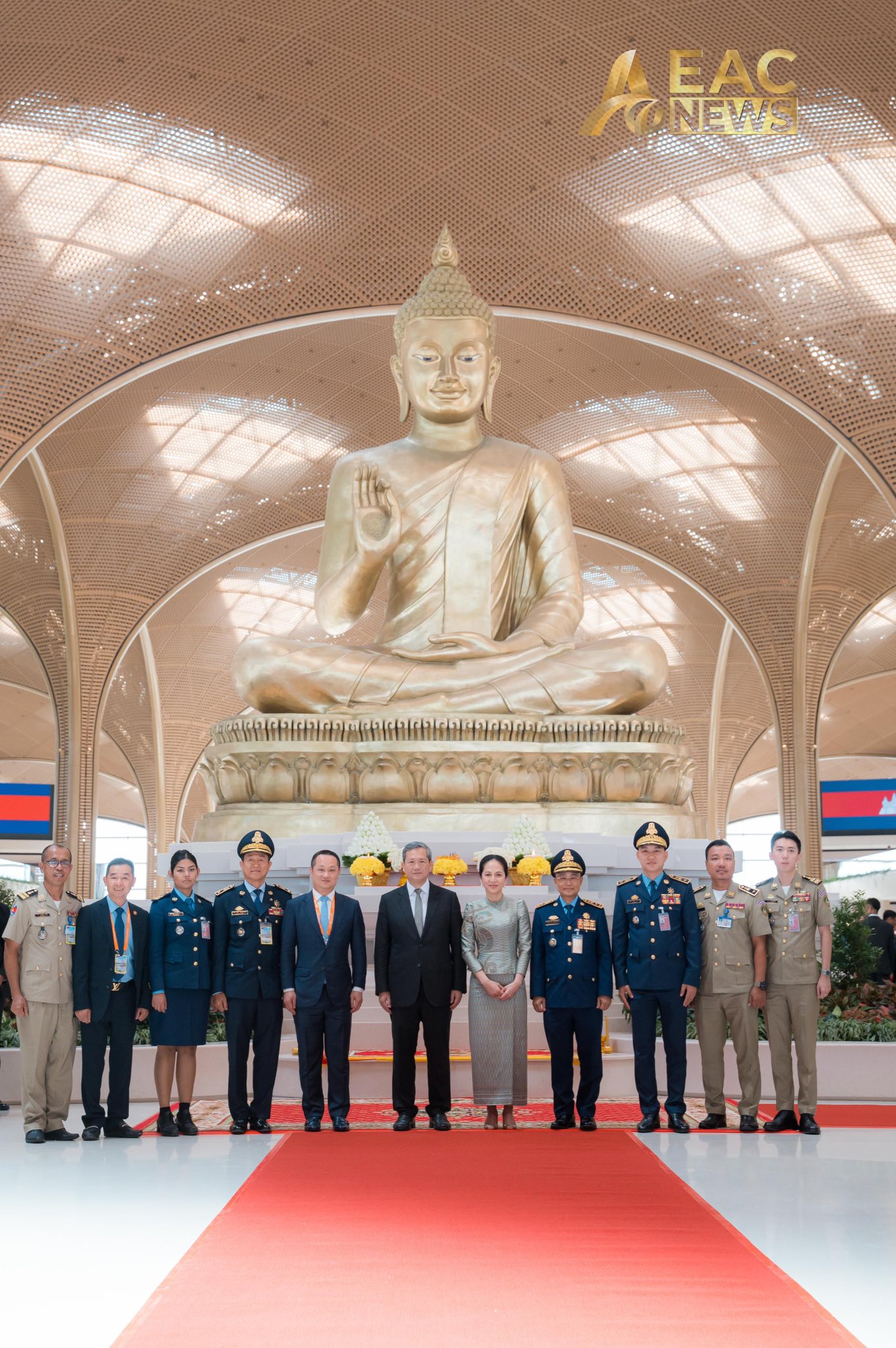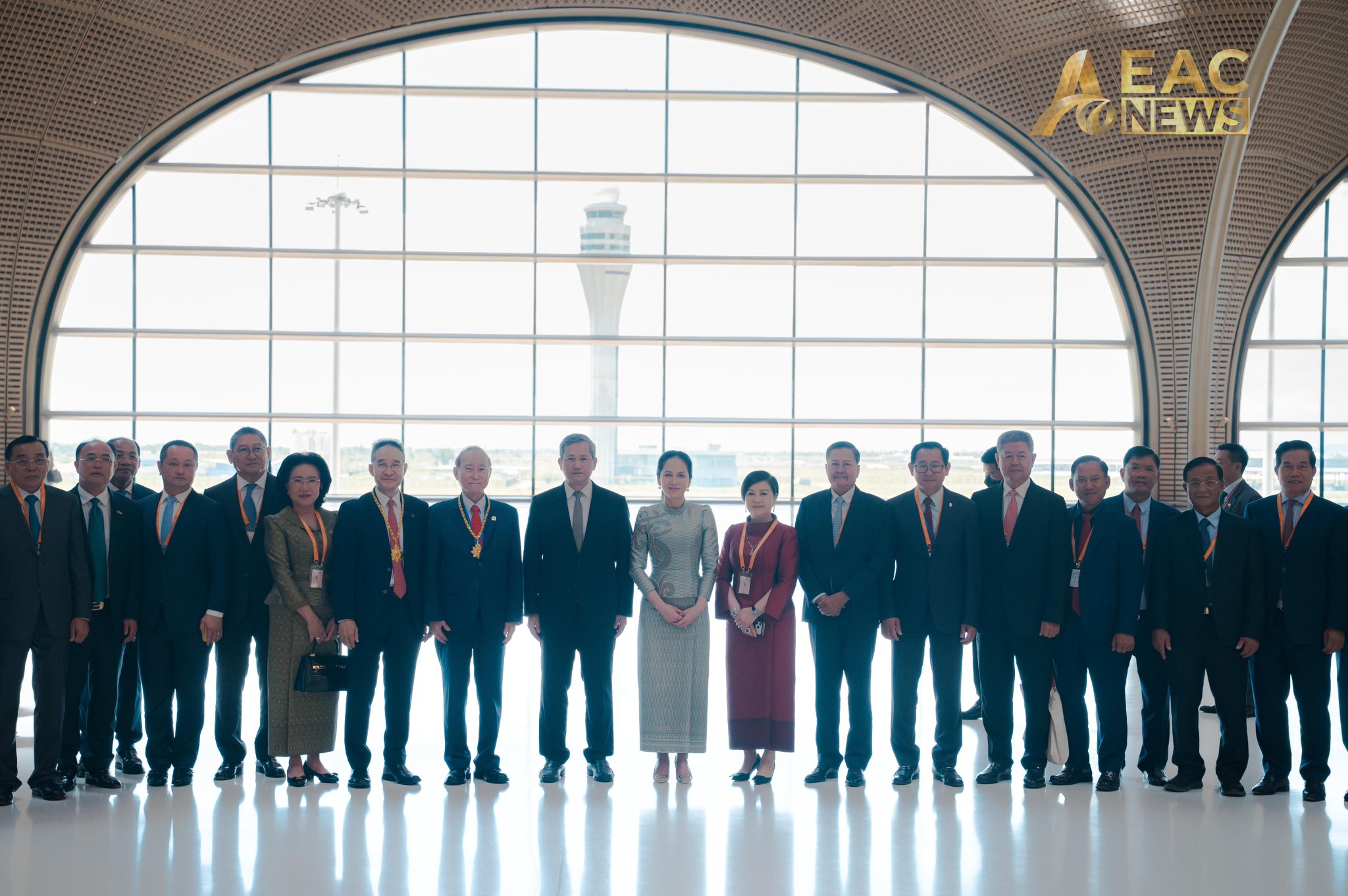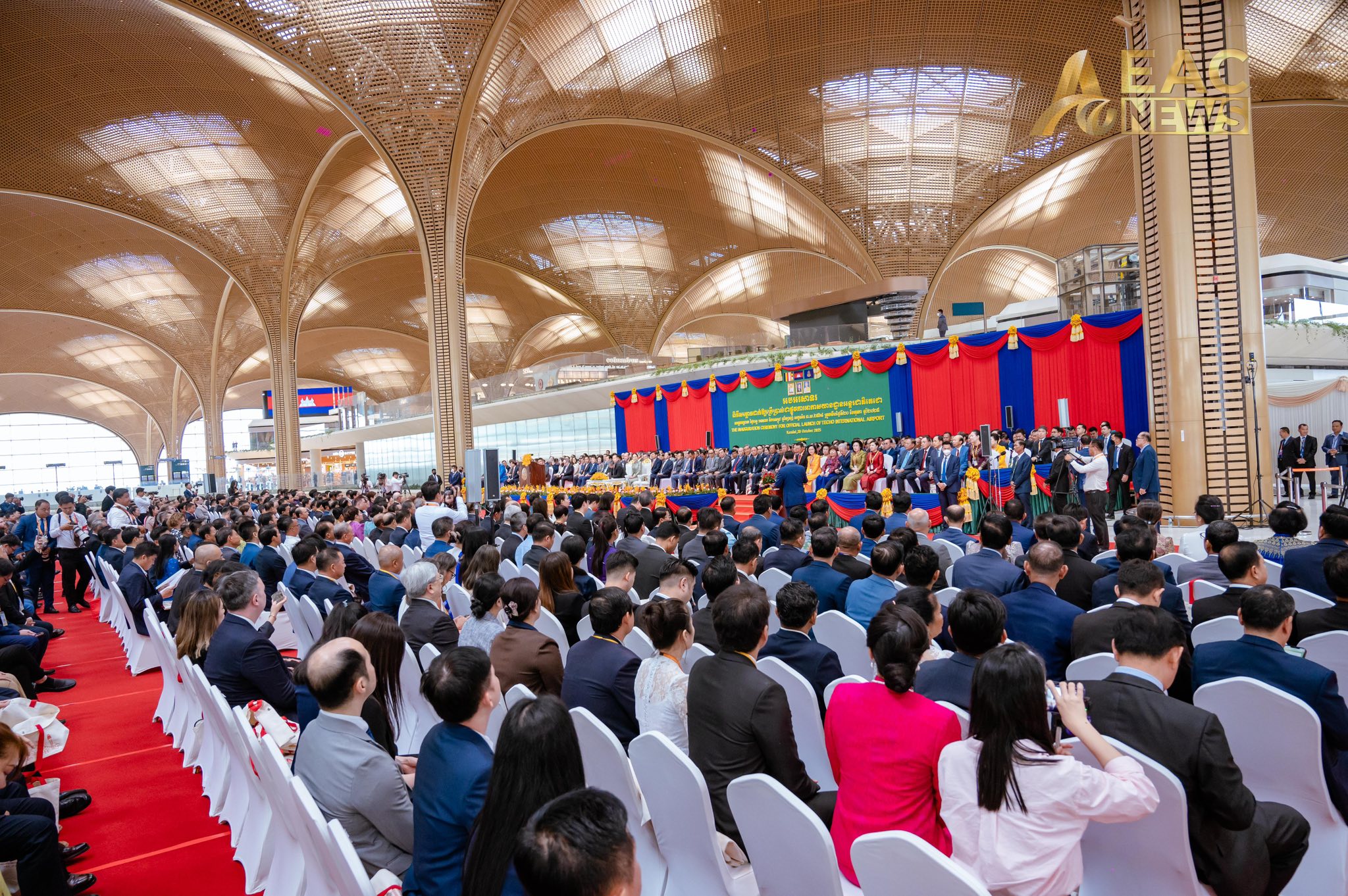













PHNOM PENH — Cambodia’s newest megaport, Techo International Airport (TIA), was officially inaugurated Monday morning in a ceremony led by Prime Minister Hun Manet and First Lady Dr. Pich Chanmony Hun Manet. The 4F-class international airport, situated approximately 20 kilometers from Phnom Penh, marks a significant milestone in the country’s development, with a total investment of approximately USD 2.3 billion.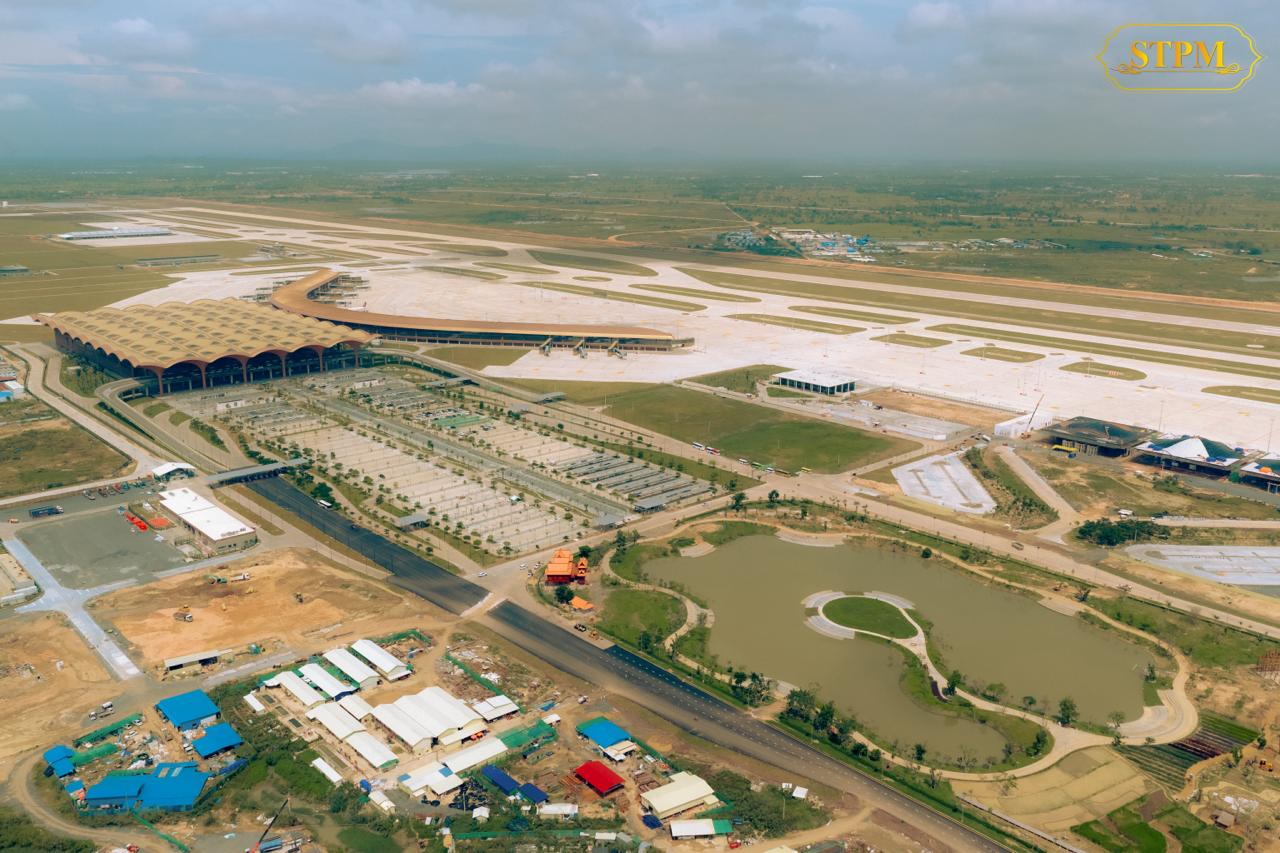
Attended by members of the Senate, the National Assembly, government officials, diplomatic representatives, development partners, private sector leaders, and around 1,500 distinguished guests from abroad and within Cambodia, the event highlighted the airport’s strategic importance as a future catalyst for economic growth. 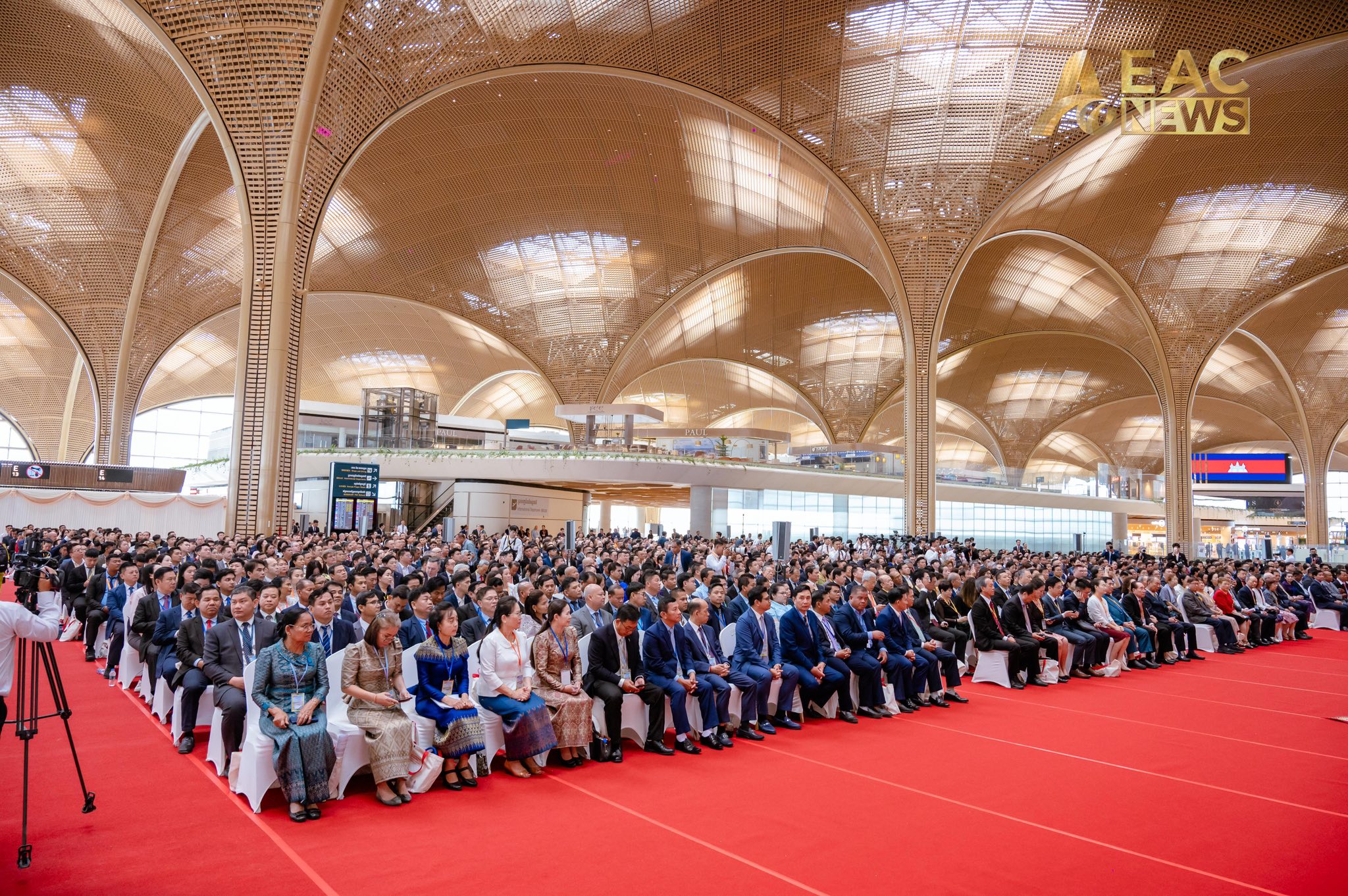
“This is a new achievement reflecting Cambodia’s long-term development vision,” Prime Minister Hun Manet said. “TIA will serve as a driving force to attract more tourists and investors, expanding our horizons and opening new opportunities for the nation.”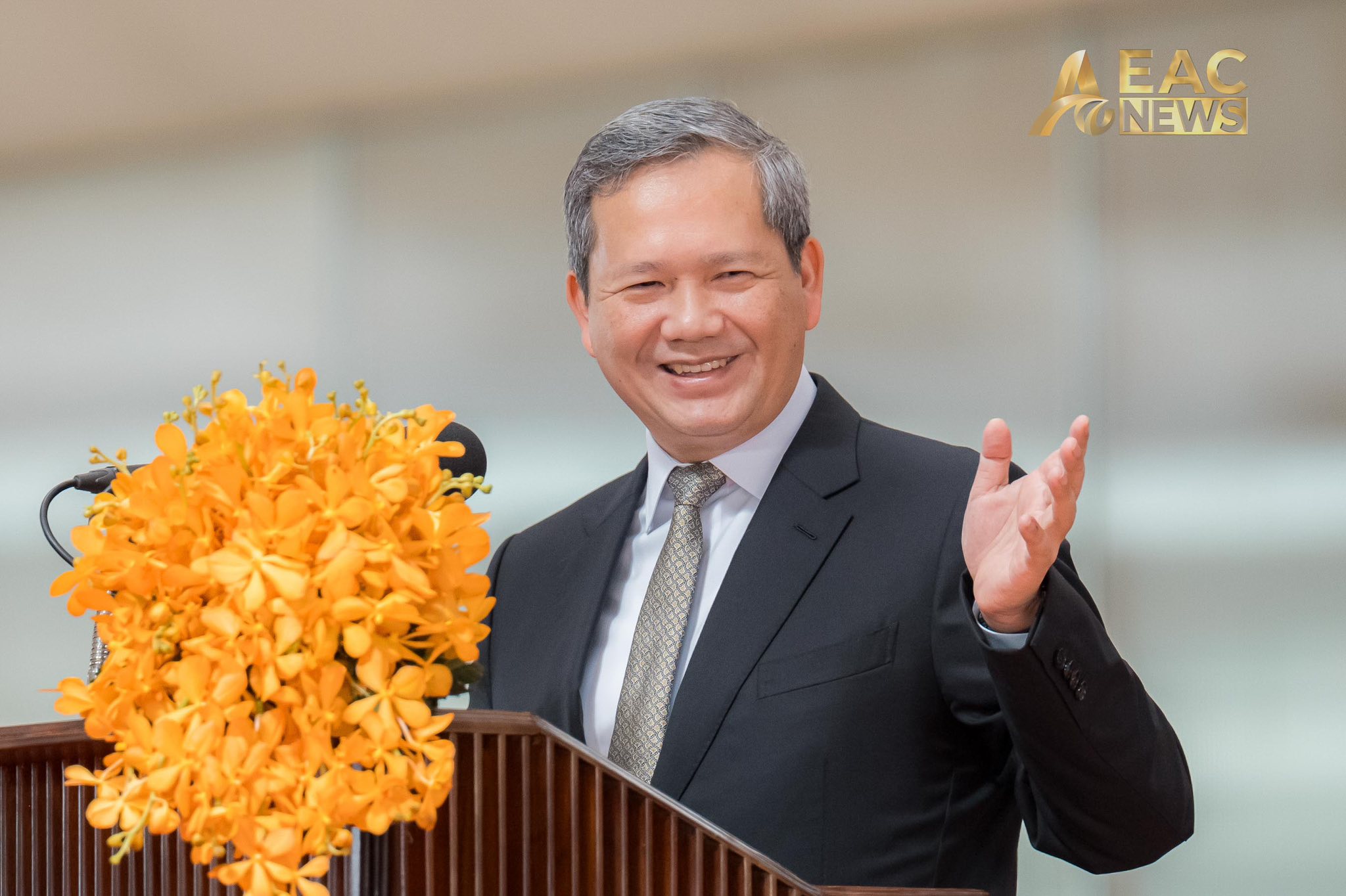
The ceremony underscored the significance of TIA not only as an infrastructure project but as a symbol of Cambodia’s aspirations for stability, peace, and progress, according to attendees. Mao Havannall, Minister in Charge of the State Secretariat of Civil Aviation (SSCA), described the airport as “a vital bridge of solidarity and cooperation” that links Cambodia to the global community and supports the country’s tourism industry.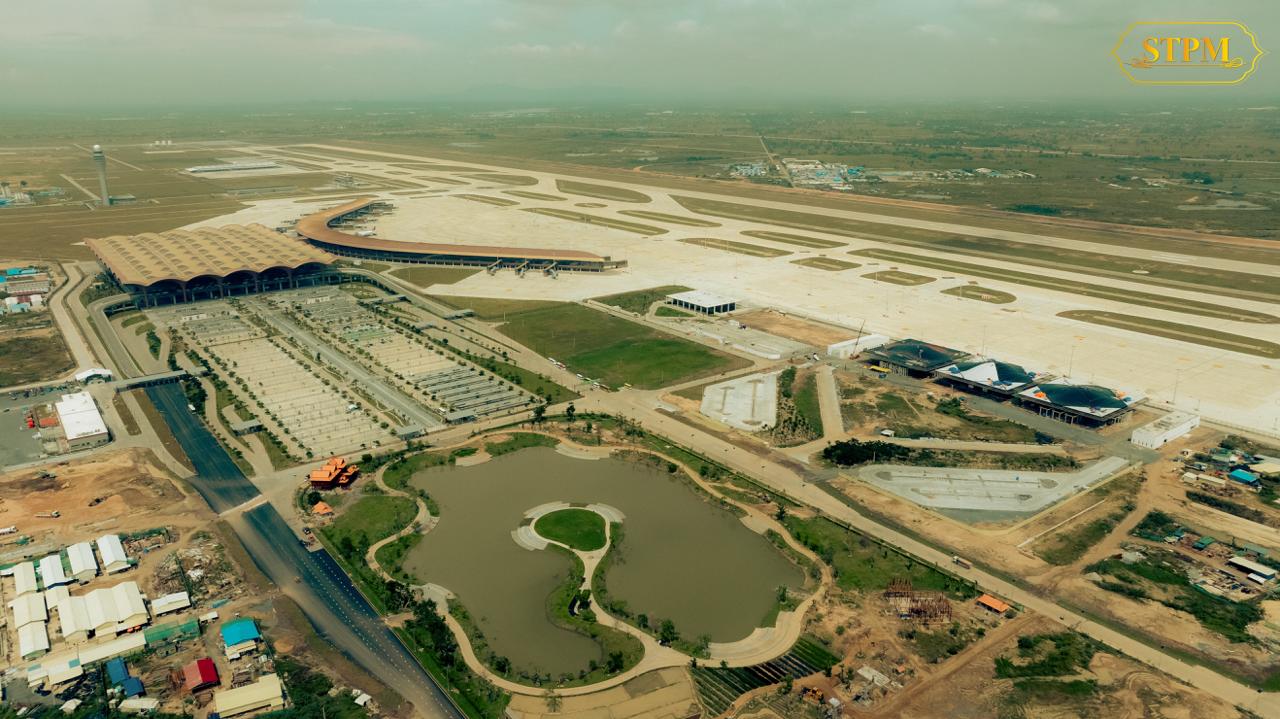
Constructed and managed by the Cambodia Airport Investment Co., Ltd. (CAIC) and the Overseas Cambodia Investment Corporation (OCIC), TIA is Cambodia’s first fully upgraded international airport built to 4F standards — the highest classification for facilities capable of handling the world's largest aircraft, including Airbus A380-800s and Boeing 747-800s. The project drew international expertise, with architects Foster + Partners (UK), project management consultants ATKINS (Canada), Heerim Architects & Planners (South Korea), master planner NACO (Netherlands), and Singapore’s Changi Airport International providing critical support.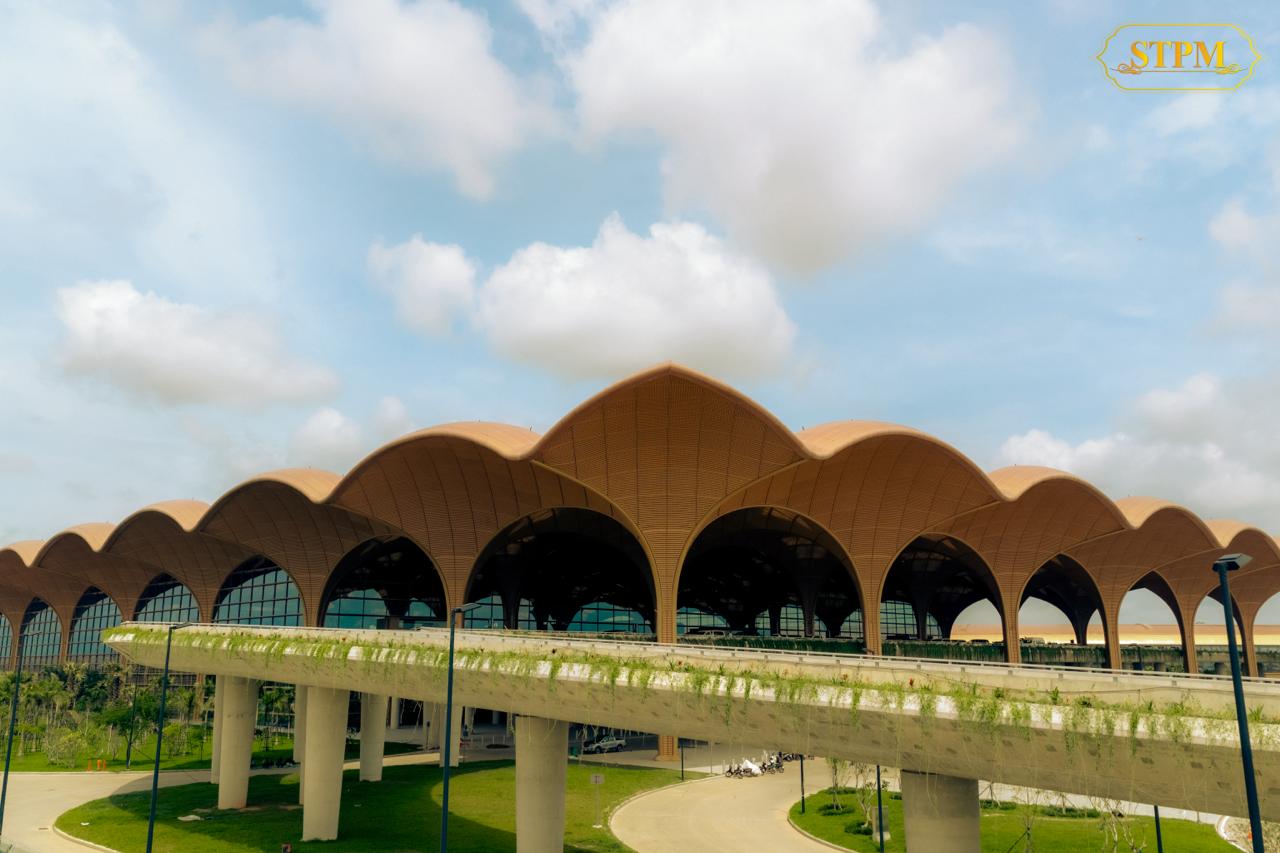
Main construction was executed by China State Construction Third Engineering Bureau Co., Ltd., with participation from numerous global and local companies, including Singapore’s RLB, China’s AVIC, and multiple firms specializing in aviation systems, construction, and interior finishing.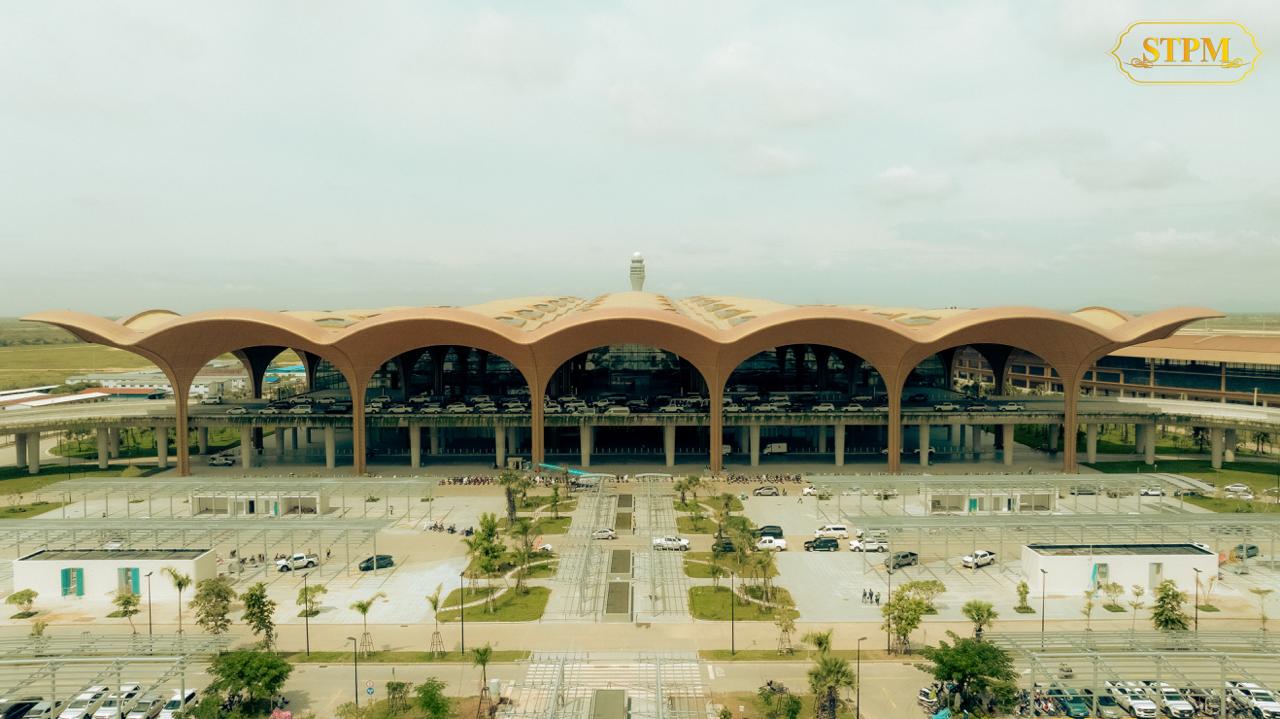
The initial phase involved an investment of USD 2.3 billion, covering a new passenger terminal, airfields, cargo warehouses, access roads, and supporting infrastructure. The project will be developed in three phases, with a capacity of up to 13 million passengers annually in the first phase, expanding to 30 million in the second, and 50 million in the third, projected for 2050.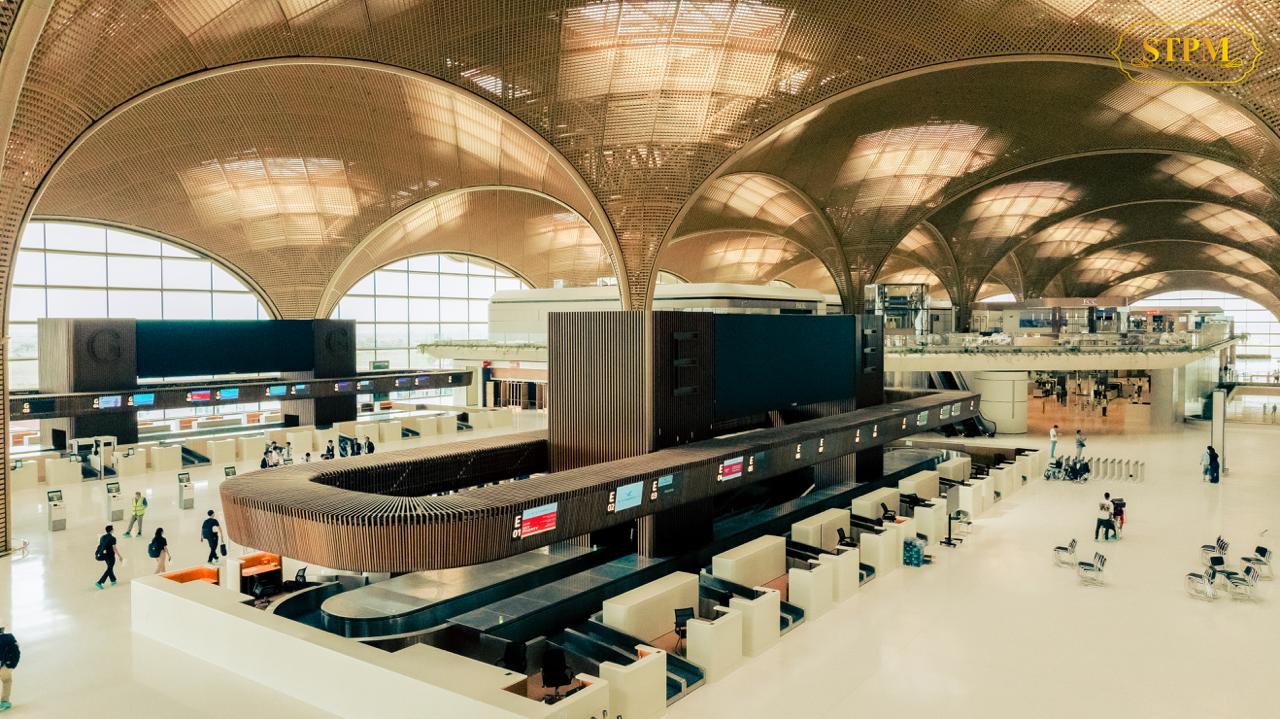
The airport’s development aligns with Cambodia’s broader vision to transform Phnom Penh into a global transport hub. Notable future plans include constructing a second cargo terminal, a 10-kilometer waterway linking TIA to Cambodia’s seaport in Kep, and a satellite city encompassing housing, commercial zones, industrial parks, and a special economic zone to foster production and export activities.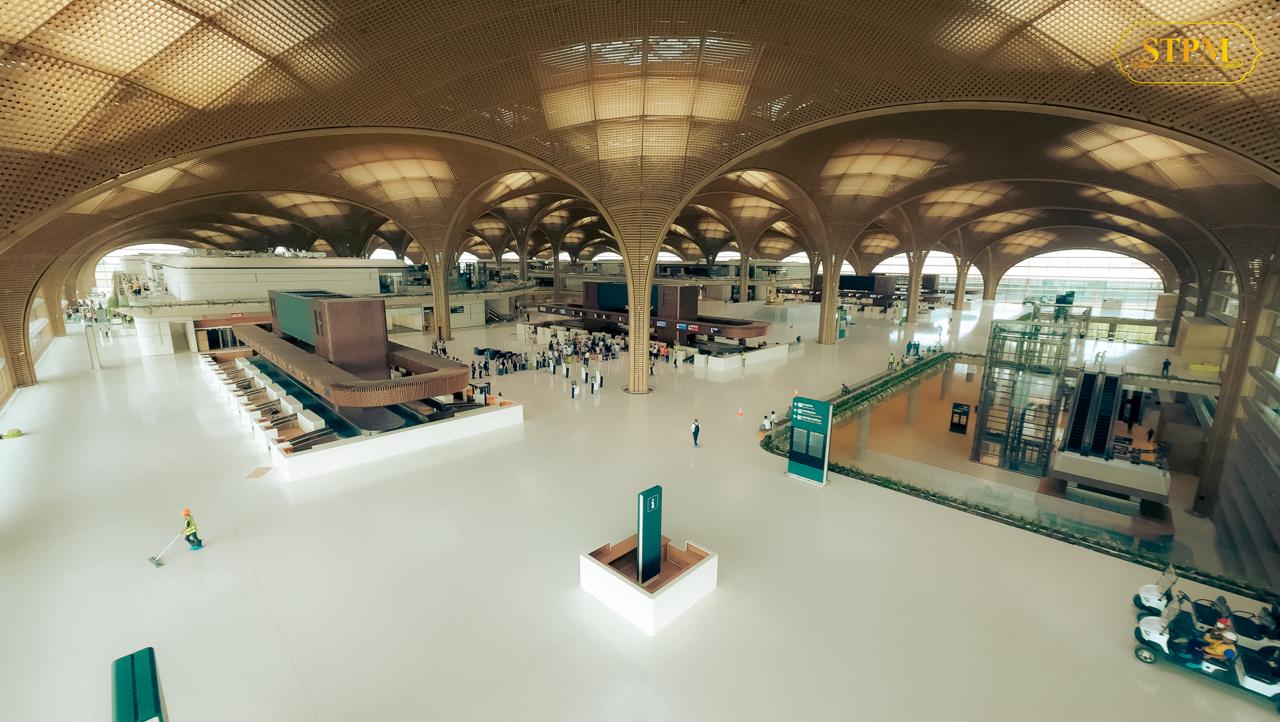
As of October 2025, TIA has attracted 29 airline operators, including recent entries like Etihad Airways and Turkish Airlines. Etihad launched direct flights from Abu Dhabi on October 3, while Turkish Airlines will commence service in December. Additionally, Cebu Pacific and Singapore Airlines are among the carriers expanding their presence.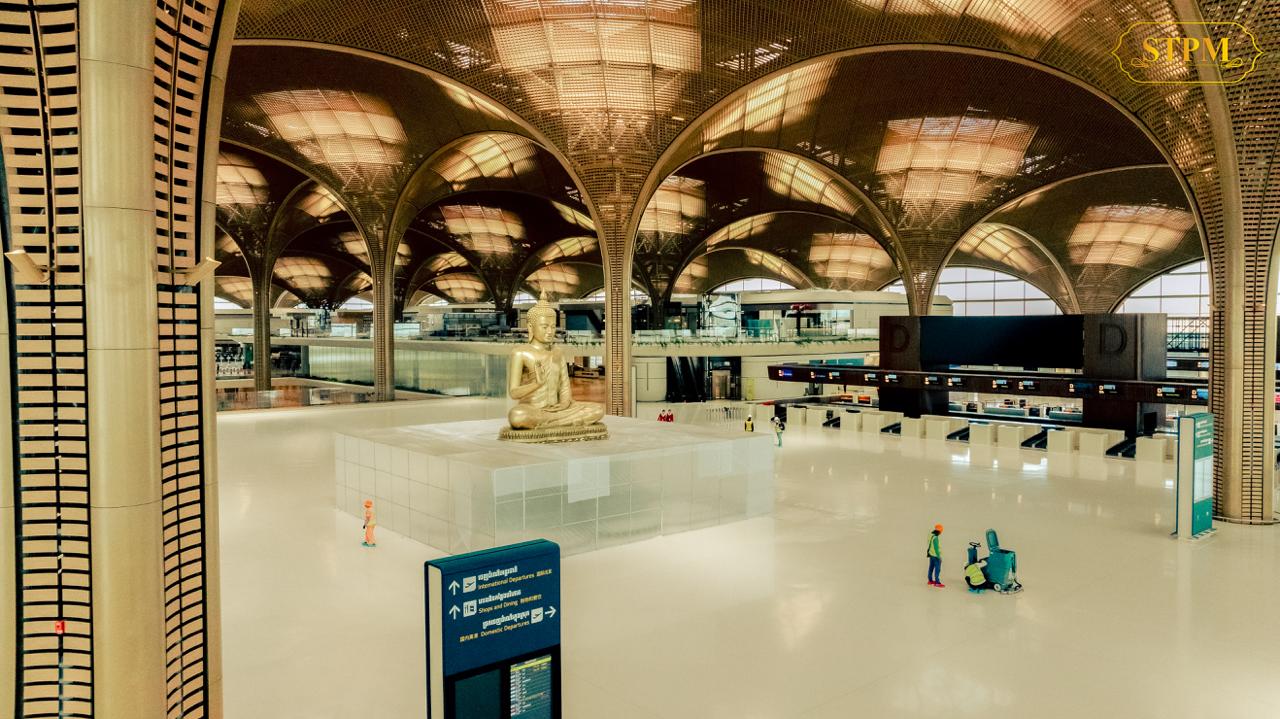
Aiming at passenger growth, authorities expect TIA to handle over 10 million passengers annually by 2030, up from the current target of 5.3 million for 2025. A new 40,000-square-meter cargo terminal, with an investment of USD 50 million, is under construction to bolster Cambodia’s logistics capacity and position Phnom Penh as a transshipment hub.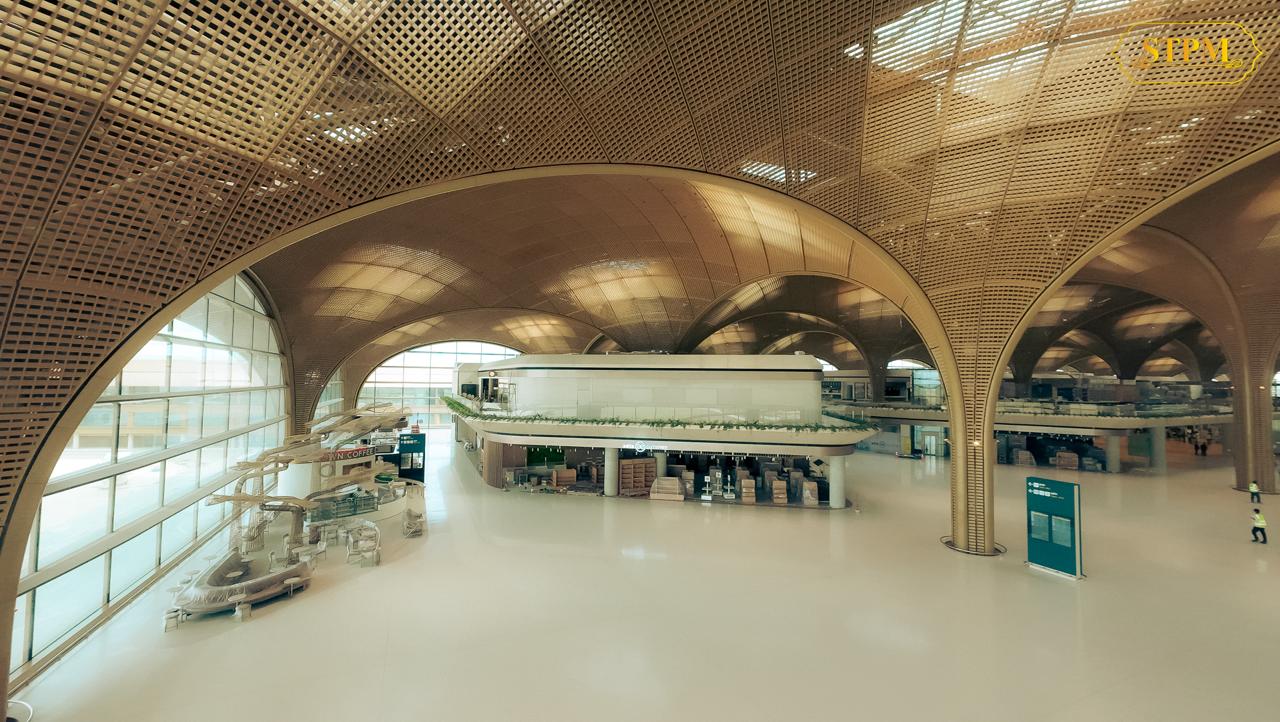
Prime Minister Hun Manet emphasized the airport’s role in boosting Cambodia’s connectivity and economic resilience. “Because of its passenger capacity, this airport can handle both regional and intercontinental routes,” he said. “It opens the door for Cambodia to welcome more visitors and attract greater investment.”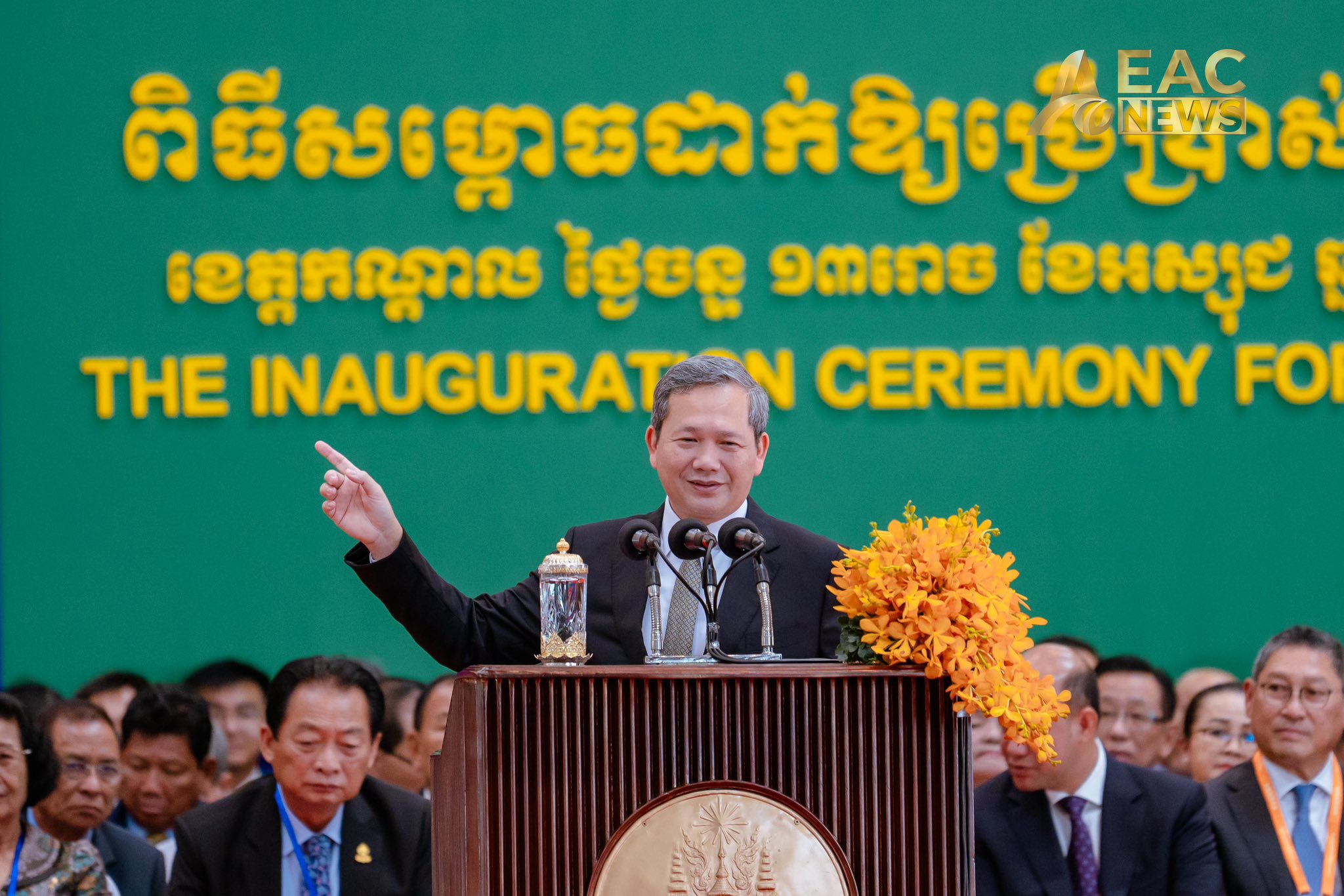
He also reaffirmed the government’s commitment to aviation sector growth, citing the signing of air service agreements with countries including Australia, and expressed confidence that the new facility would attract more international airlines.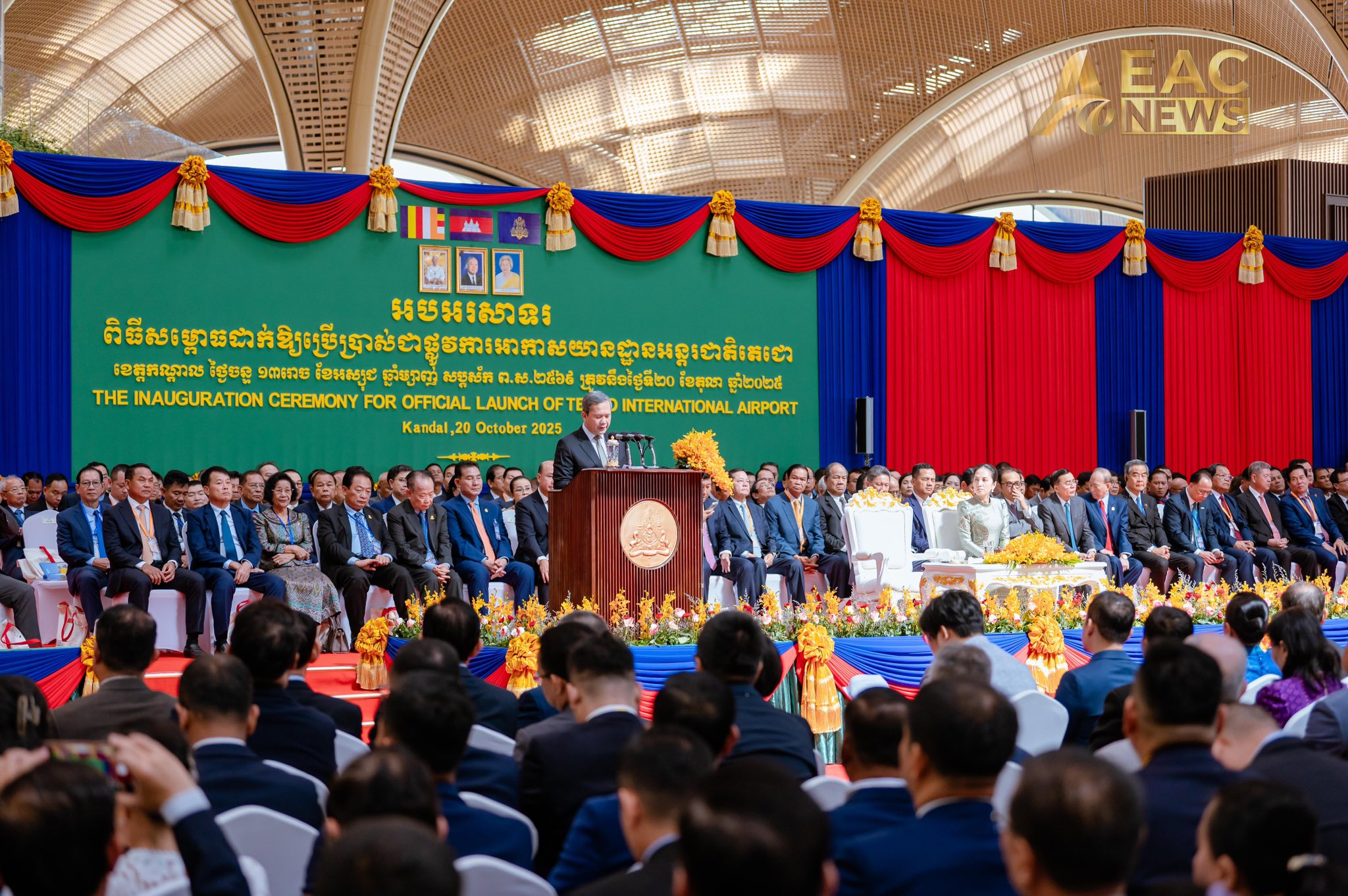
Chairman of CAIC, Pung Kheav Se, called TIA “more than infrastructure; it is a gateway and a symbol of Cambodia’s aspirations for future development.”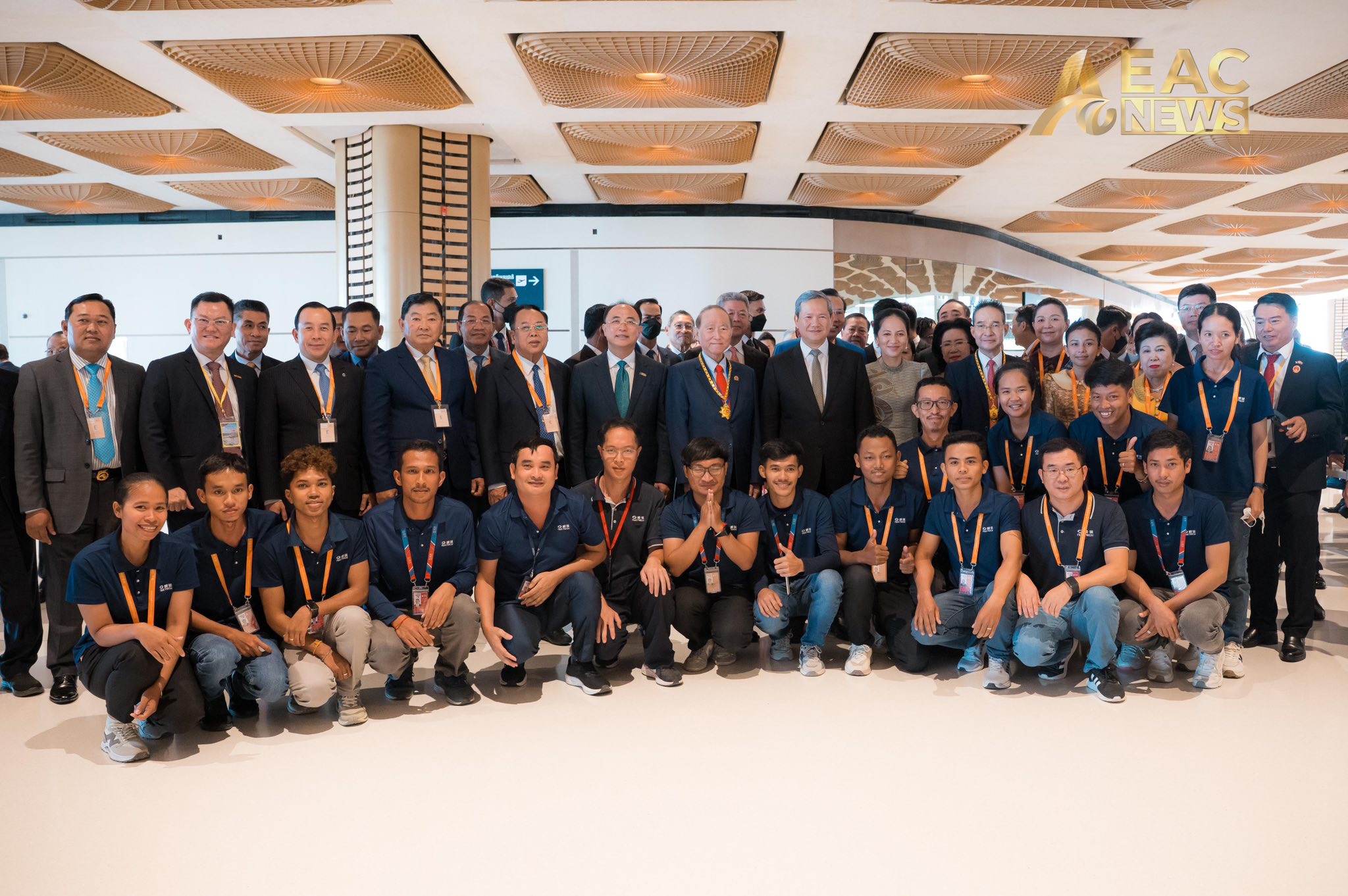
Since its soft opening on September 9, the airport has managed an average of 150,000 passengers daily and operates flights by 29 airlines. It is projected to serve up to 13 million passengers per year after full implementation of Phase 1. 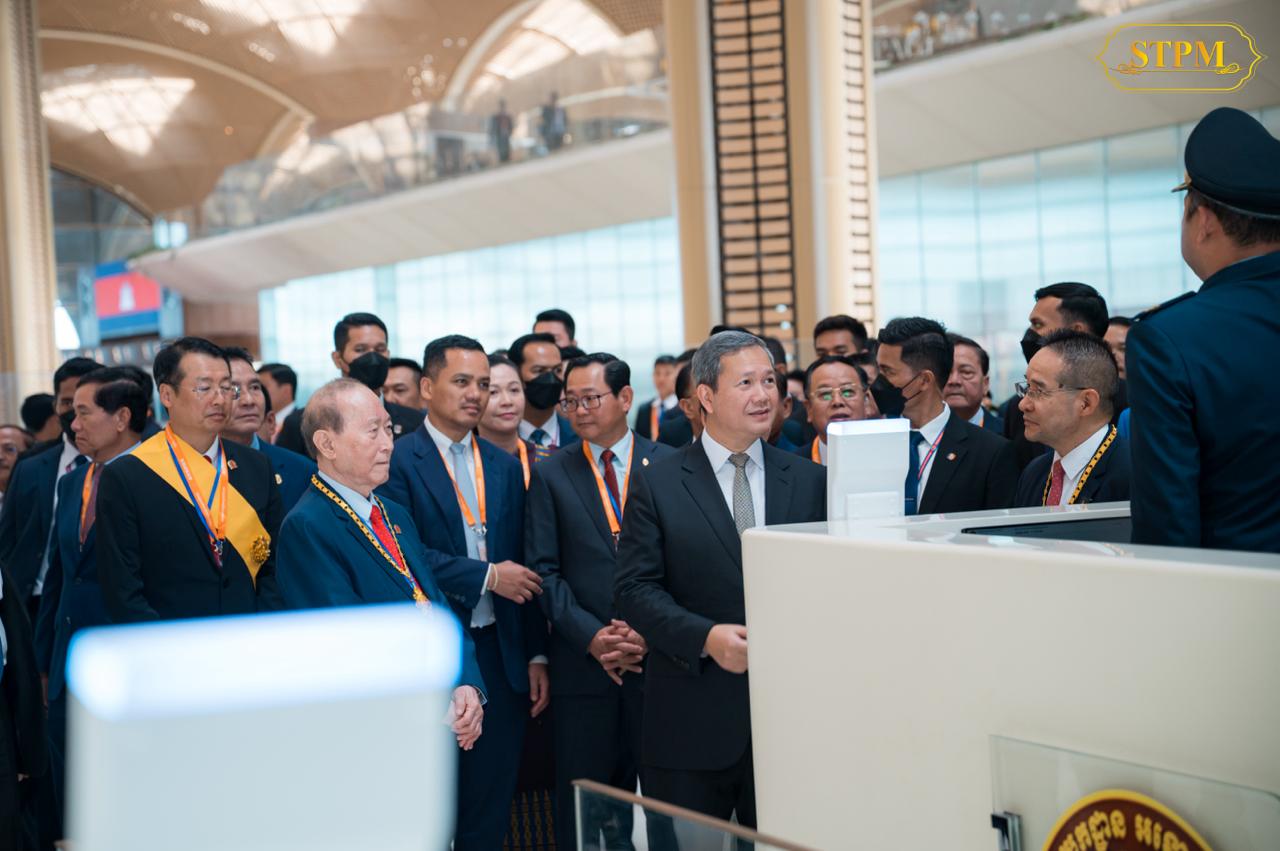
The inauguration of Techo International Airport signals Cambodia’s ambition to become a regional hub for tourism, trade, and investment, positioning the country for increased integration into the global economy.