






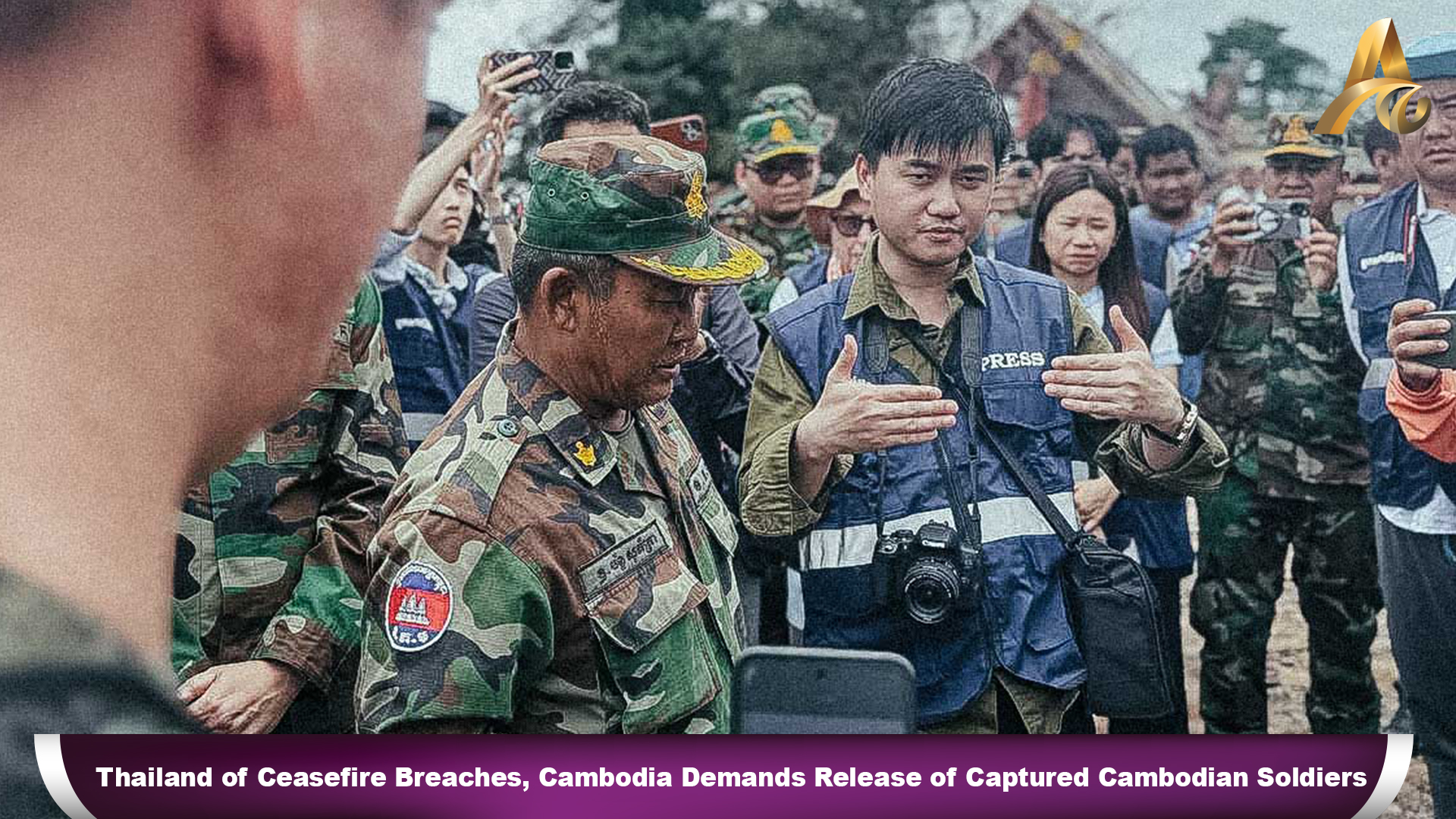








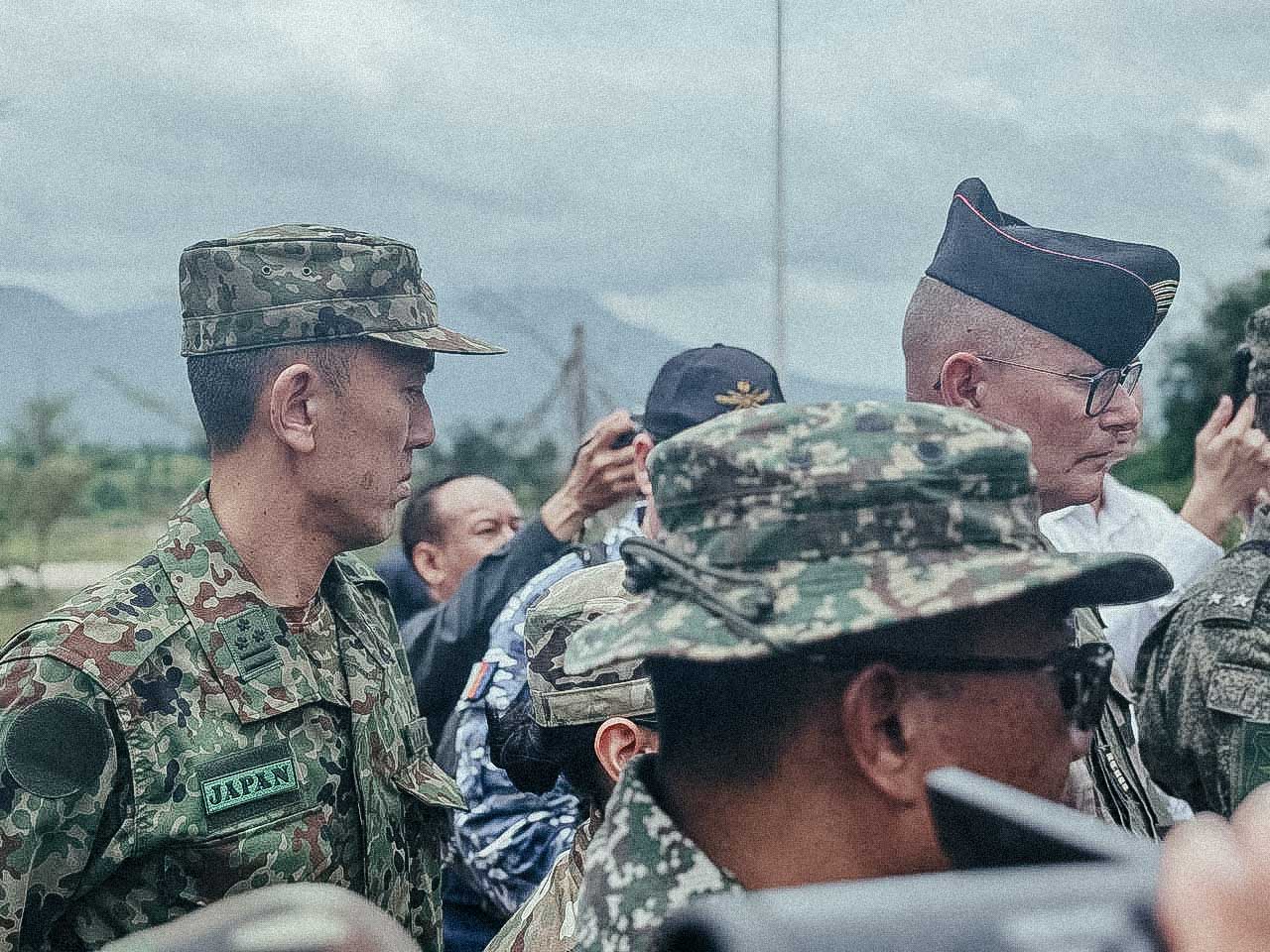
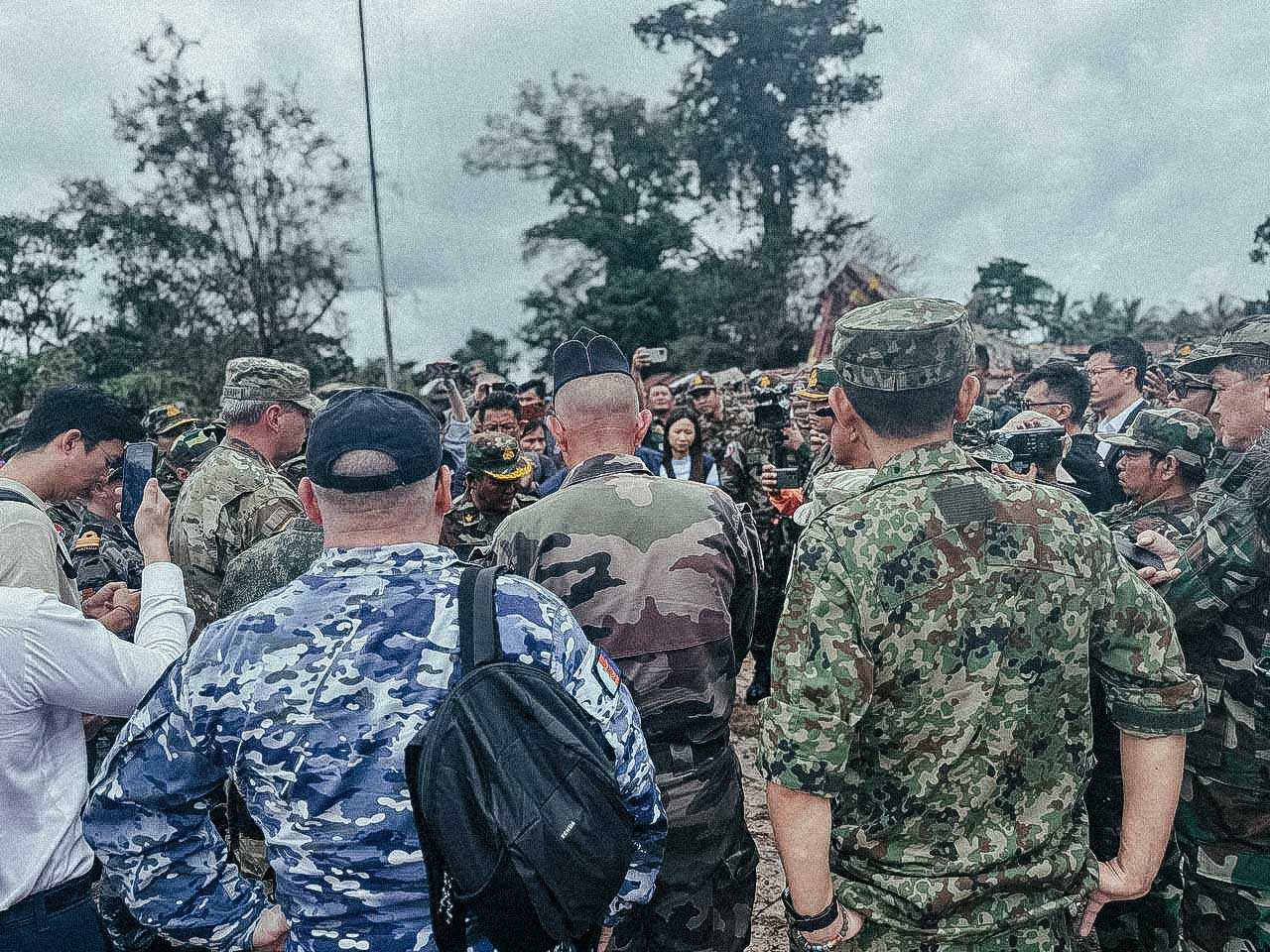
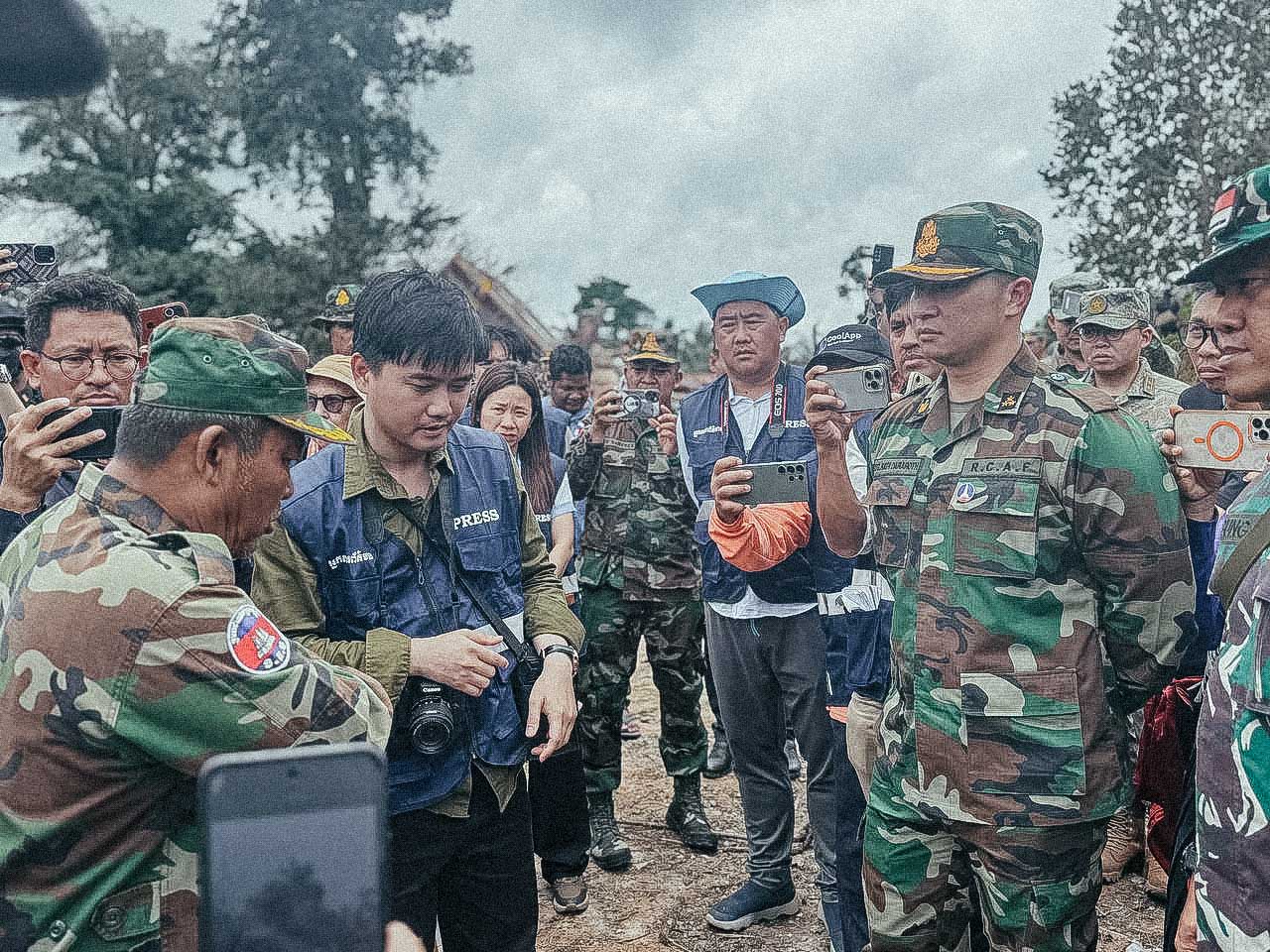
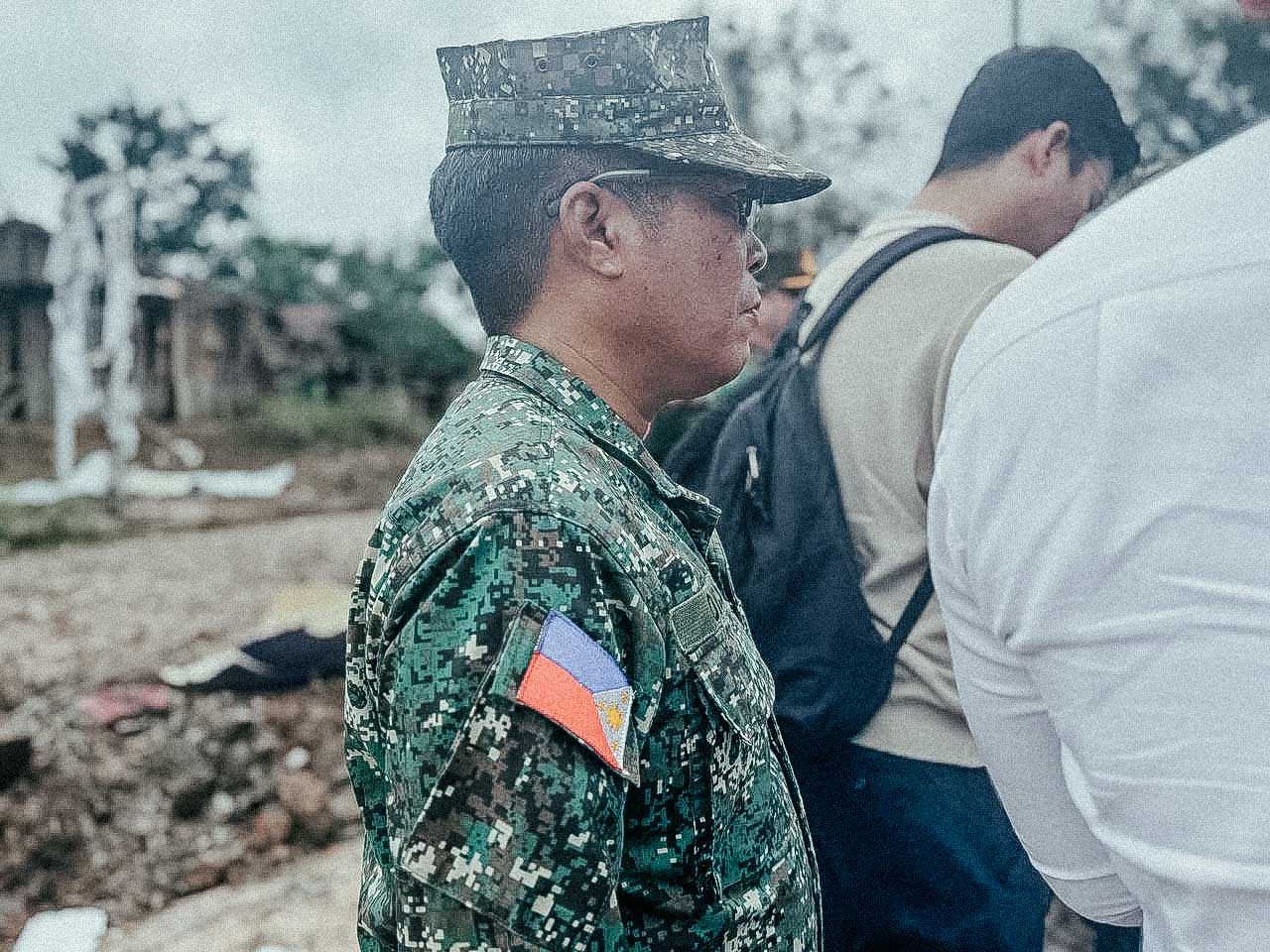
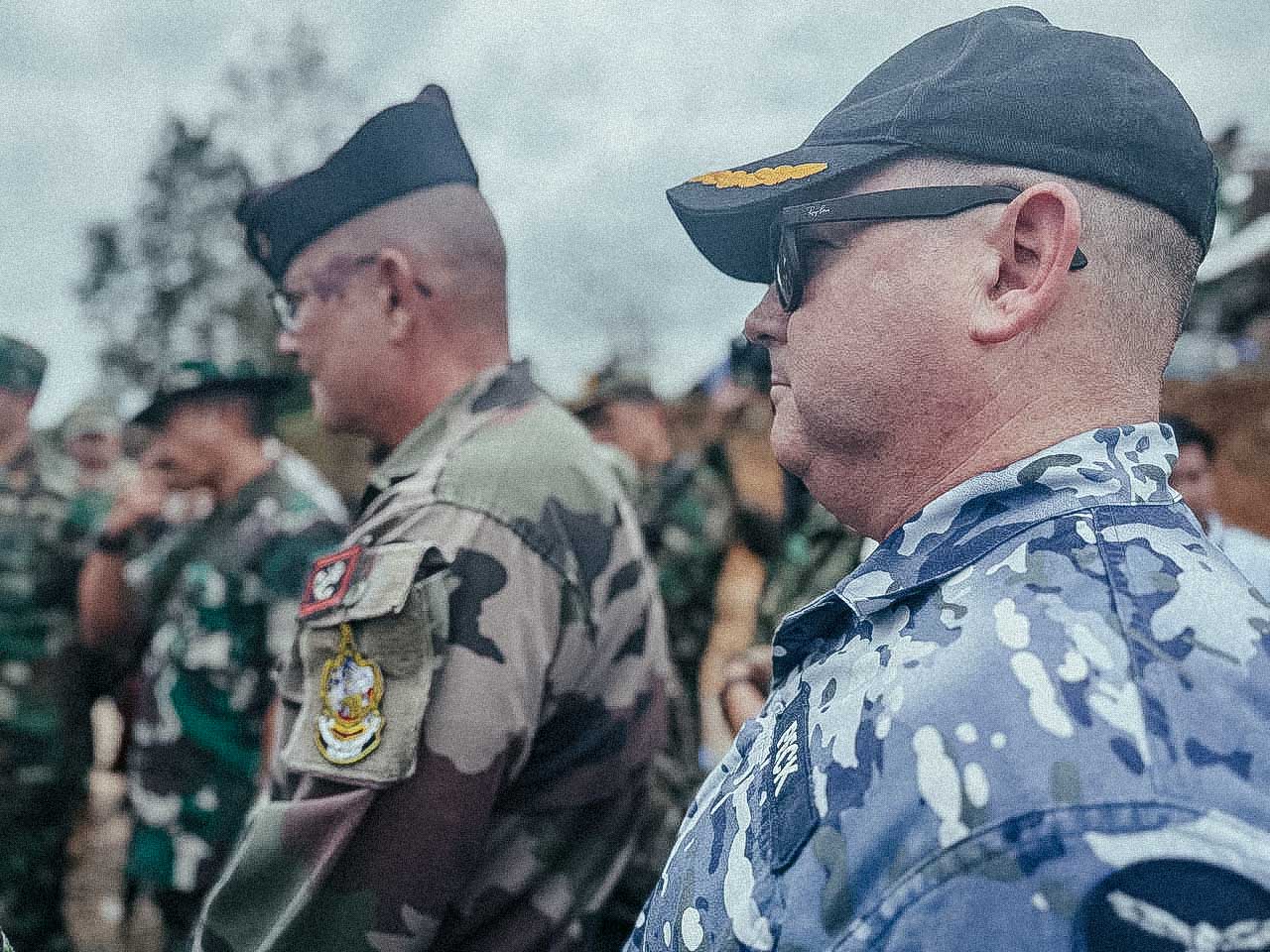
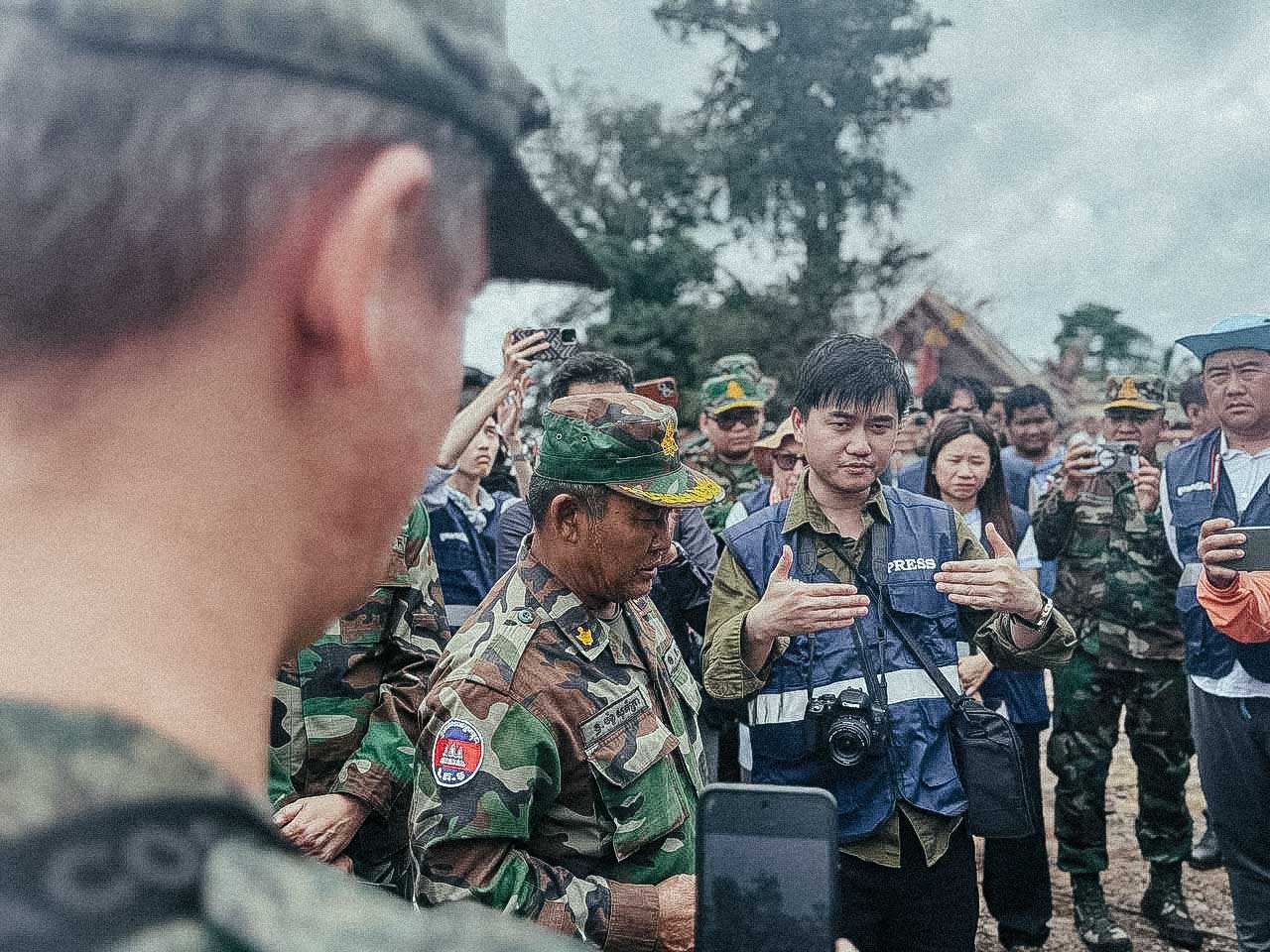
Preah Vihear Province, July 30, 2025 – The Cambodian Ministry of National Defense has reports Thai forces of violating the current ceasefire agreement and has demanded the immediate release of captured Cambodian soldiers. The report were made during an inspection tour of the An Ses Pass battlefield in Preah Vihear province, conducted by military attachés and international observers from 13 countries.
Phat Vibolsopheak, director-general of the defense ministry’s Department of International Relations, informed the visiting delegation about alleged Thai incursions after the ceasefire took effect. He presented photographic evidence, taken by Cambodian forces, showing seven Thai soldiers on the Cambodian side of the ceasefire demarcation line.
Vibolsopheak further stated that 20 Cambodian soldiers were captured by Thai forces at approximately 5 a.m. on July 29. One soldier managed to escape, while the remaining 19 were allegedly taken to Thai territory. "What we want at the moment, regardless of what else is going on, is the release of the soldiers who were captured after the ceasefire,” Vibolsopheak emphasized.
Major General Chanth Sopheaktra, commander of the Preah Vihear Operational Area, corroborated Vibolsopheak's account, describing the capture as a clear violation of the ceasefire agreement. “They shook hands, smiled, and greeted each other in a friendly manner, then took photos together to show that both sides respected the agreement. However, additional Thai forces emerged from the forest, overpowering ours. Twenty people were captured. One escaped, but we fear that some may have been killed,” Sopheaktra explained.
The visiting military attachés, representing major international powers and ASEAN member states, were present to assess the current situation at An Ses Pass following the ceasefire. The Cambodian government has stressed that the An Ses area remains an integral part of its sovereign territory.
The Cambodian government continues to call for dialogue and adherence to the ceasefire agreement to ensure regional stability.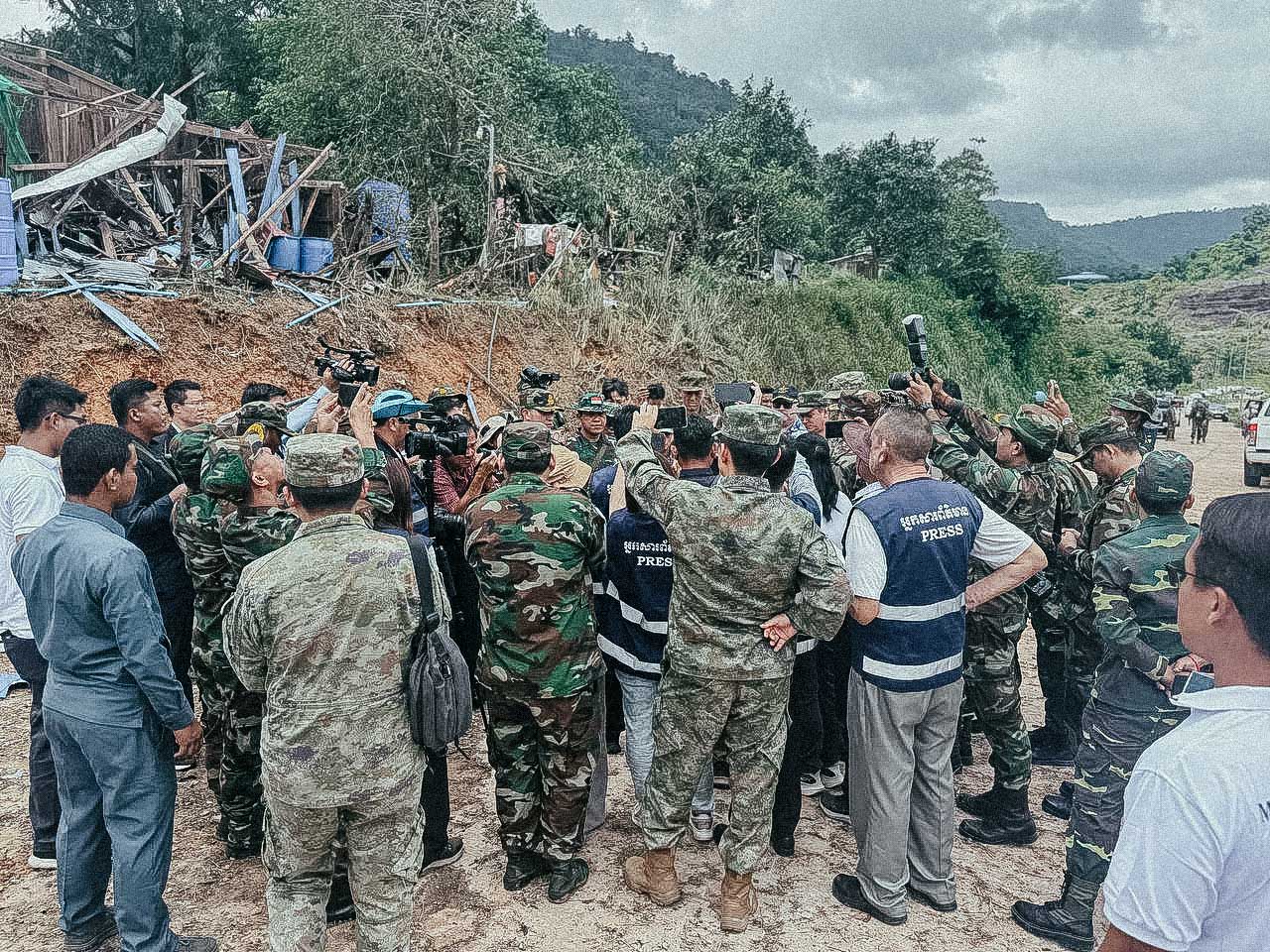
Related News