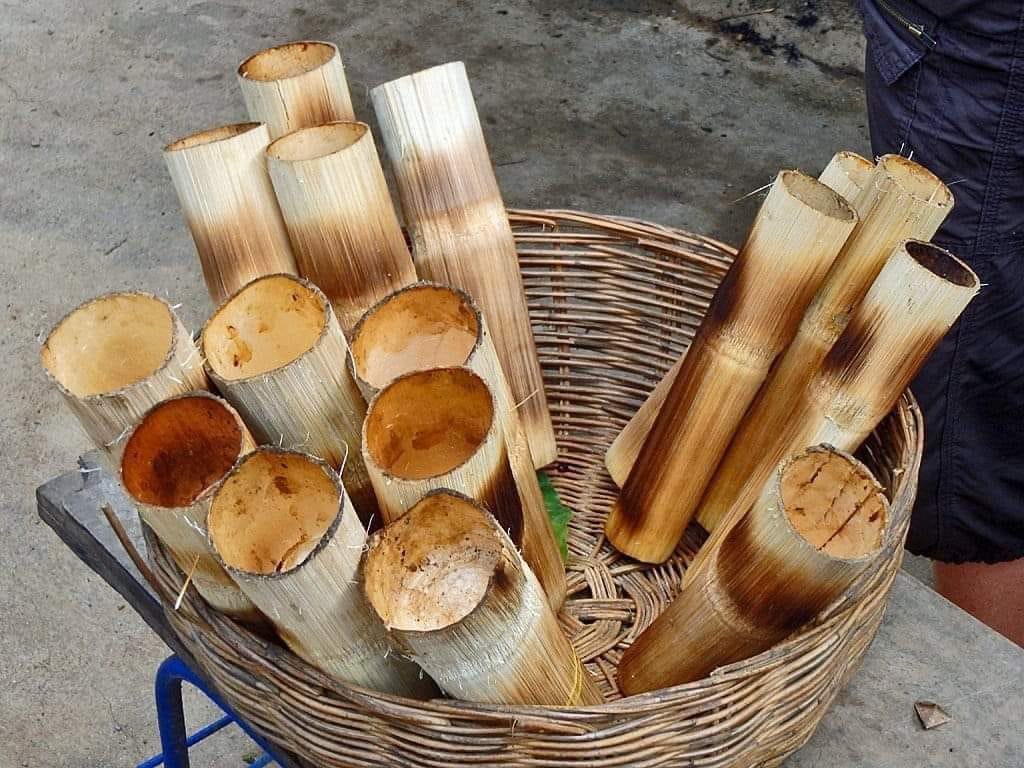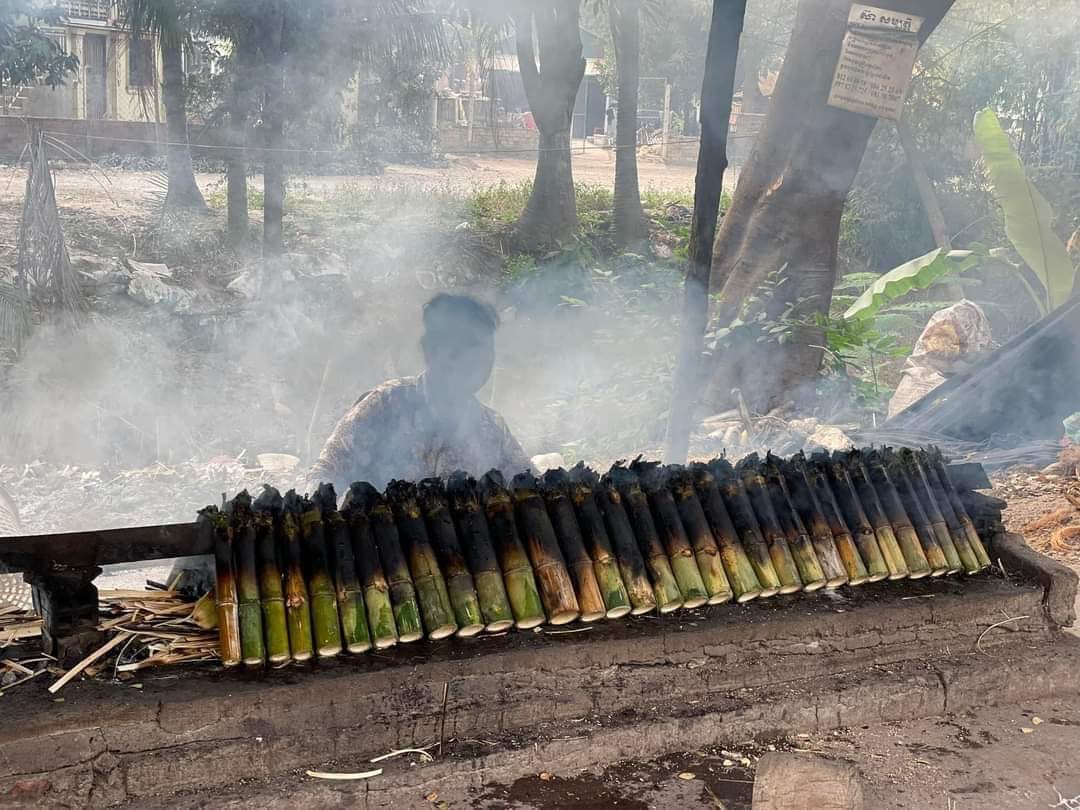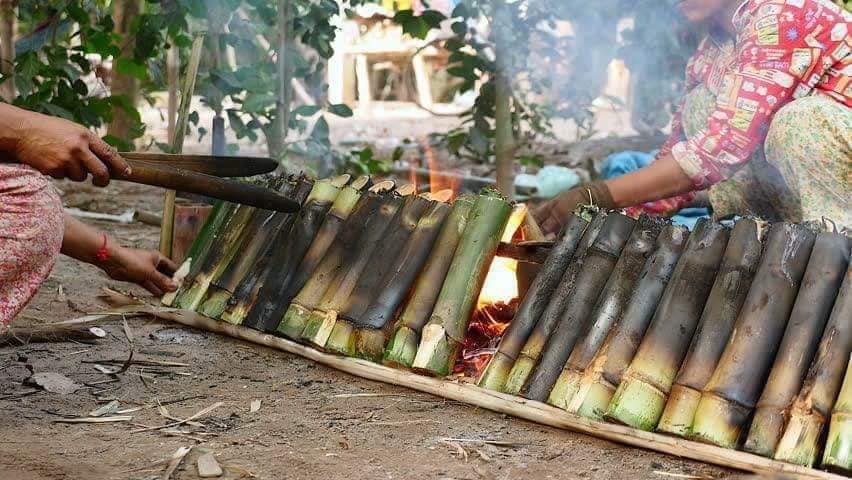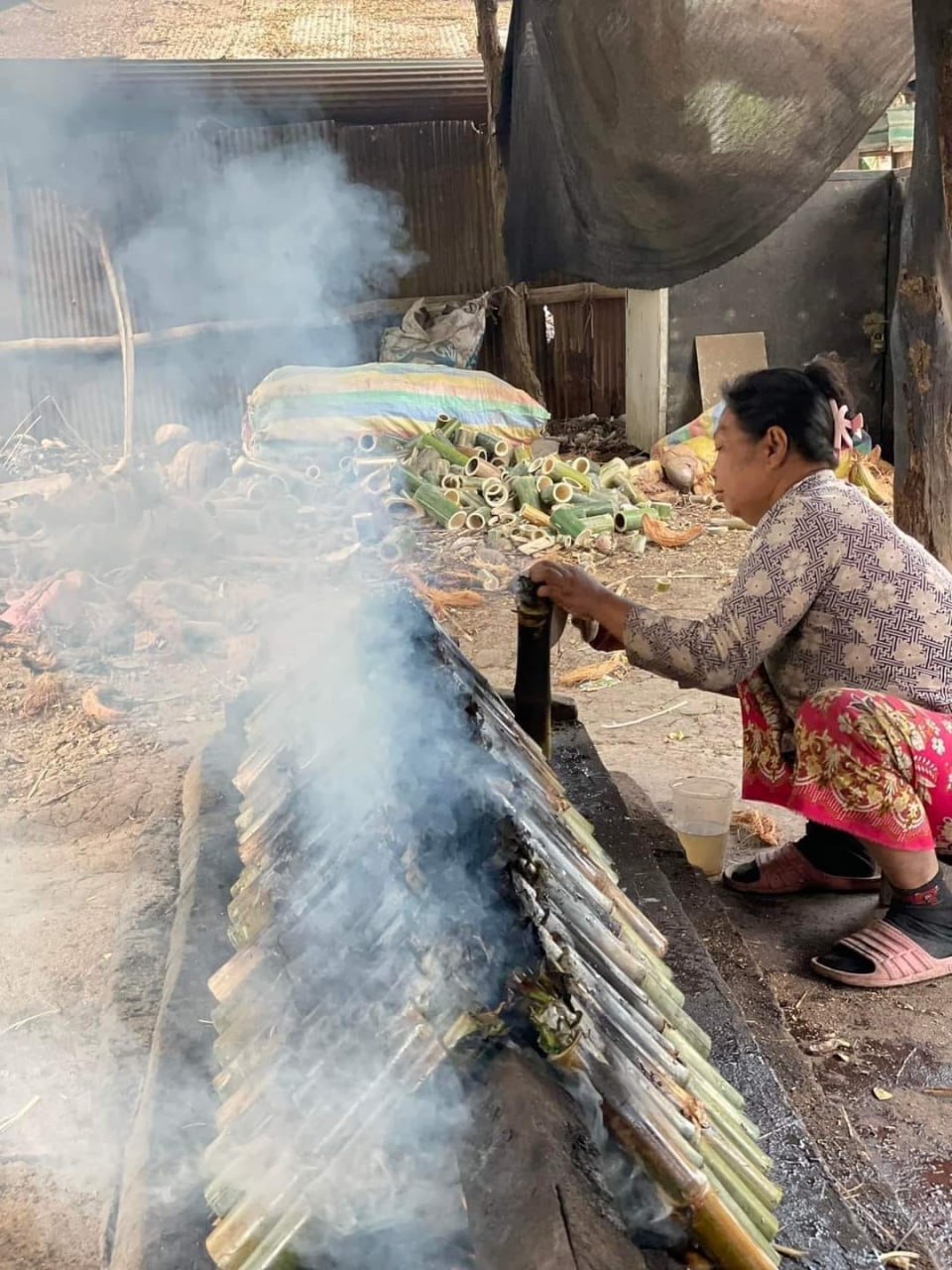







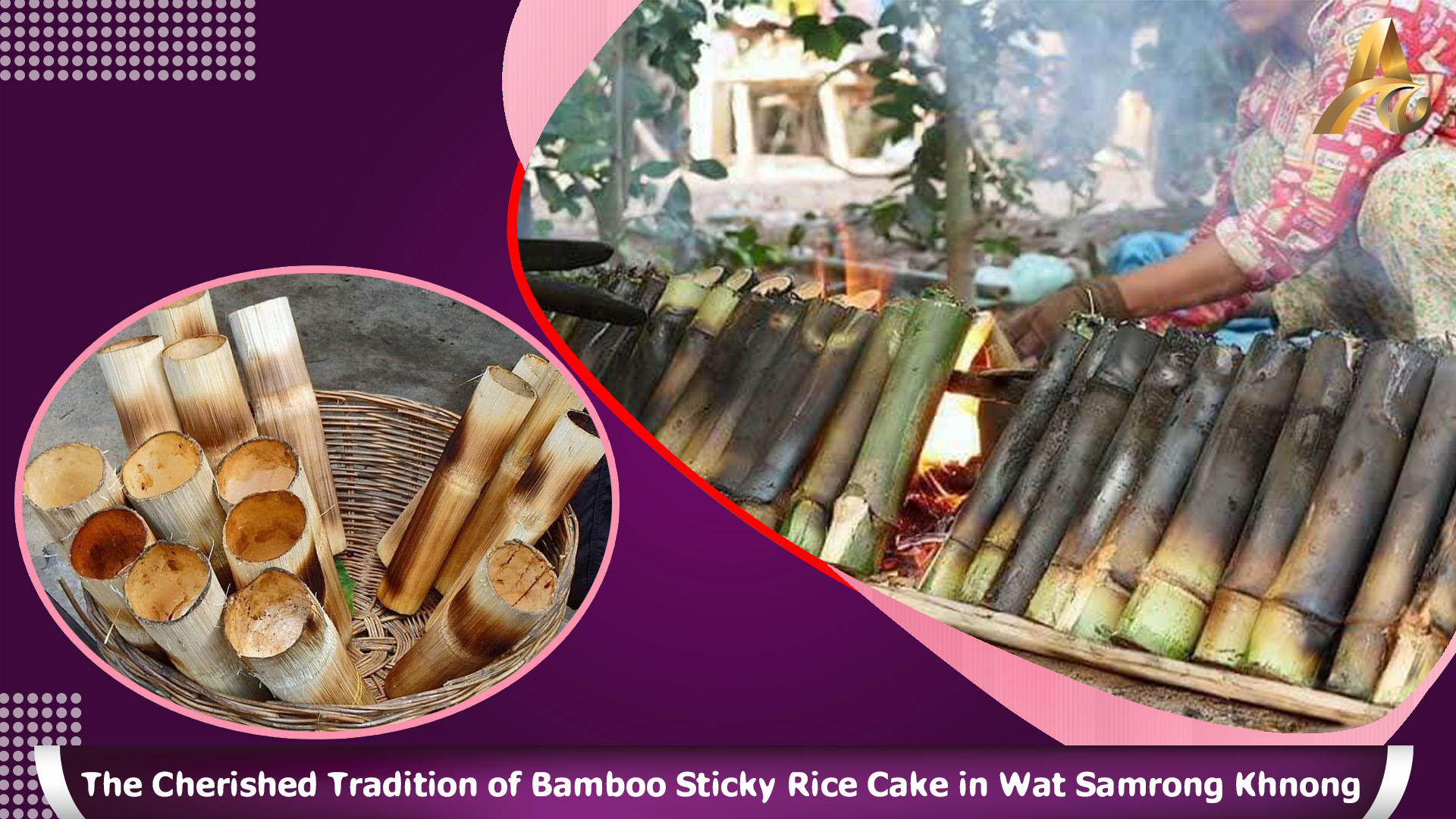








BATTAMBANG: In the Ek Phnom district, particularly in the villages of Samrong Khnong, Norea, and Takom, a unique culinary tradition thrives. Bamboo Sticky Rice (Krolan) is not just considered a traditional cake but has also become a notable tourism product of Battambang province due to its delightful taste, popularity, and the rich history it holds for the villagers.
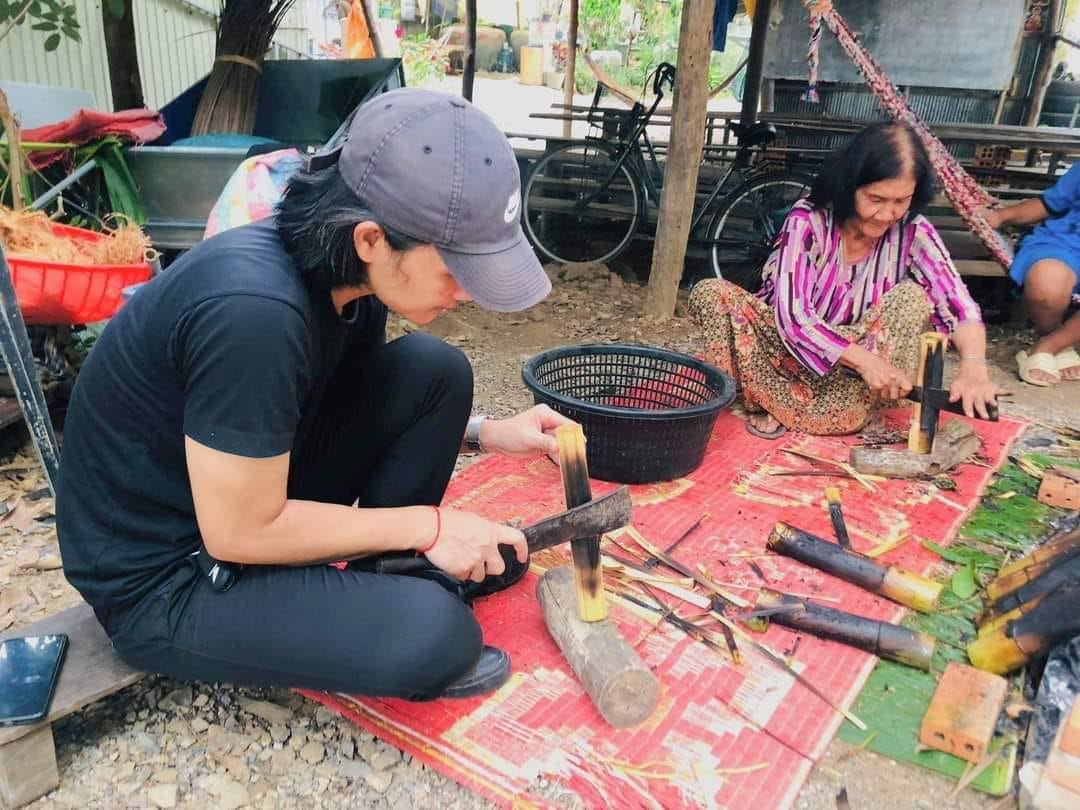
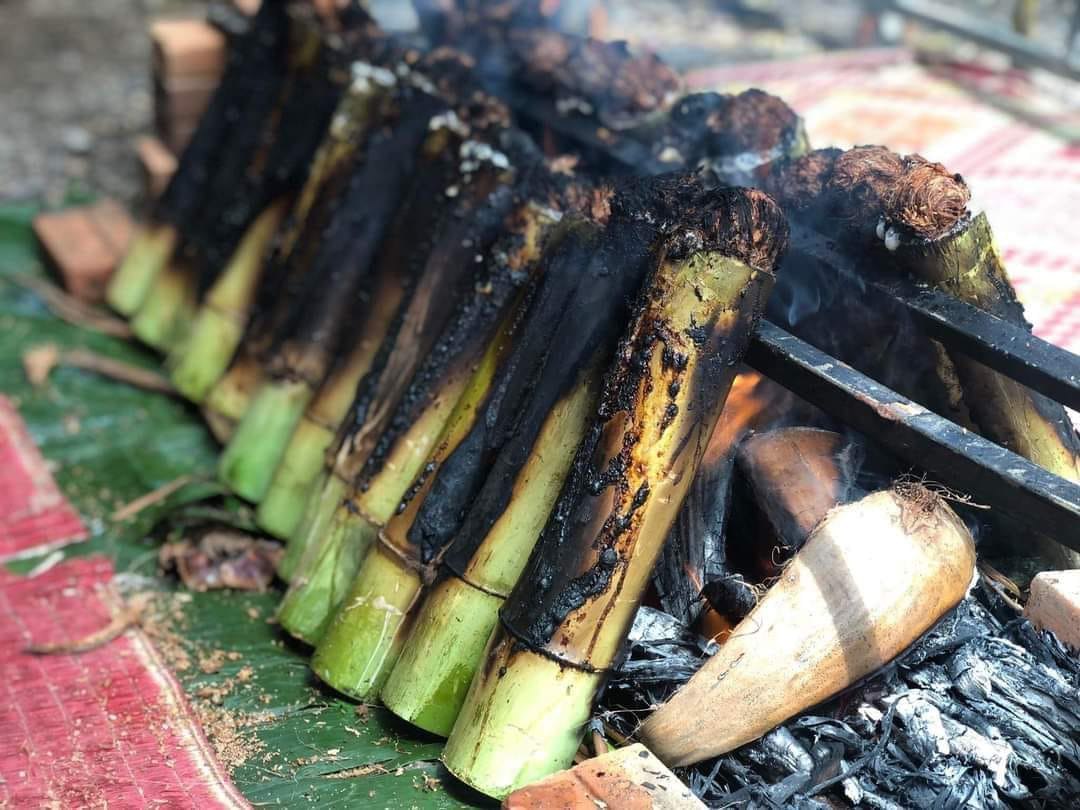
Crafted from Damneab rice mixed with black beans, coconut cream, and other ingredients, the mixture is then carefully stuffed into bamboo tubes and roasted. This delicious treat, varying in price depending on its size, starts from 1,000 Riel. Villagers of Samrong Knong have faithfully preserved the traditional recipe and method of preparing this distinct cake.
National and international tourists making their pilgrimage to Wat Samrong Knong consistently carve out time from their schedules to savor this cake. Its presence has now spread across Battambang province, being sold in markets, parking lots, resorts, and various gathering spots.
The Origin of Kralean Cake
Kralean cake, a traditional Khmer delicacy, is prepared by filling bamboo tubes with sweet rice, sealing them with coconut or banana leaves, and then roasting the bamboo. The term "Kralean" traces its roots back to the Cola ethnic minorities from Burma, who settled in Pailin province. The Cola people, who primarily consumed sweet rice differently from the Cambodian staple of common rice, introduced this method as a practical solution during their forest expeditions for minerals (gems, gold, diamonds) and hunting. The lightweight and portability of bamboo made it an ideal alternative to heavy and fragile clay pots.
Cambodians, who accompanied the Cola on these expeditions, discovered the enhanced flavor of sweet rice cooked in bamboo compared to traditional pots. Upon returning from the forest, they shared this innovative cooking method with their fellow villagers.
Over time, the recipe for Kralean cake has evolved, incorporating ingredients like sweet rice, sugar, black beans, coconut cream, and a hint of salt. Wrapped in banana leaves and roasted in bamboo tubes of various sizes, this cake has become a symbol of culinary innovation and cultural exchange. Today, Kralean cake stands as a testament to the enduring legacy and adaptability of Cambodian cuisine, celebrated and enjoyed by many.