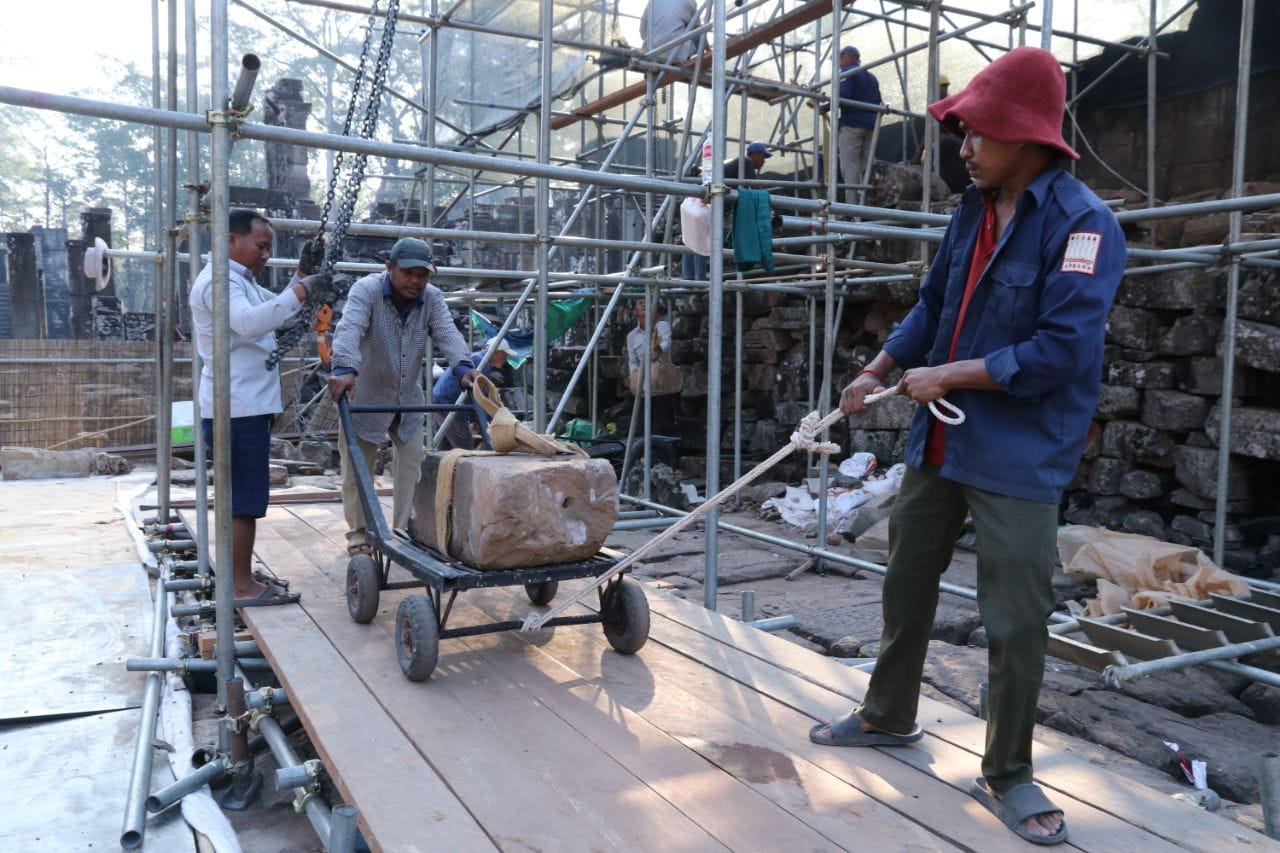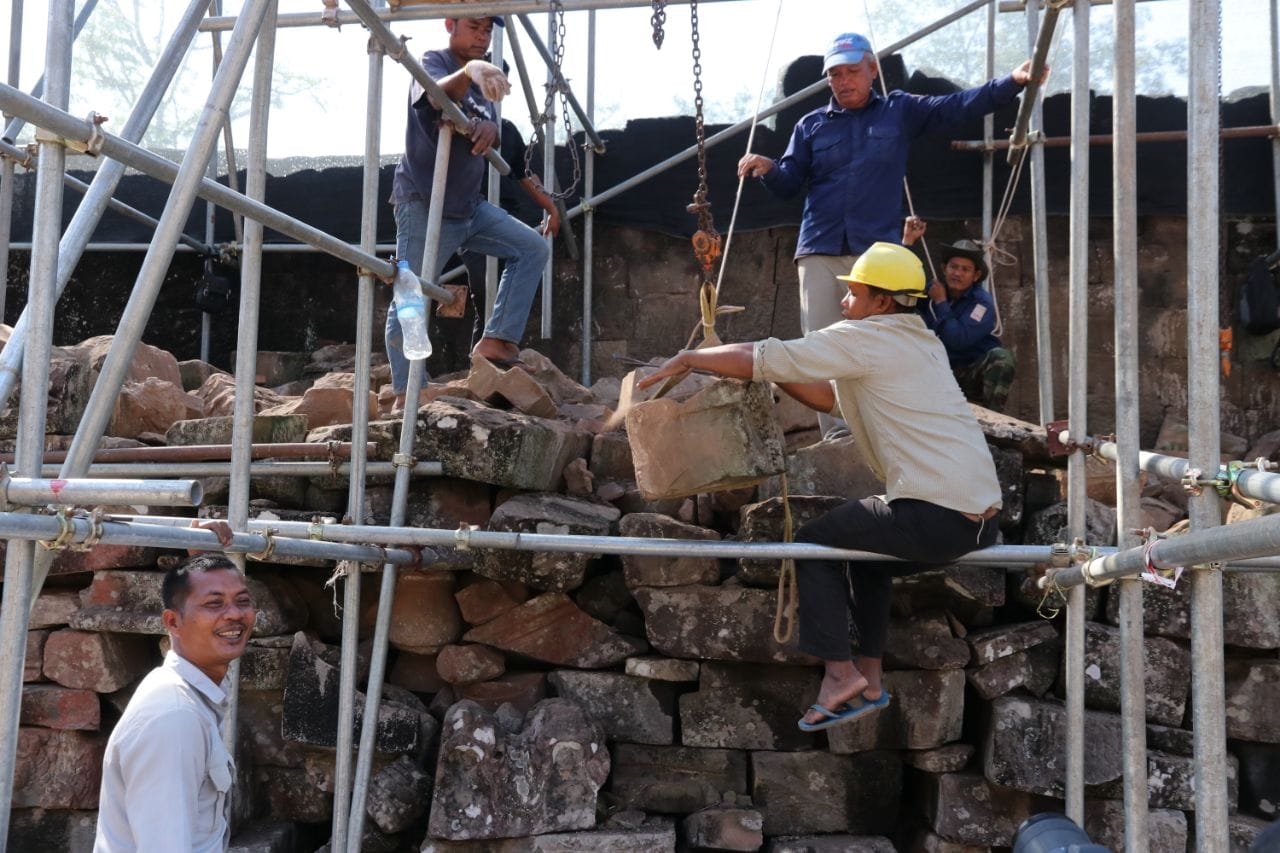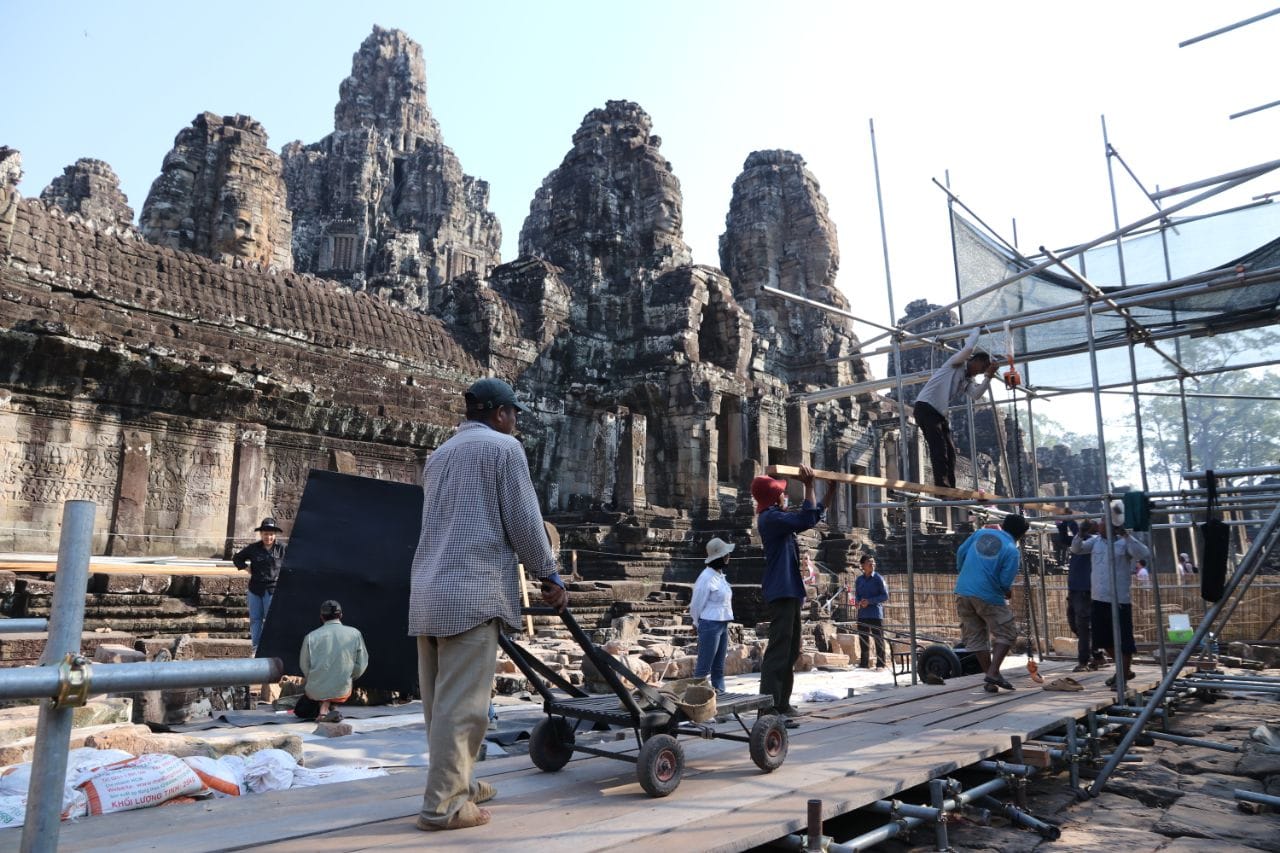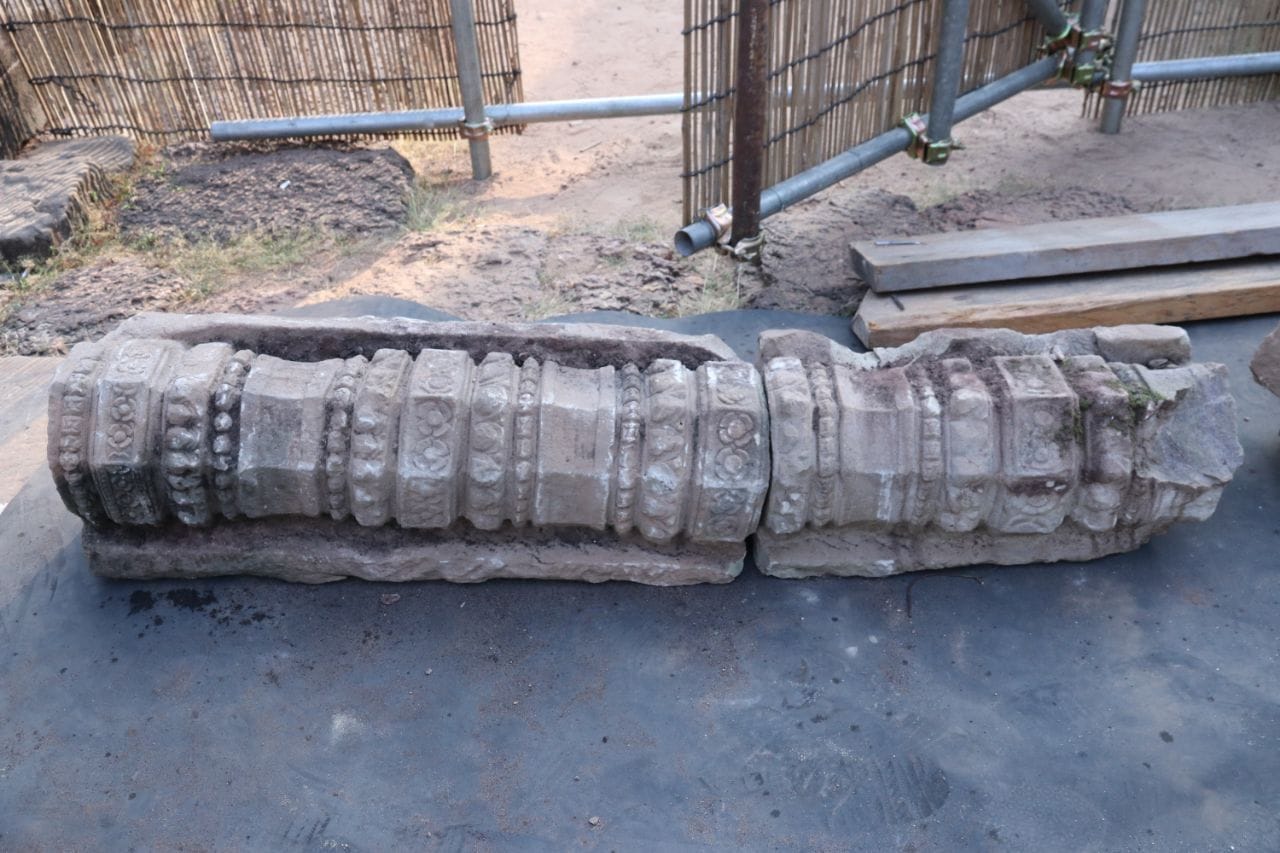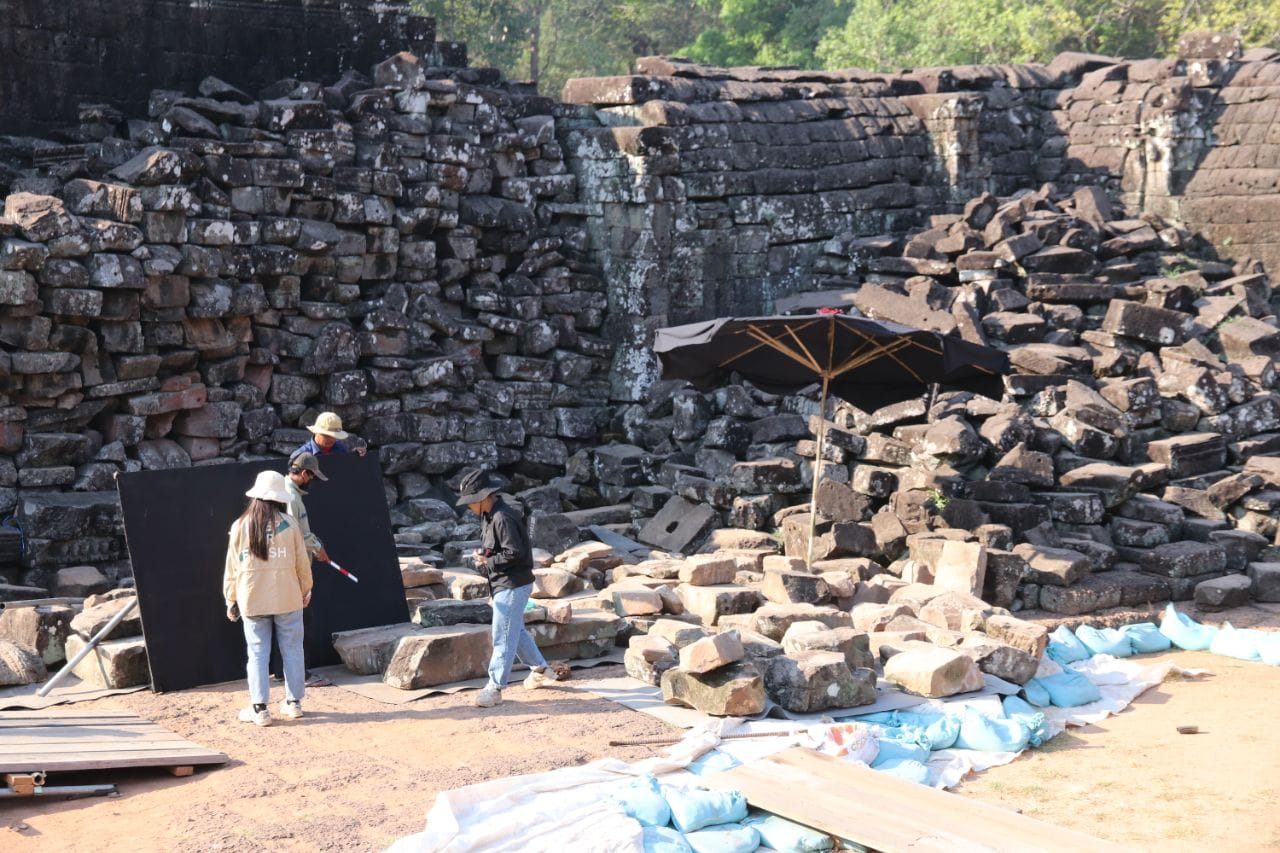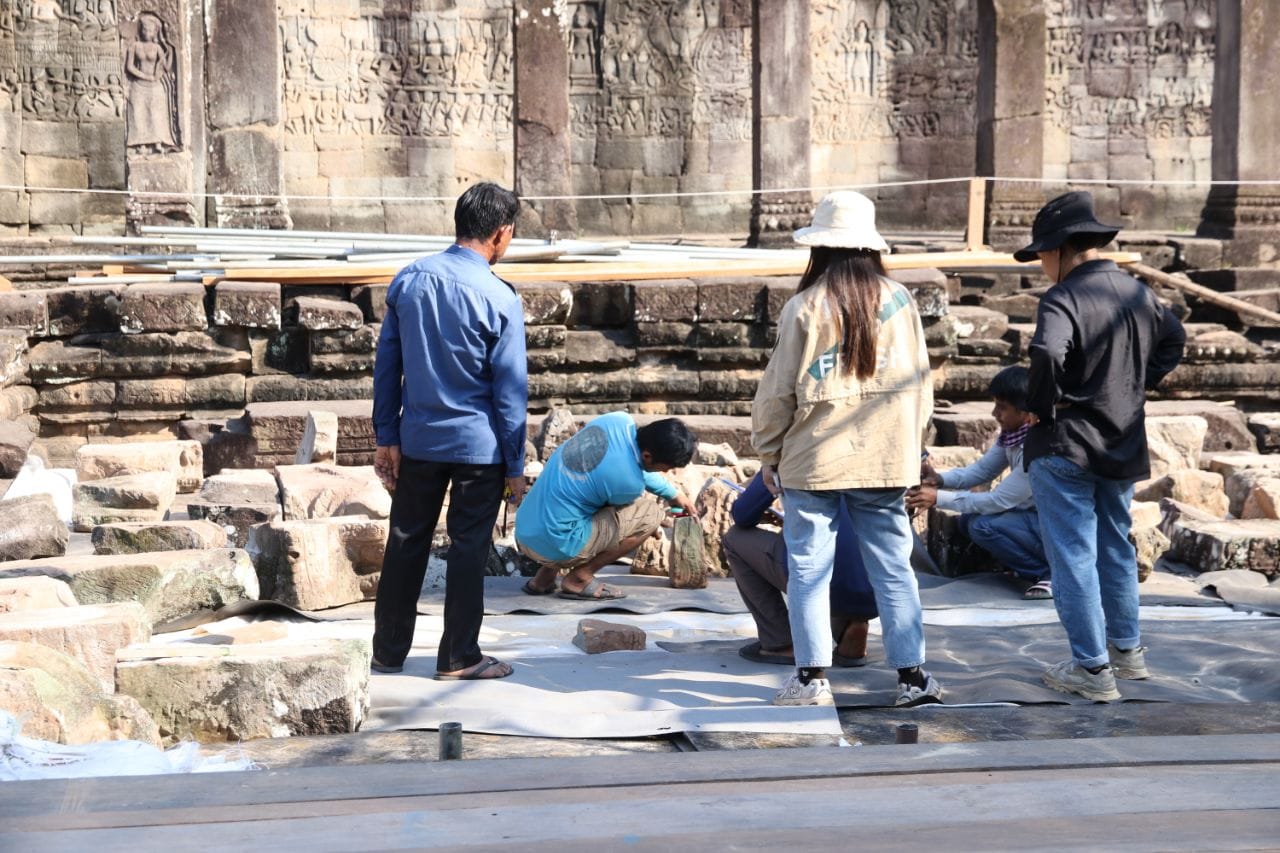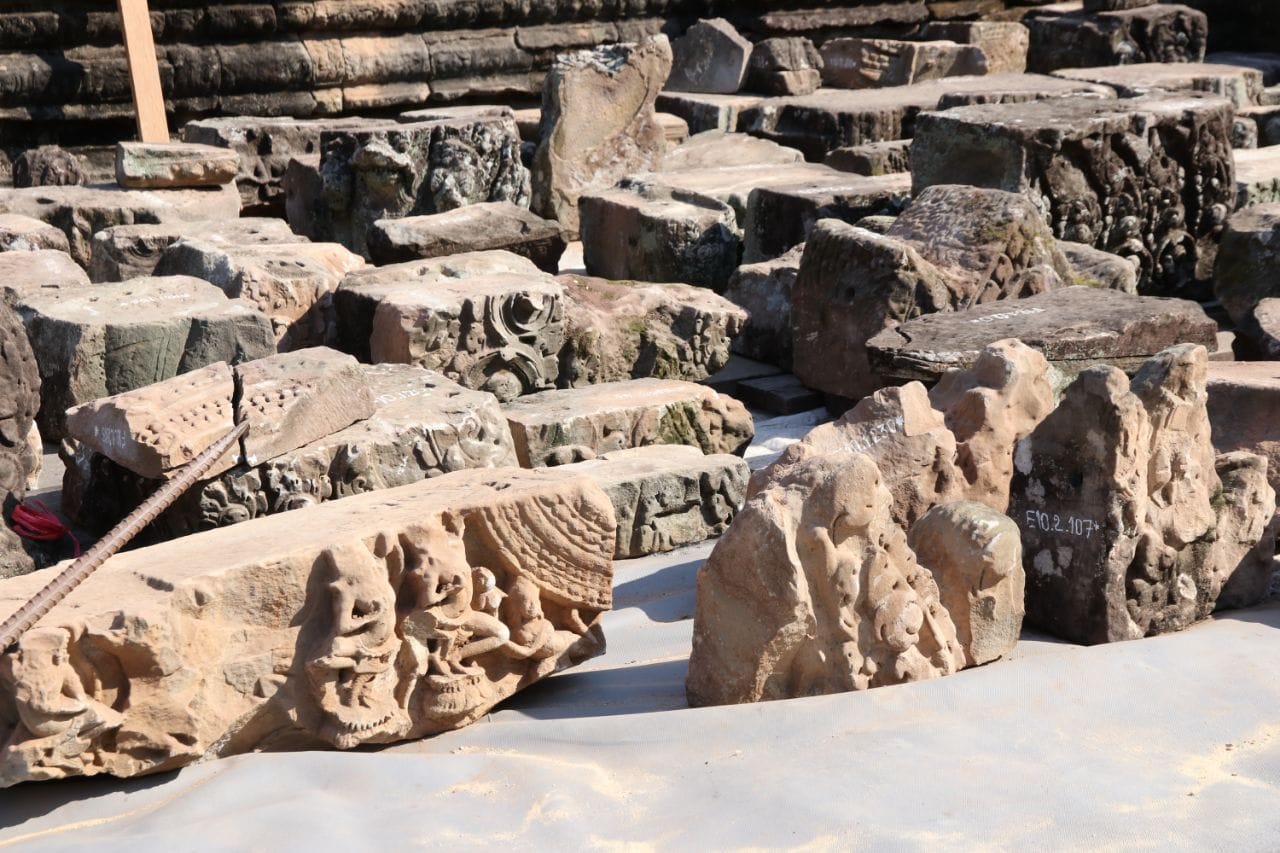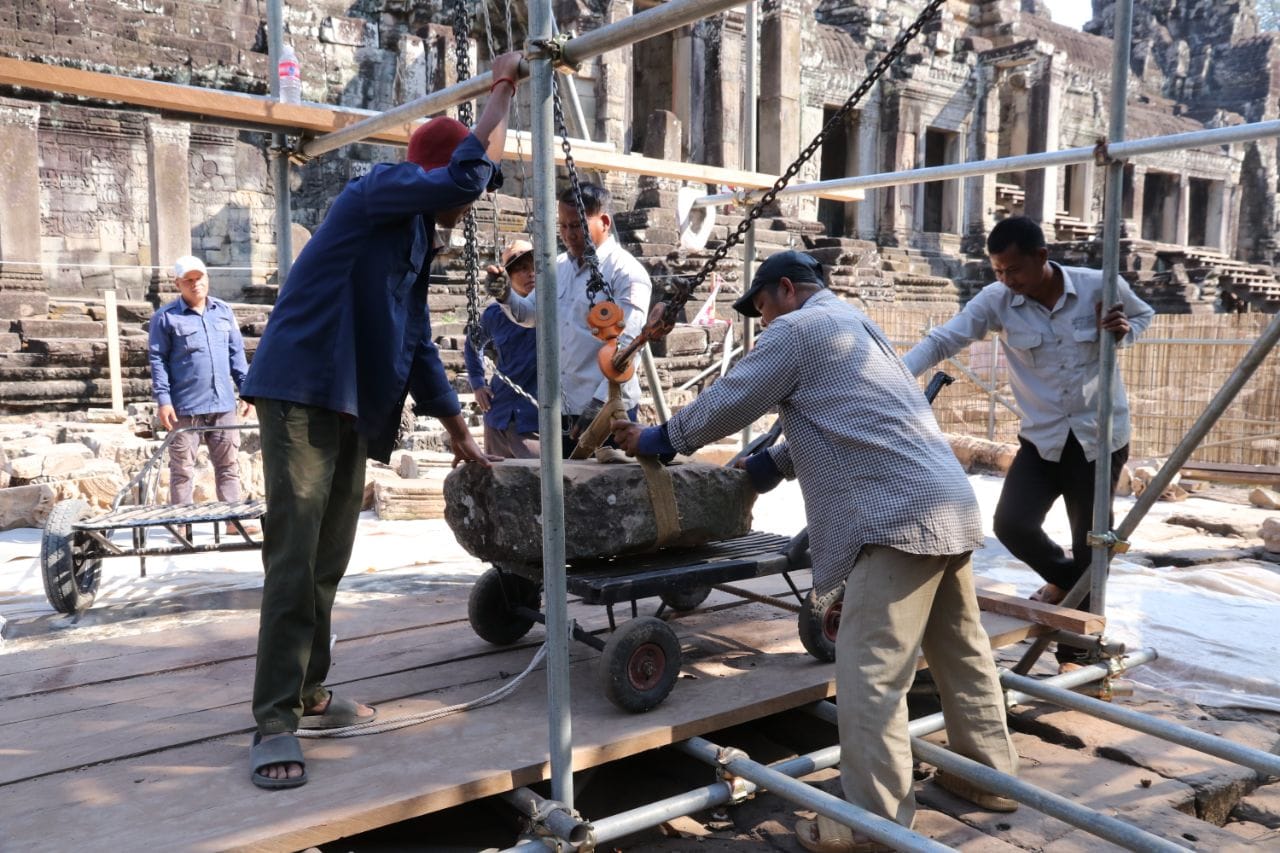





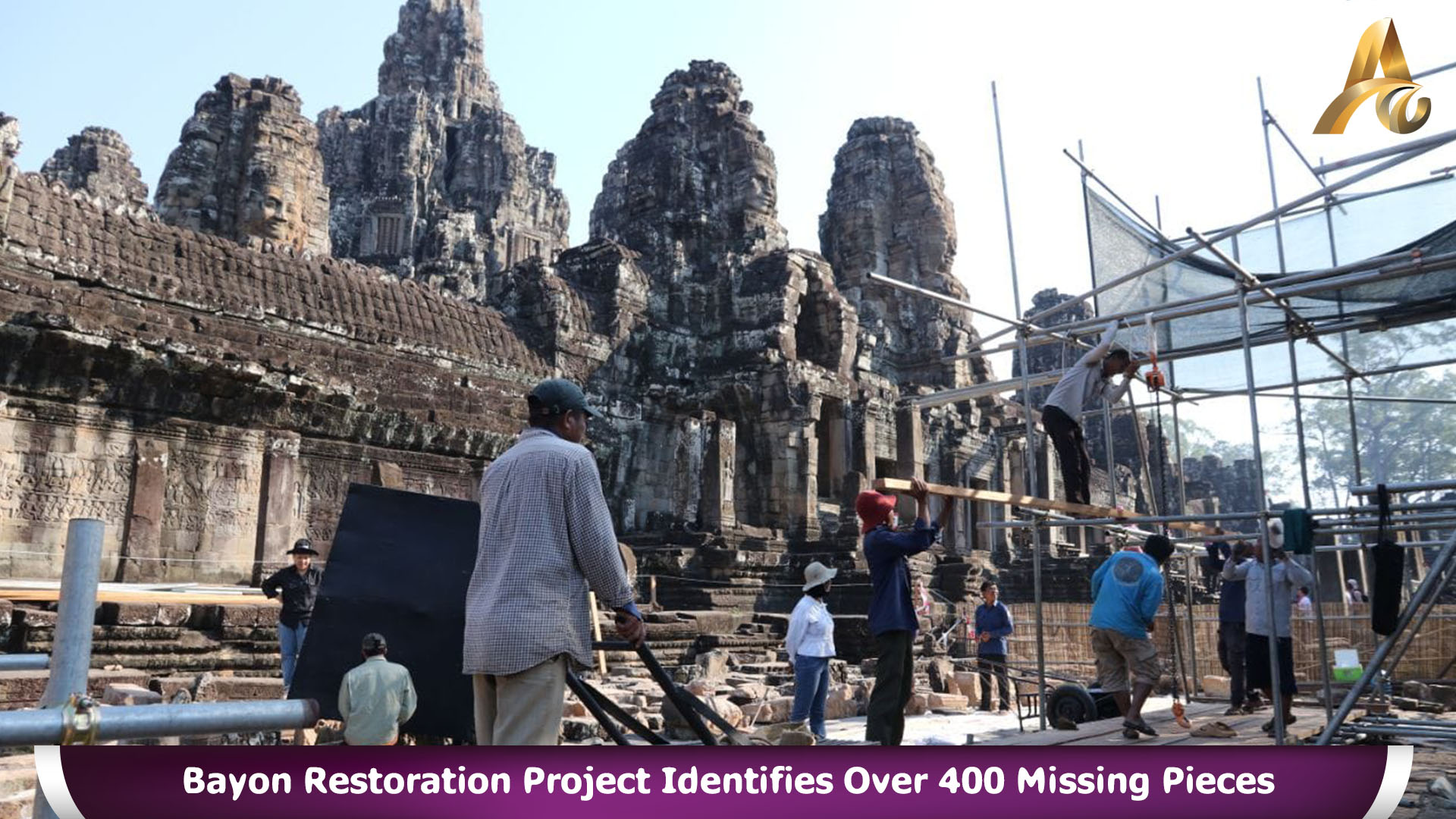








Phnom Penh: An ongoing restoration project at Bayon temple has revealed a surprising discovery: over 400 identifiable stones in the southwest corner, seemingly originating from various parts of the structure. Experts working for the APSARA Authority are currently analyzing these displaced elements, aiming to both understand their original locations and utilize them in the ongoing repairs.
The Bayon temple, renowned for its architectural and cultural significance, has long captivated experts and historians alike. The recent findings include stones that form part of the temple's second gallery and the iconic four-faced Brahma sculptures situated at the temple's southwest corner. Nhok Lo, a leading figure in temple restoration and a stone expert with the APSARA Authority, shared insights into the diverse types of stones identified. These range from elements of the four-faced Brahma's eyebrows to the distinctive Diamond Pillars and Ho Cheang stones, crucial components of the temple's structure and aesthetic.
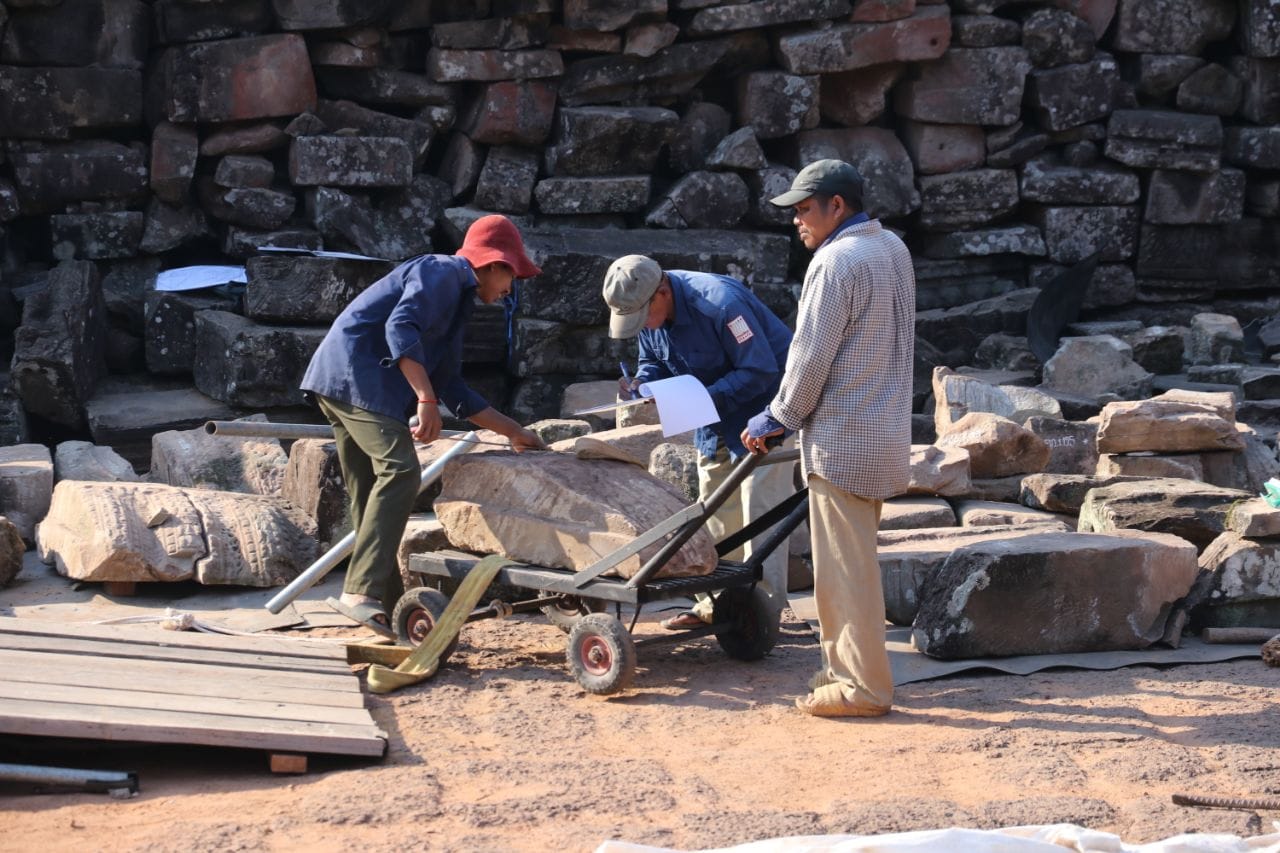
The discovery also included stone carvings that had fallen from the 27th Brahma sculpture, adding to the temple's rich narrative of preservation and restoration challenges. The team's meticulous approach involves separating identifiable stones for reassembly, while those yet to be identified are carefully isolated for further examination.
Meng Sovanlylin, the architect and manager overseeing the restoration project, highlighted the systematic process undertaken by the team. Before addressing the collapsed structures and improving the drainage system in the temple's southwest area, each stone is catalogued and moved based on its type to facilitate its eventual reintegration into the temple's fabric. This painstaking effort aims to reconstruct the temple's original layout, especially focusing on the upper sections of the four frontal towers, a critical aspect of the restoration work.
As the team progresses, their goal remains to pinpoint the original placement of each stone, aspiring to reassemble all identified pieces in their historical context. This ambitious project not only underscores the dedication to preserving Cambodia's cultural heritage but also promises to unveil further insights into the architectural marvel that is Bayon temple.