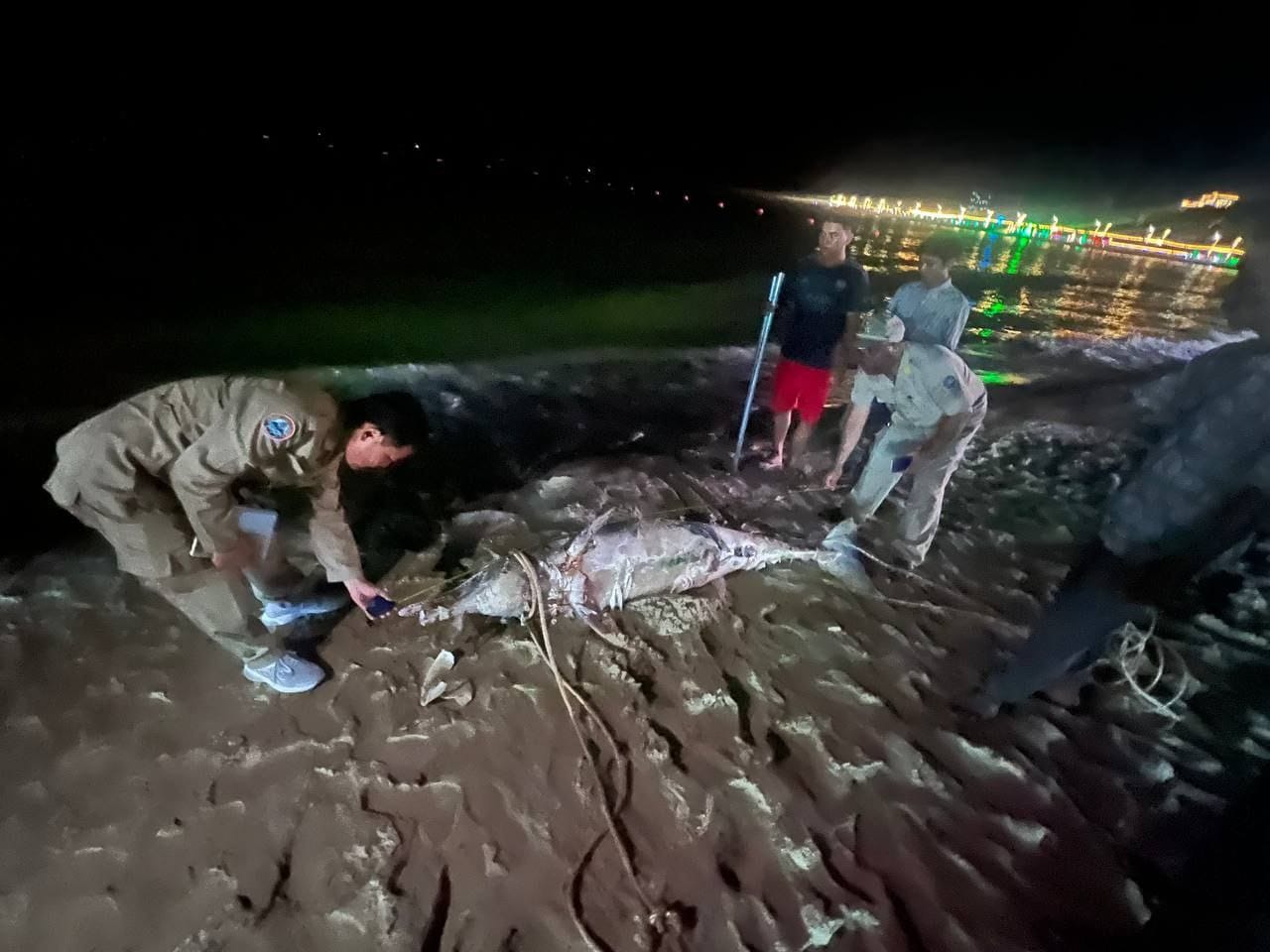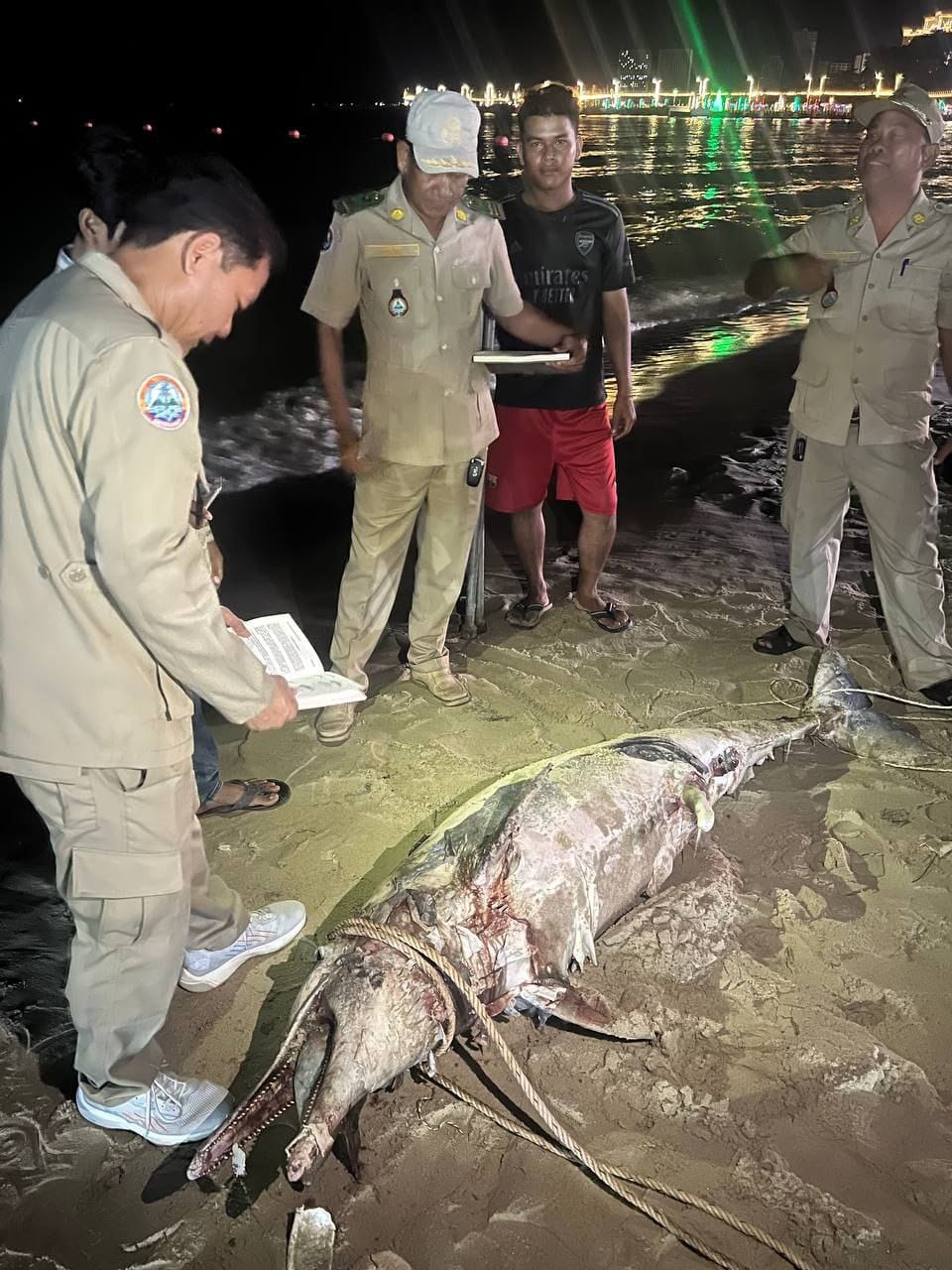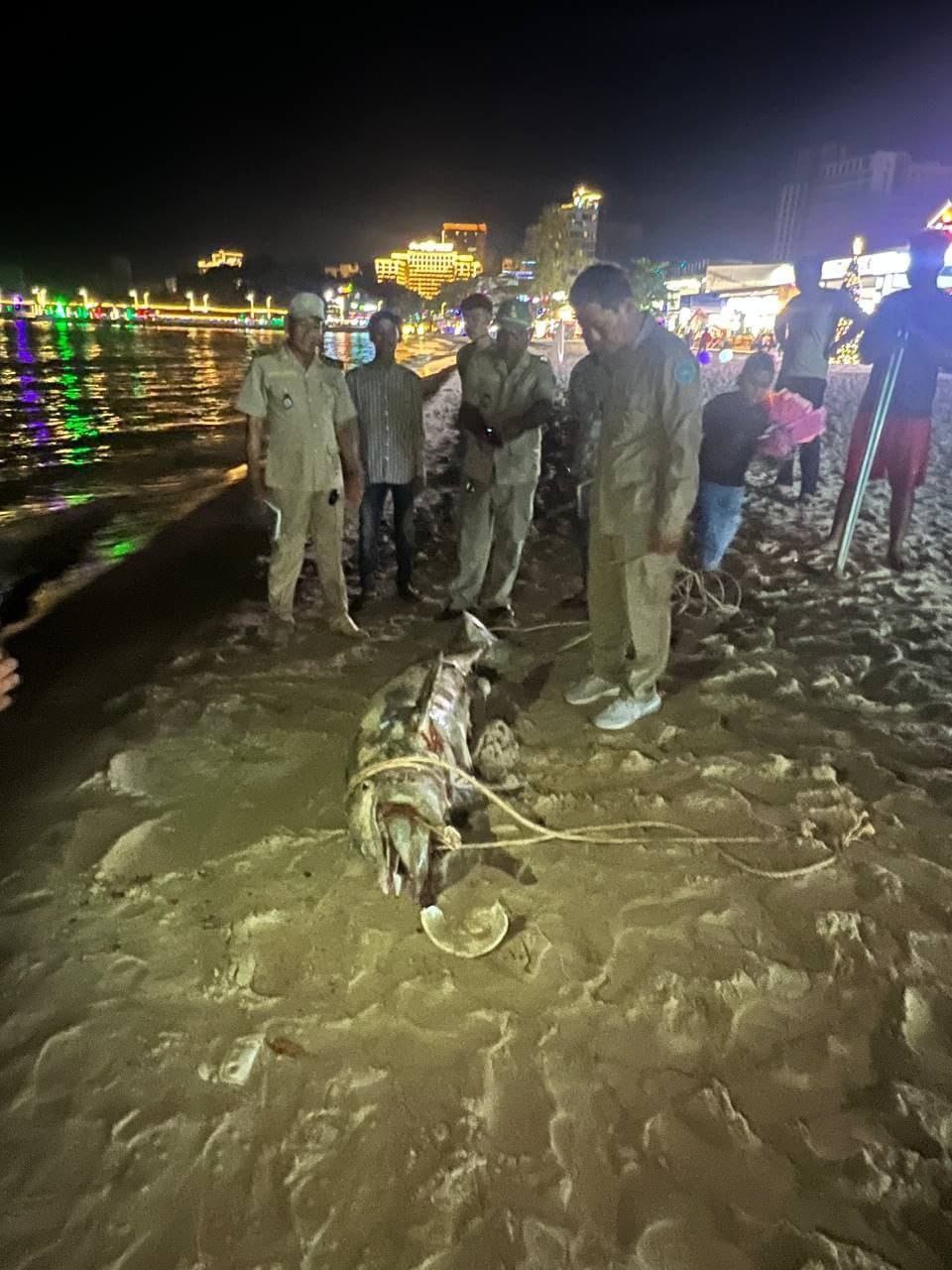













SIHANOUKVILLE: Residents of Sihanoukville’s popular Ochheuteal Beach witnessed a somber sight on the night of December 8 when a dead dolphin washed ashore after being entangled in a fishing net.
The Sihanoukville Fisheries Department confirmed him to be a male Indopacific humpback dolphin, also known as the Chinese white dolphin, who weighed 80kg and measured just over two meters.
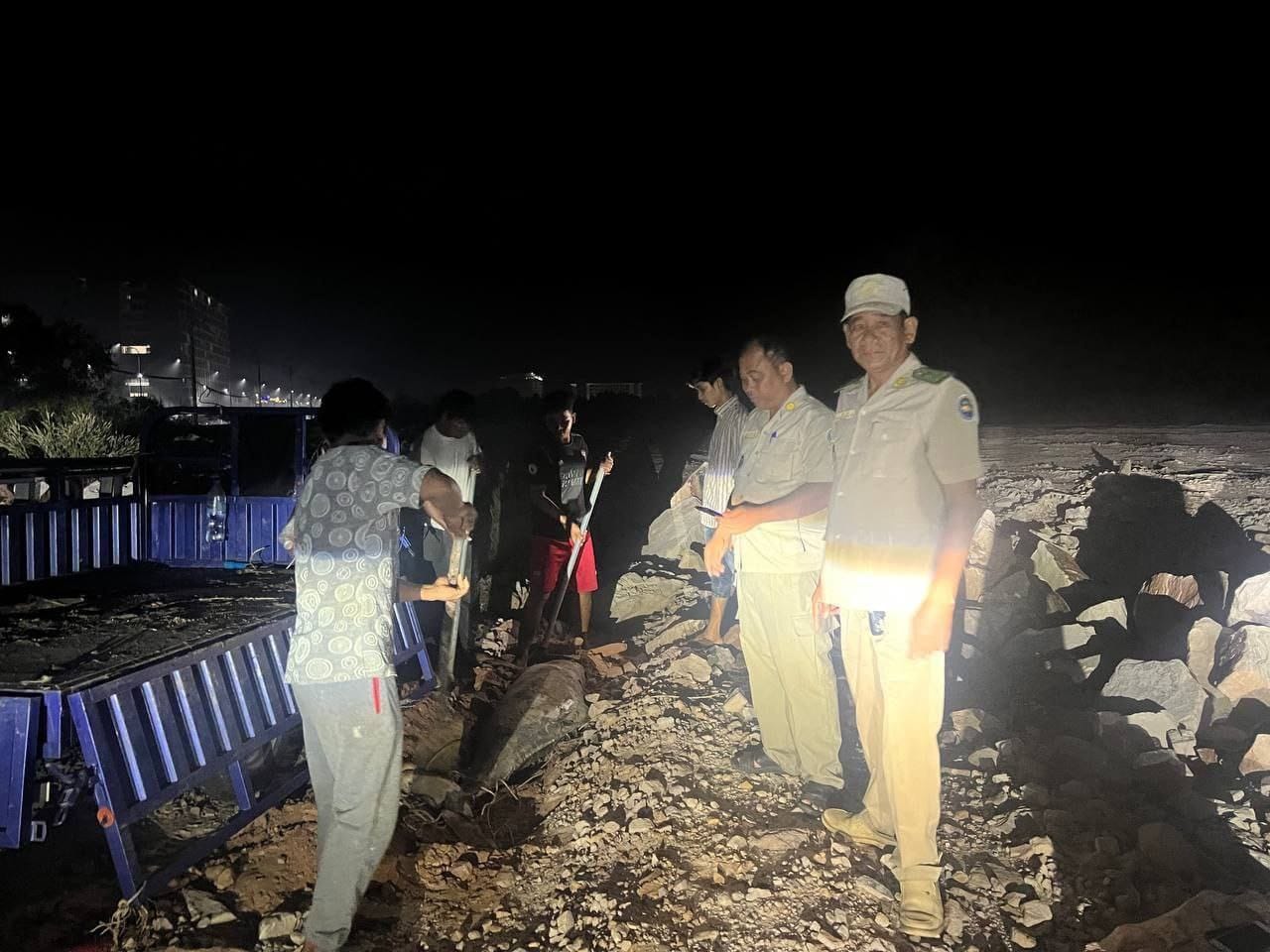
According to experts, the dolphin died after being trapped in a fishing net for several days. The Indopacific dolphin can only dive for 5-7 minutes without coming up for air so getting entangled in fishing gear is usually deadly for the species. Following inspection, the team buried him in nearby Village 6.
Indopacific humpback dolphins are widely distributed in coastal and inshore waters of the Indian and western Pacific Oceans. They were listed as vulnerable on the IUCN list in 2018, with an estimated 2,500 individuals remaining. Their main threats are fishing net entanglement, habitat loss and marine traffic and pollution. They inhabit the shallow Cambodian coastal waters of Kampong Som Bay, stretching from southwest to Koh Rong, Koh Rong Samloem and Veal Renh Bay.