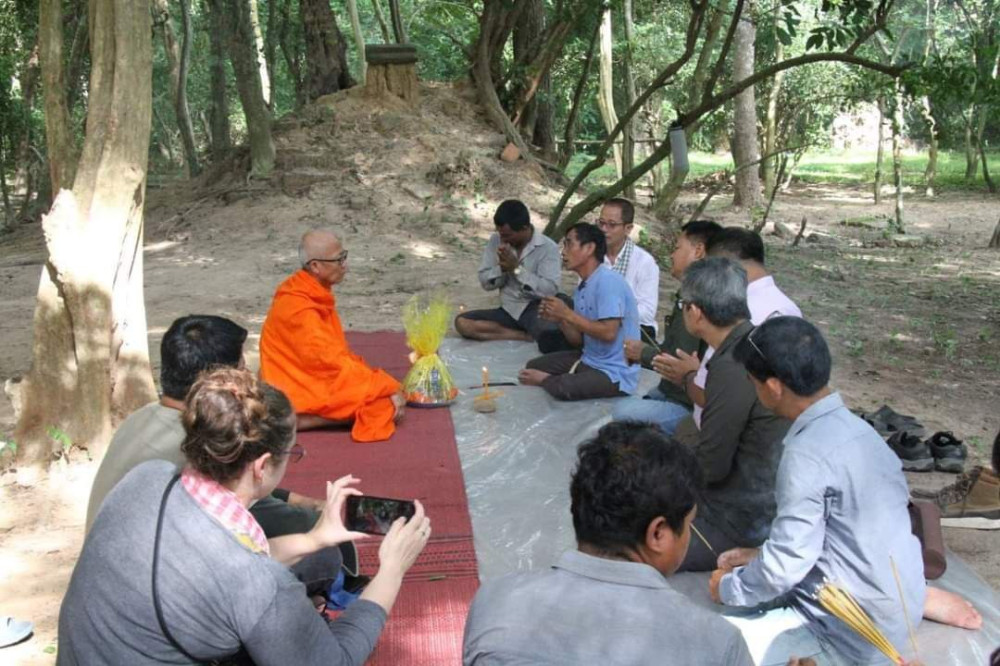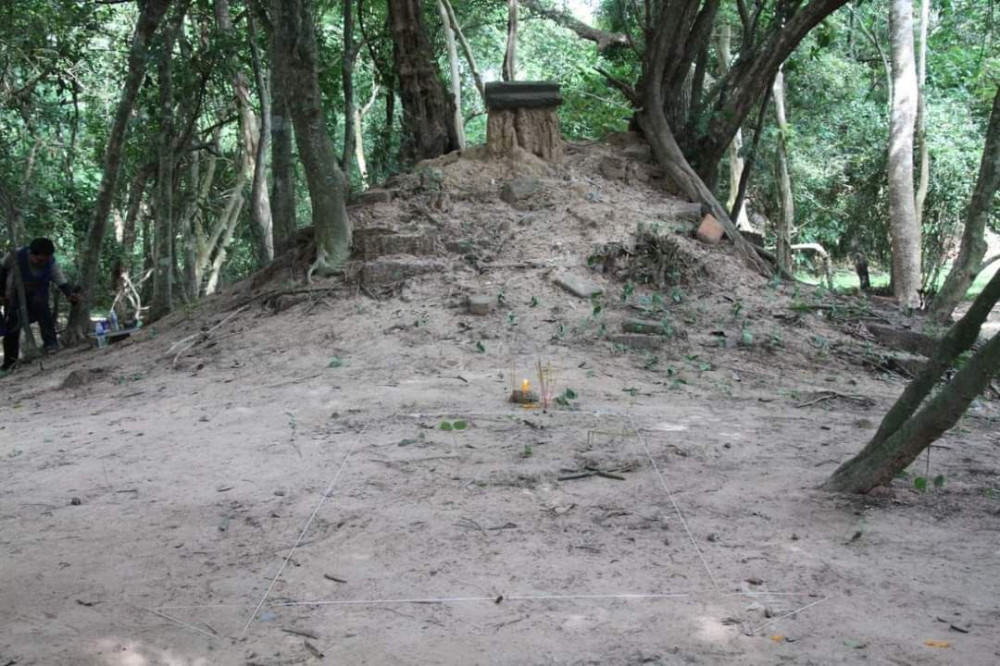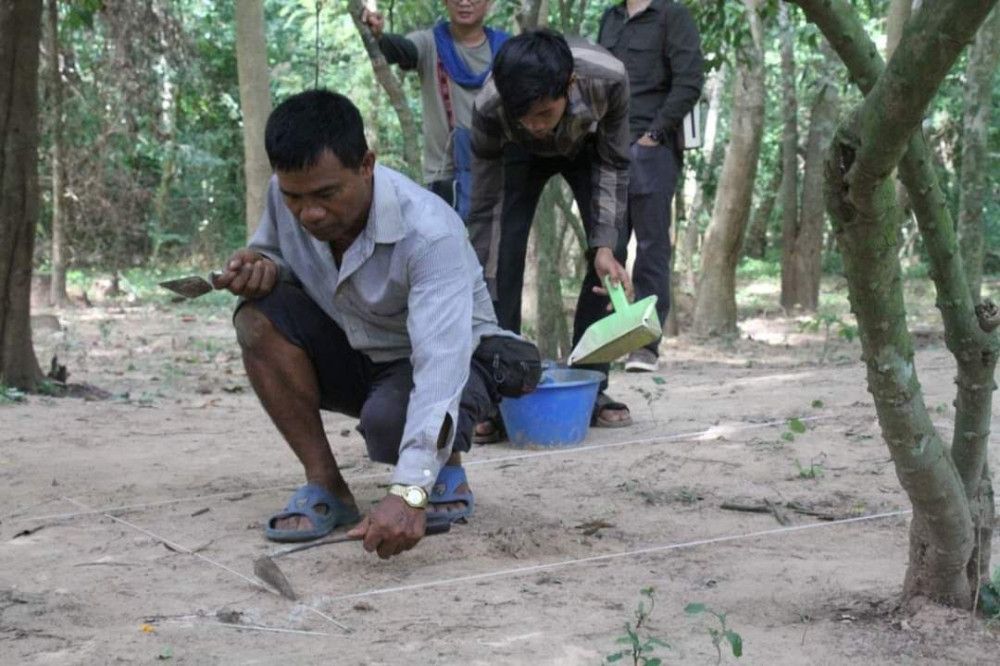






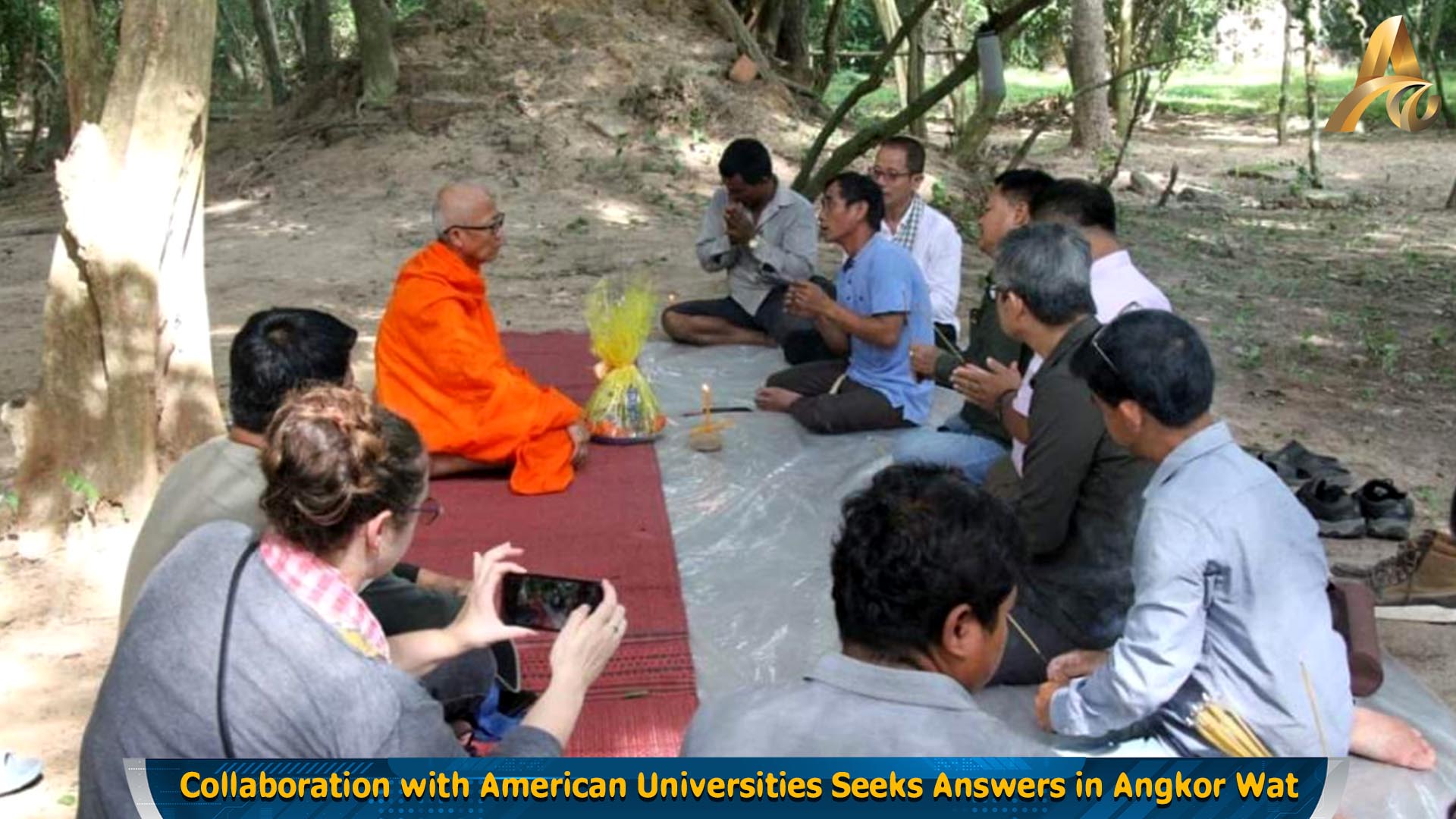








ANGKOR: The APSARA National Authority has teamed up with the University of Hawaii and the University of California to excavate and ancient mound southwest of Angkor Wat.
Dr. Heng Pipal from the University of Hawaii is heading the research project and explained that the mound appears to contain the remains of an ancient vihara, or Buddhist monastery. The researchers will be using carbon dating to determine the accurate age of the ancient structure. "Previous research has shown that the Angkor Wat Temple complex is a suburb of Angkor, which is why Cambodians in Siem Reap call it "Angkor Toch". The town has a system of mounds, ponds, and roads of grids in the Angkor Wat complex. If you look at the grid of this city, we see that the Buddhist vihara was built on a mound that used to be inhabited since the 12th century," said Dr. Pipal.
Based on its style, it is a Theravada Buddhist temple from the 14th to 16th century dedicated to Brahma, Vishnu or Narayan. Theravada, or “the way of the elders”, Buddhism is still practiced in Cambodia today and is one of the earliest forms of the religion, adhering closely to the original doctrines and practices taught by the Buddha.
The villagers of Angkor have a history of practicing Hinduism which raises questions about the temple’s presence in the area. The researchers hope that through further analysis of the mound they will be able to build a more comprehensive picture of changes in Angkor’s urban community and religious allegiances during the city’s relocation to the south.
Researchers say there are two other sites containing ancient Theravada Buddhist viharas at Angkor Wat: one in the southwest and the other in the northwest, where there is still a shrine to the Buddha.