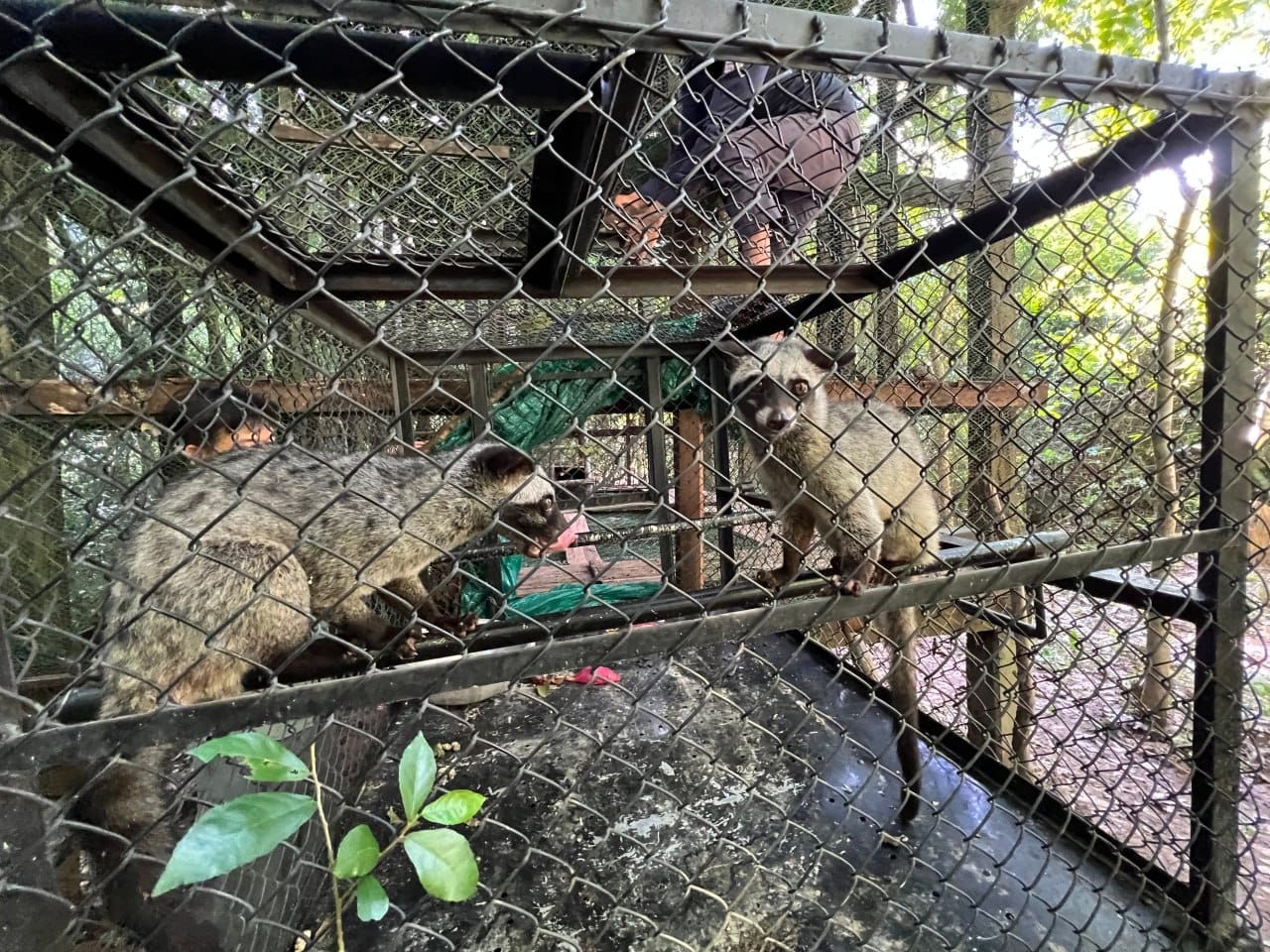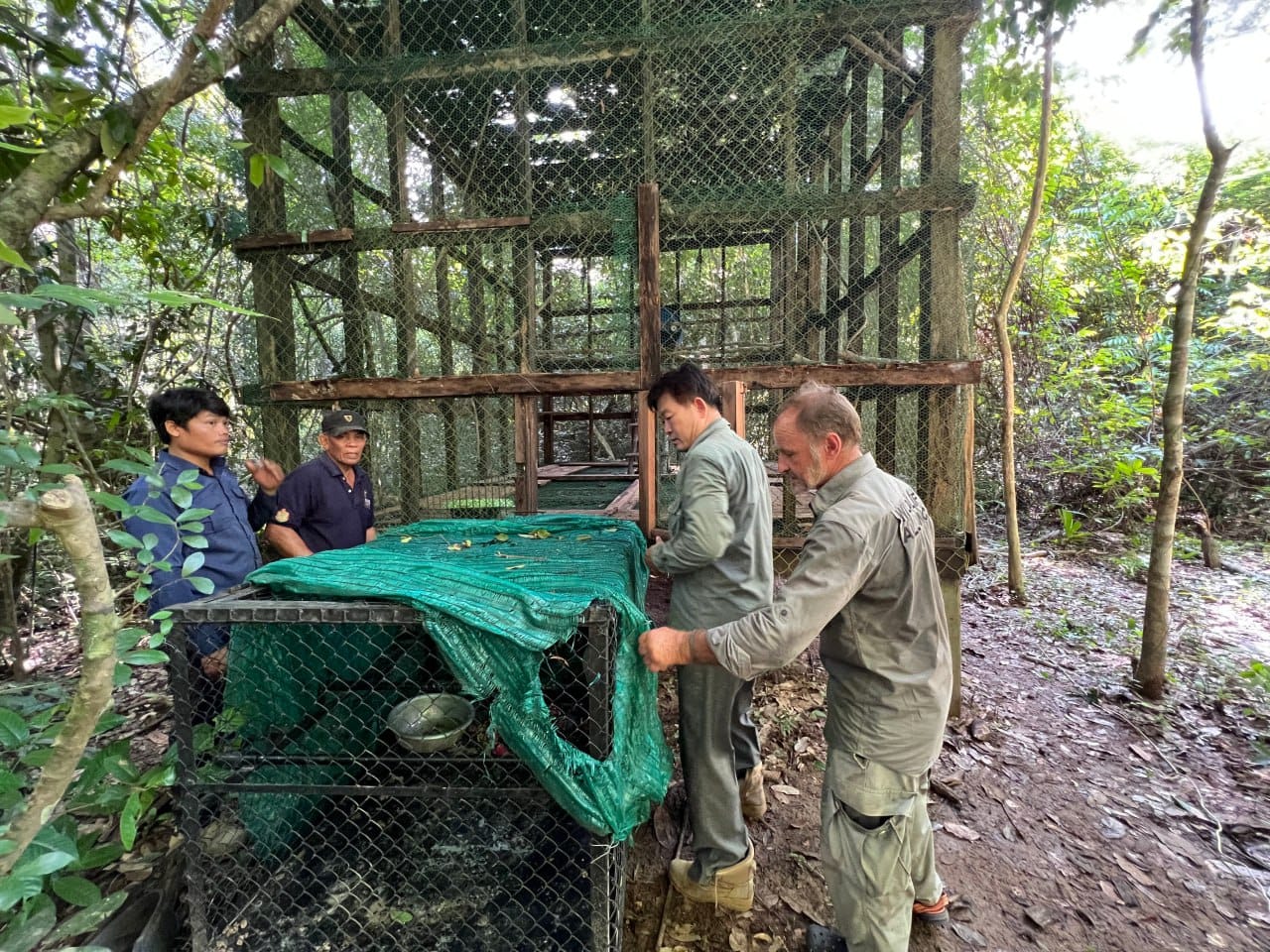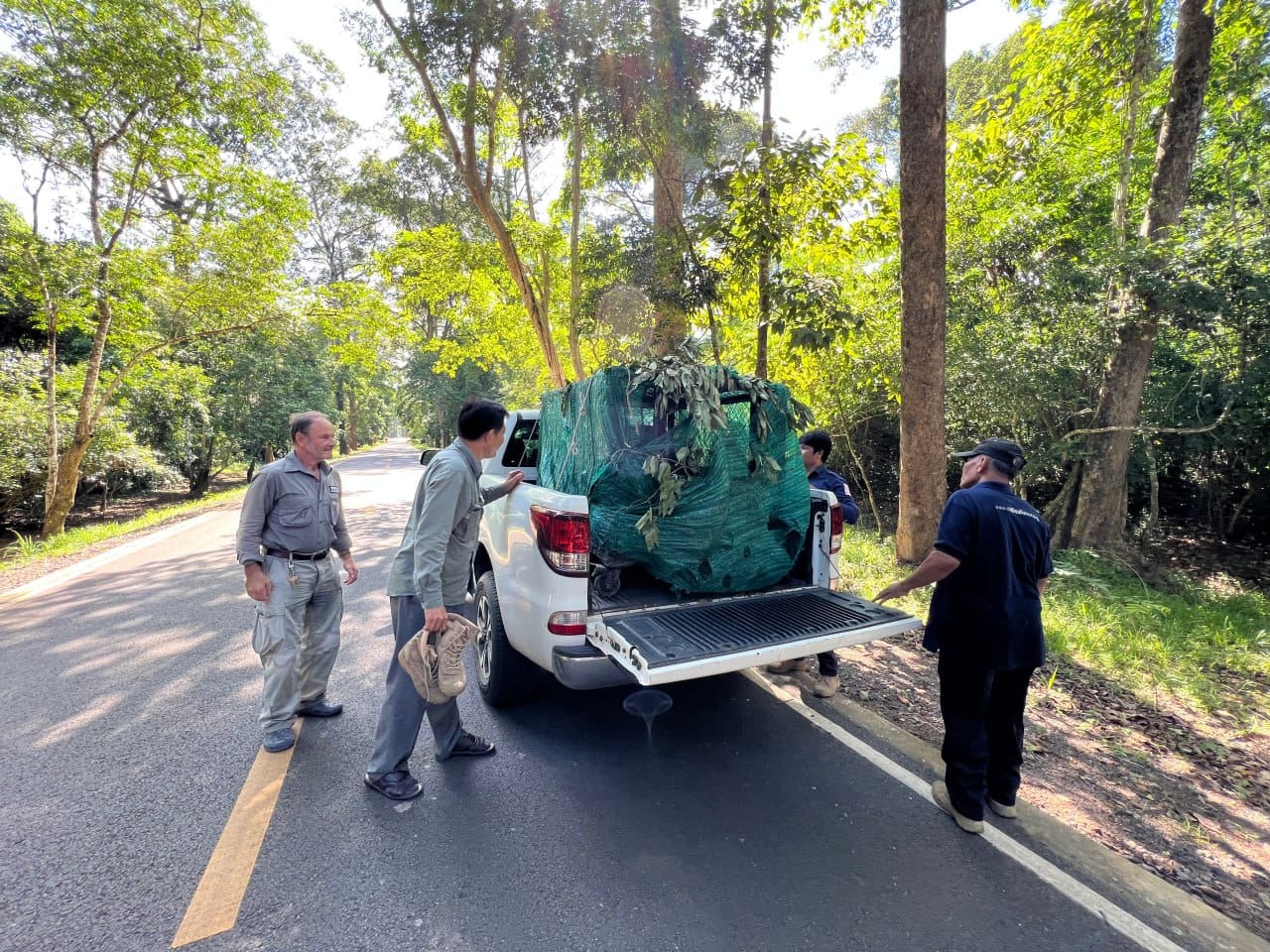






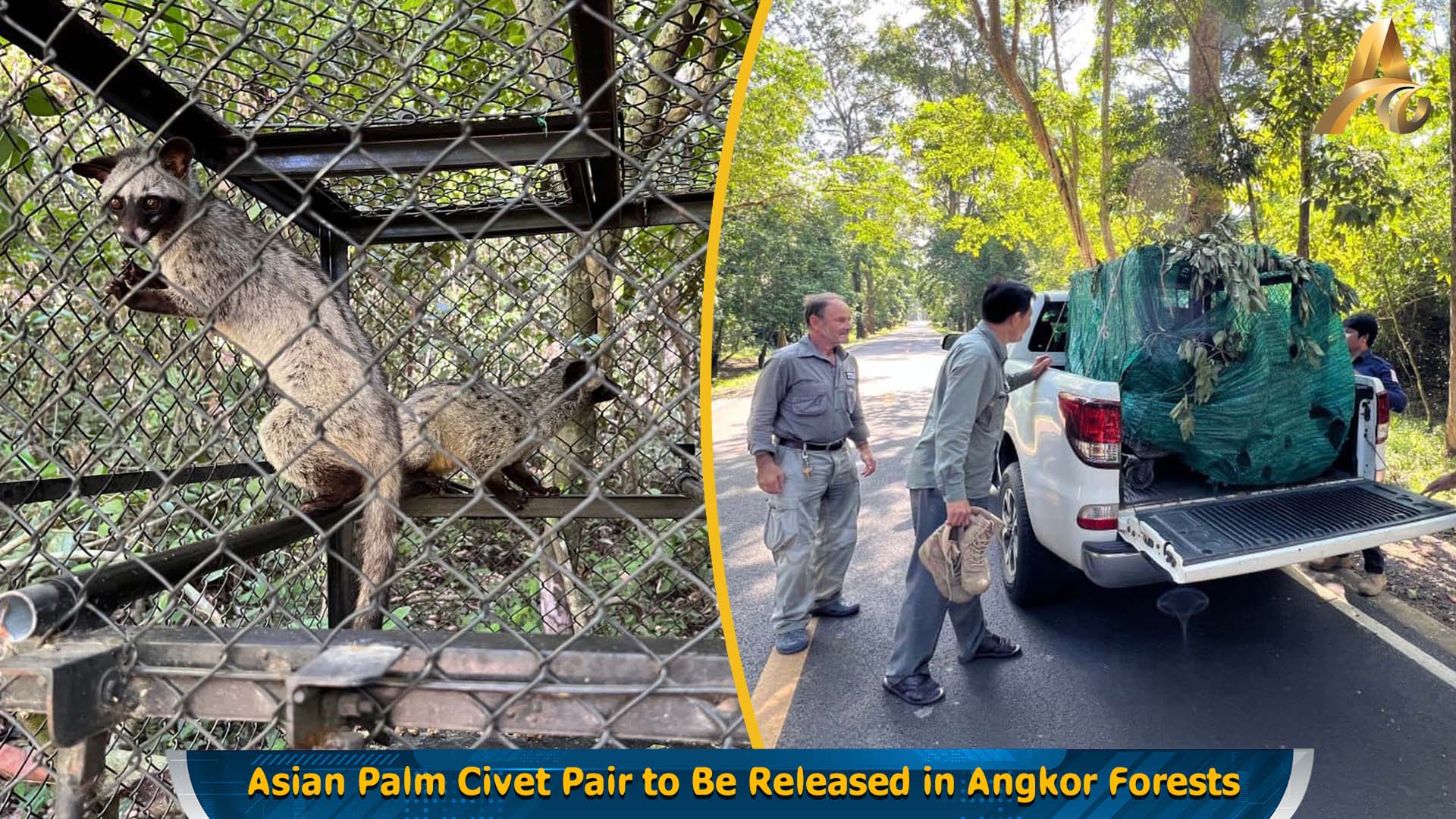








SIEM REAP: A pair of Asian palm civets, one female and one male, are set to be released in the forests of Angkor Park soon.
The animals were transported from Phnom Tamao Wildlife Rescue Centre on July 7 by the Angkor Park Wildlife Release Project, in collaboration with the APSARA National Authority, Phnom Penh Forestry Administration, and the Wildlife Alliance. Since 2008, Asian palm civets have been listed as Least Concern on the IUCN list of endangered species as they are able to survive in a broad range of habitats.
According to the APSARA National Authority, the project has successfully released many species of wildlife into the forests of Angkor, including 15 pileated gibbons (which have produced seven offspring) and six red muntjacs, 12 silver langurs, five Asian palm civets, eight smooth-coated otters (which have produced five pups), two leopards, seven Oriental pied hornbills, six great hornbills, seven wreathed hornbills, nine peafowls, and one Asian water monitor lizard, among others. Some of the animals are still under the constant supervision and care of the team.
The civet is most commonly known outside of Asia for its role in the production of Kopi luwak, a fashionable coffee export. Also known as civet coffee, the brew is produced by gathering coffee cherries from civet excrement, which partially ferments the berries. Unfortunately, in some parts of the world, civets are kept in cages and force-fed the berries to produce the coffee, which many coffee aficionados say is a gimmick and does not enhance the flavor to taste any better than normally processed coffee. The demand for civets has led to issues of illegal poaching and trade of the animals.
The APSARA National Authority and the Angkor Park Wildlife Release Project called on national and international visitors and especially the people living in that area, to take part in protecting Cambodia’s wildlife.